
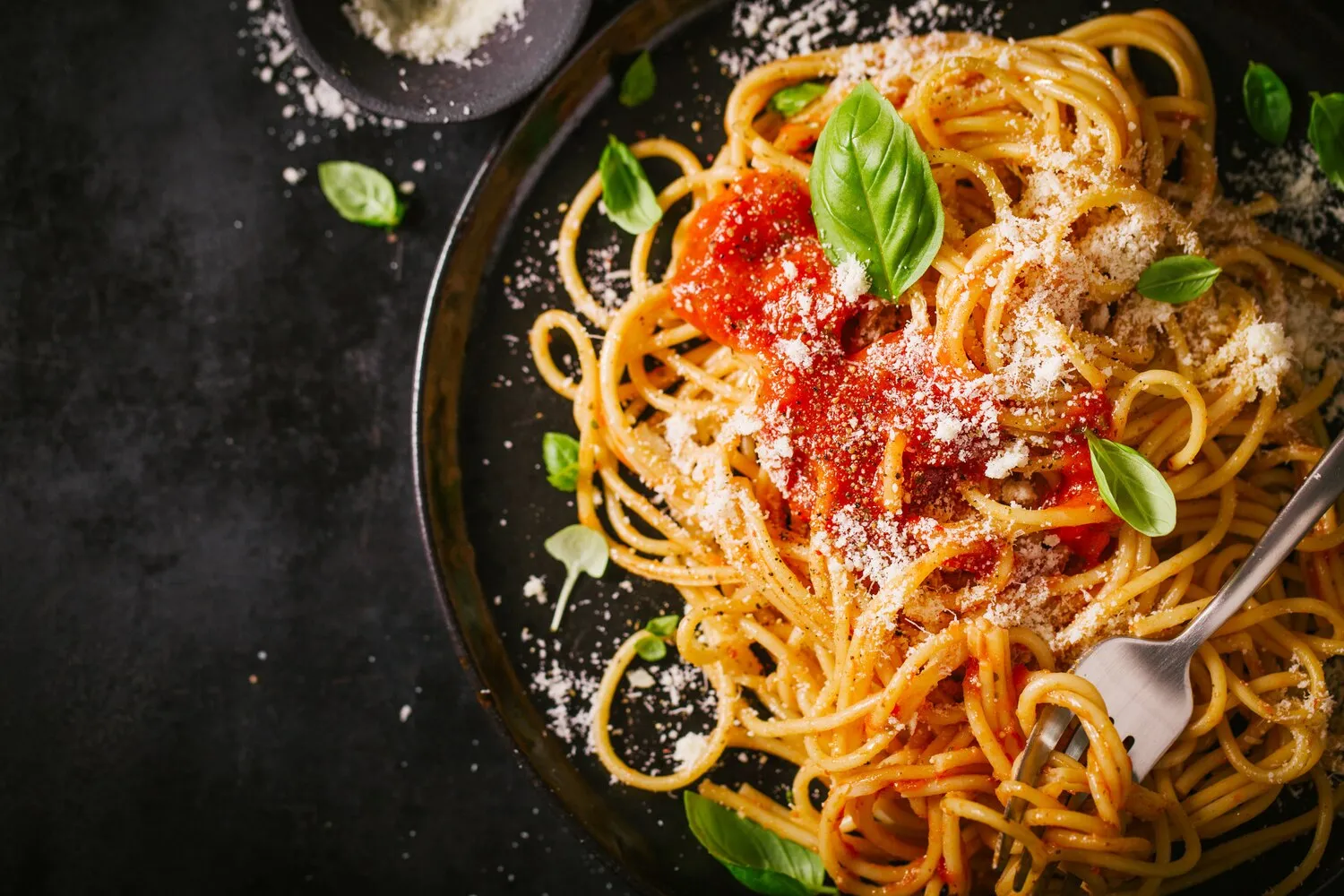

Pasta
al Dente serves a variety of pasta dishes.
Valori Nutrizionali
* Il % del Valore Giornaliero (VG) indica quanto un nutriente in una porzione di cibo contribuisce a una dieta giornaliera. 2.000 calorie al giorno sono utilizzate per i consigli nutrizionali generali.
Funzionalità Premium
al Dente
Funzionalità Premium
Pasta's history is long and complex. While there's debate about its exact origins, the earliest evidence points to noodles in Asia. However, modern pasta, as we know it, developed in Italy, particularly in Sicily, influenced by Arab traders who brought dried noodles. Over centuries, regional variations evolved, using local ingredients and techniques. The standardization of pasta shapes and cooking methods accelerated during the Renaissance and further developed with industrialization.
Funzionalità Premium
Pasta is deeply ingrained in Italian culture and is much more than just food; it's a symbol of family, tradition, and regional identity.
Family Meals
Pasta dishes are often the centerpiece of family meals, especially on Sundays. Preparing and sharing pasta is a communal activity that strengthens family bonds.
Regional Variations
Each region of Italy boasts unique pasta shapes and sauces, reflecting local ingredients and culinary traditions. This regional diversity is a source of pride and identity.
Simplicity and Quality
Italian cuisine emphasizes simple, high-quality ingredients. Even the simplest pasta dish can be incredibly flavorful if made with fresh, well-sourced ingredients.
Funzionalità Premium
Pasta dishes are incredibly diverse, showcasing a wide range of flavors. The core flavor profile depends heavily on the sauce and accompanying ingredients, but a common element is a balance of savory, umami, and sometimes a touch of sweetness or acidity.
The base flavor often comes from tomatoes (fresh or canned), garlic, onions, olive oil, and herbs like basil, oregano, and parsley. Meats such as beef, pork, sausage, or seafood contribute richness and umami. Cheese, particularly Parmesan, Pecorino Romano, and ricotta, adds salty and creamy notes. Other ingredients like vegetables (mushrooms, zucchini, peppers) or spices (chili flakes, black pepper) provide additional layers of flavor. Al dente cooking ensures the pasta itself has a slight bite, contributing to the overall textural experience. Different shapes complement different sauces; long strands work well with oil-based sauces, while shorter shapes are better with thicker, chunkier sauces.
Funzionalità Premium
Cook Pasta Al Dente
Al dente means 'to the tooth' in Italian. Cook the pasta until it is firm to the bite, not mushy. Check for doneness a minute or two before the package instructions suggest.
Use Enough Salt
Salt the pasta water generously – it should taste like the sea. This seasons the pasta from the inside out.
Reserve Pasta Water
Before draining the pasta, reserve about a cup of the starchy cooking water. This can be added to the sauce to help it cling to the pasta and create a creamy emulsion.
Combine Sauce and Pasta
Don't just pour the sauce over the pasta. Toss the cooked pasta in the sauce for a minute or two before serving to allow the flavors to meld together.
Funzionalità Premium
Esplora piatti e ristoranti aggiuntivi di Italian
Esplora ItalianScopri i migliori ristoranti ed esperienze culinarie a Klagenfurt.
Esplora KlagenfurtScopri di più sulla cultura gastronomica, la scena dei ristoranti e il patrimonio culinario di Austria.
Esplora Austria