
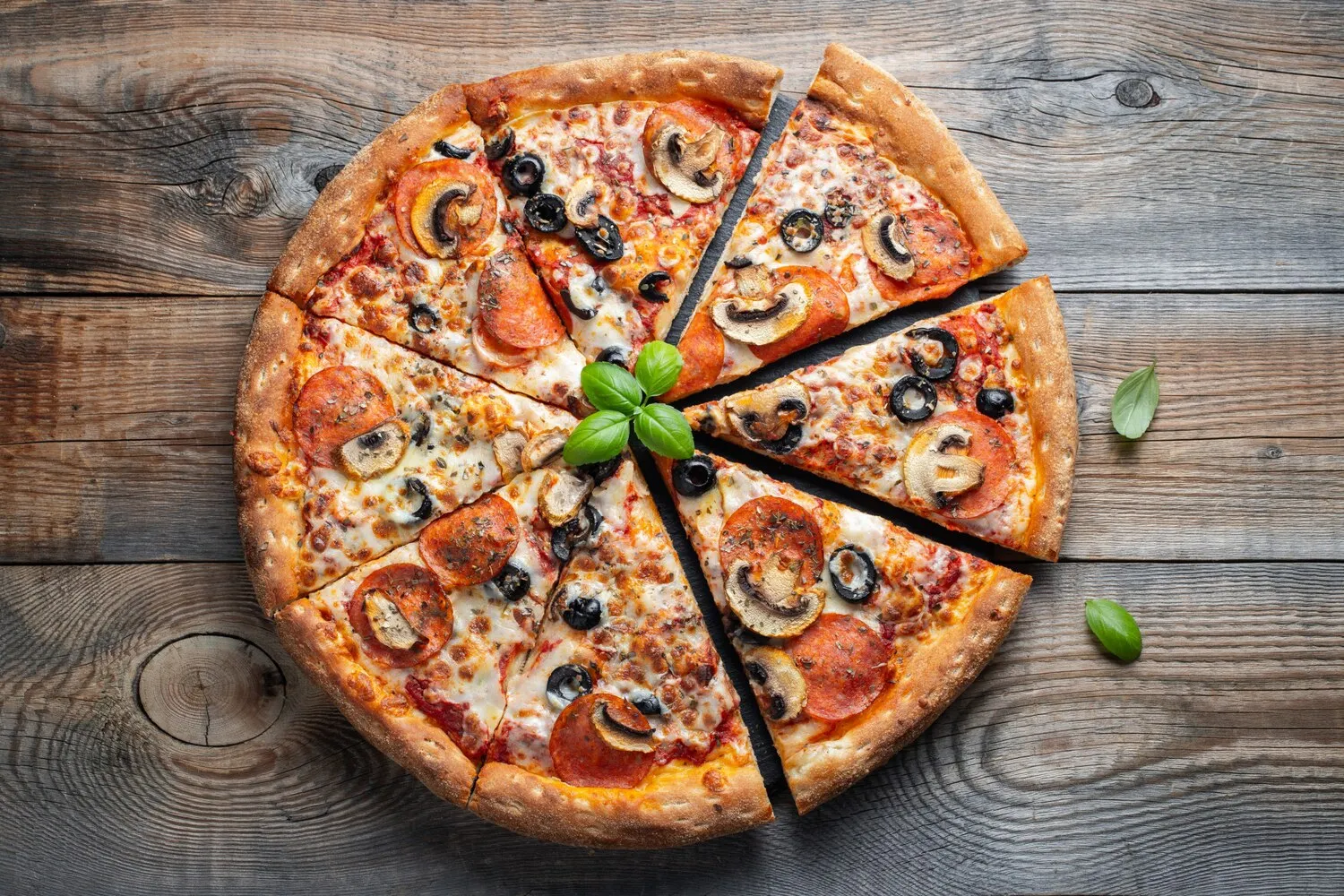

Pizza
Viva la Mamma is known for its pizza. Specific types haven't been clearly identified as 'best', but it is a signature item.
Valori Nutrizionali
* Il % del Valore Giornaliero (VG) indica quanto un nutriente in una porzione di cibo contribuisce a una dieta giornaliera. 2.000 calorie al giorno sono utilizzate per i consigli nutrizionali generali.
Funzionalità Premium
Viva la Mamma (Viva La Mamma)
Funzionalità Premium
Pizza's history stretches back to ancient times, with flatbreads topped with various ingredients being a common food in Mediterranean cultures. However, the modern pizza as we know it originated in Naples, Italy, in the 18th or early 19th century. It began as a simple, affordable food for the city's poor, typically topped with tomatoes, garlic, oil, and salt. The legend of the Margherita pizza, created in 1889 to honor Queen Margherita, solidified pizza's place in Italian cuisine.
Funzionalità Premium
Pizza is more than just food; it's a cultural icon, deeply embedded in Italian society and now a global phenomenon. It's a symbol of family, sharing, and celebration, often enjoyed in casual settings.
Family and Gathering
Pizza is often associated with family gatherings and celebrations. Its shareable nature makes it ideal for communal meals.
Regional Variations
Different regions of Italy have their own unique pizza styles, reflecting local ingredients and culinary traditions. For example, Neapolitan pizza is known for its thin, soft crust and simple toppings, while Roman pizza tends to be crispier.
Global Adaptation
Pizza has been adapted and reinterpreted around the world, incorporating local ingredients and flavors. This has led to a vast array of pizza styles, from deep-dish pizza in Chicago to Hawaiian pizza with pineapple.
Pizza as an Art Form
For some, pizza making is an art. Techniques for preparing the dough, sauce, and assembling the pizza are honed over many years.
Funzionalità Premium
Pizza offers a diverse range of flavors, depending on the toppings used. It's typically a balance of savory, tangy, and often slightly sweet notes. The base, crust, provides a foundation for a symphony of tastes.
The fundamental flavors of pizza come from its core ingredients: a yeasty, slightly tangy crust; a rich, acidic tomato sauce; and creamy, often salty mozzarella cheese. Beyond this, the possibilities are endless. Meats like pepperoni, sausage, and prosciutto add savory and spicy notes. Vegetables such as mushrooms, onions, peppers, and olives contribute earthy, sweet, and briny elements. Herbs like basil and oregano provide aromatic complexity. The type of cheese used also significantly impacts the flavor profile, with options ranging from sharp parmesan to creamy ricotta.
Funzionalità Premium
Dough Preparation
Use high-quality flour and allow the dough to rise slowly for optimal flavor and texture. Cold fermentation in the refrigerator for 24-72 hours is often recommended.
Oven Temperature
High heat is crucial for achieving a crispy crust and properly melting the cheese. If possible, use a pizza stone or steel to retain heat.
Ingredient Quality
Use fresh, high-quality ingredients for the best flavor. Opt for ripe tomatoes, fresh mozzarella, and good-quality olive oil.
Sauce Simplicity
The best pizza sauces are often simple, relying on the quality of the tomatoes rather than excessive seasonings.
Don't Overload
Resist the urge to overload the pizza with toppings. Too many toppings can make the crust soggy and prevent the pizza from cooking evenly.
Funzionalità Premium
Esplora piatti e ristoranti aggiuntivi di Pizza
Esplora PizzaScopri i migliori ristoranti ed esperienze culinarie a Wien.
Esplora WienScopri di più sulla cultura gastronomica, la scena dei ristoranti e il patrimonio culinario di Austria.
Esplora Austria