
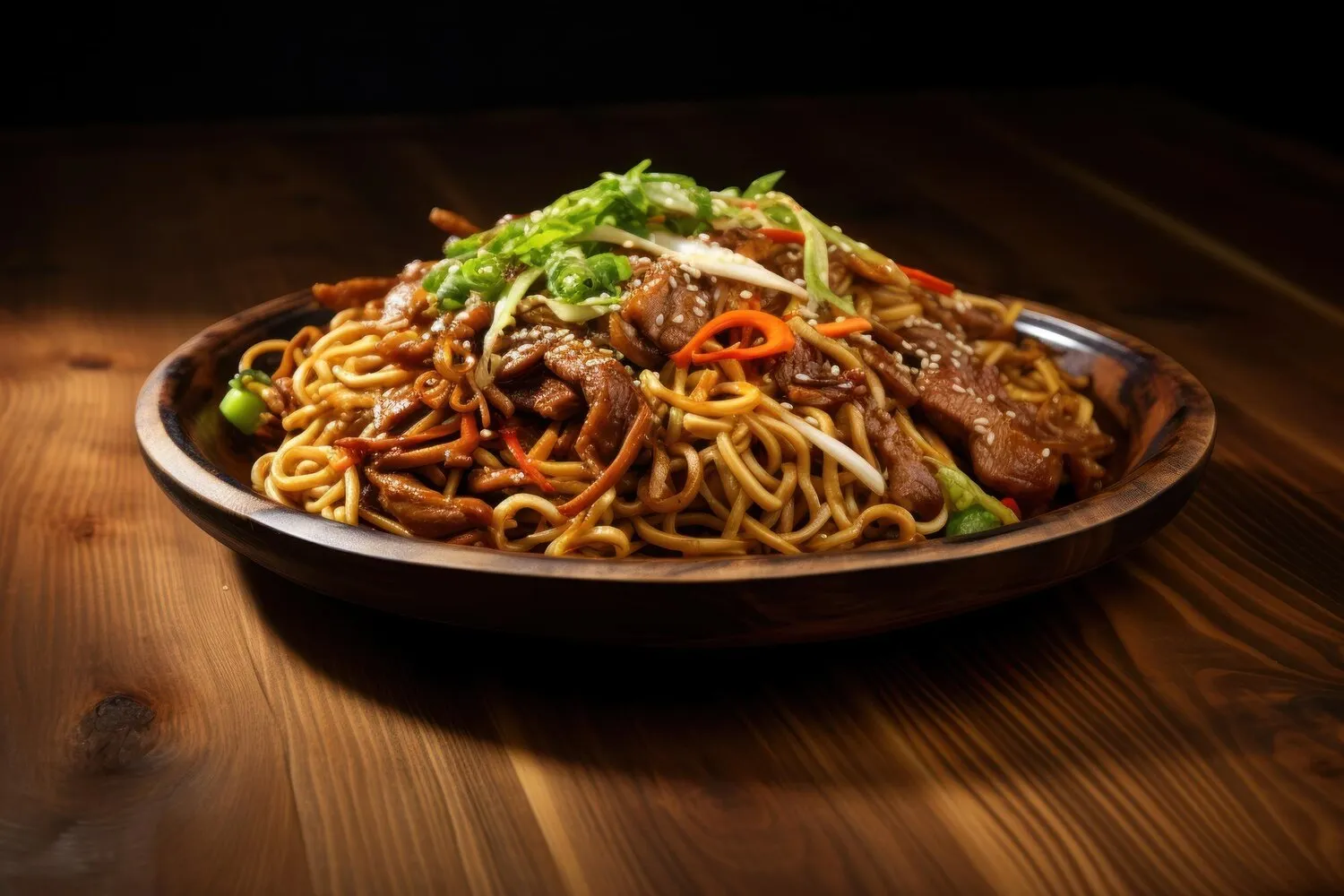

Yakisoba
Stir-fried noodles with vegetables and meat (various options available).
Valori Nutrizionali
* Il % del Valore Giornaliero (VG) indica quanto un nutriente in una porzione di cibo contribuisce a una dieta giornaliera. 2.000 calorie al giorno sono utilizzate per i consigli nutrizionali generali.
Funzionalità Premium
Bento Restaurante
Funzionalità Premium
Yakisoba's history is intertwined with the popularization of wheat noodles in Japan after World War II. The dish evolved as a casual, affordable, and filling meal, often adapted from Chinese stir-fried noodle techniques and flavors, becoming a staple at festivals and local eateries.
Funzionalità Premium
Yakisoba is deeply ingrained in Japanese popular culture, particularly as a street food and festival staple. Its accessibility, affordability, and satisfying nature have made it a beloved comfort food enjoyed by people of all ages.
Festival Food
Yakisoba is a ubiquitous sight at Japanese festivals (matsuri). Stalls selling yakisoba are common, and the dish is often cooked on large griddles, creating a lively and communal atmosphere.
Teppanyaki Restaurants
While often enjoyed as street food, yakisoba is also a popular menu item at teppanyaki restaurants, where it's prepared on a hot iron griddle in front of the customers.
Home Cooking
Yakisoba is easy to make at home, making it a popular choice for quick and satisfying meals. Pre-packaged yakisoba kits with noodles and sauce are readily available in supermarkets.
Funzionalità Premium
Yakisoba presents a savory and slightly sweet flavor profile. The dish balances the umami of the yakisoba sauce, the crispness of stir-fried vegetables, and the richness of the meat or protein component. The noodles themselves absorb the sauce, creating a cohesive and satisfying taste.
The primary flavor component comes from yakisoba sauce, a Worcestershire-based sauce that typically includes soy sauce, oyster sauce, ketchup, spices, and sweeteners like sugar or honey. This provides a savory, tangy, and subtly sweet flavor. Vegetables such as cabbage, onions, carrots, and bean sprouts contribute freshness and a slightly sweet, vegetal taste. Meat, commonly pork belly, adds richness and umami. Dried seaweed flakes (aonori) and pickled ginger (beni shoga) are often sprinkled on top for added flavor and texture.
Funzionalità Premium
Noodle Hydration
Pre-soak or briefly boil the yakisoba noodles before stir-frying. This helps them to cook evenly and prevents them from becoming dry and clumpy during the cooking process.
Pan Temperature
Use a hot wok or pan to ensure the vegetables and meat are stir-fried quickly and retain their crispness. Adding the ingredients in the correct order (meat first, followed by vegetables, then noodles) is key.
Sauce Timing
Add the yakisoba sauce towards the end of the cooking process to prevent it from burning or caramelizing too much. Toss the noodles and ingredients well to ensure even distribution of the sauce.
Don't Overcrowd
Cook in batches if necessary to avoid overcrowding the pan. Overcrowding lowers the pan temperature and steams the ingredients instead of stir-frying them.
Funzionalità Premium
Esplora piatti e ristoranti aggiuntivi di Asian
Esplora AsianScopri i migliori ristoranti ed esperienze culinarie a Anápolis.
Esplora AnápolisScopri di più sulla cultura gastronomica, la scena dei ristoranti e il patrimonio culinario di Brazil.
Esplora Brazil