
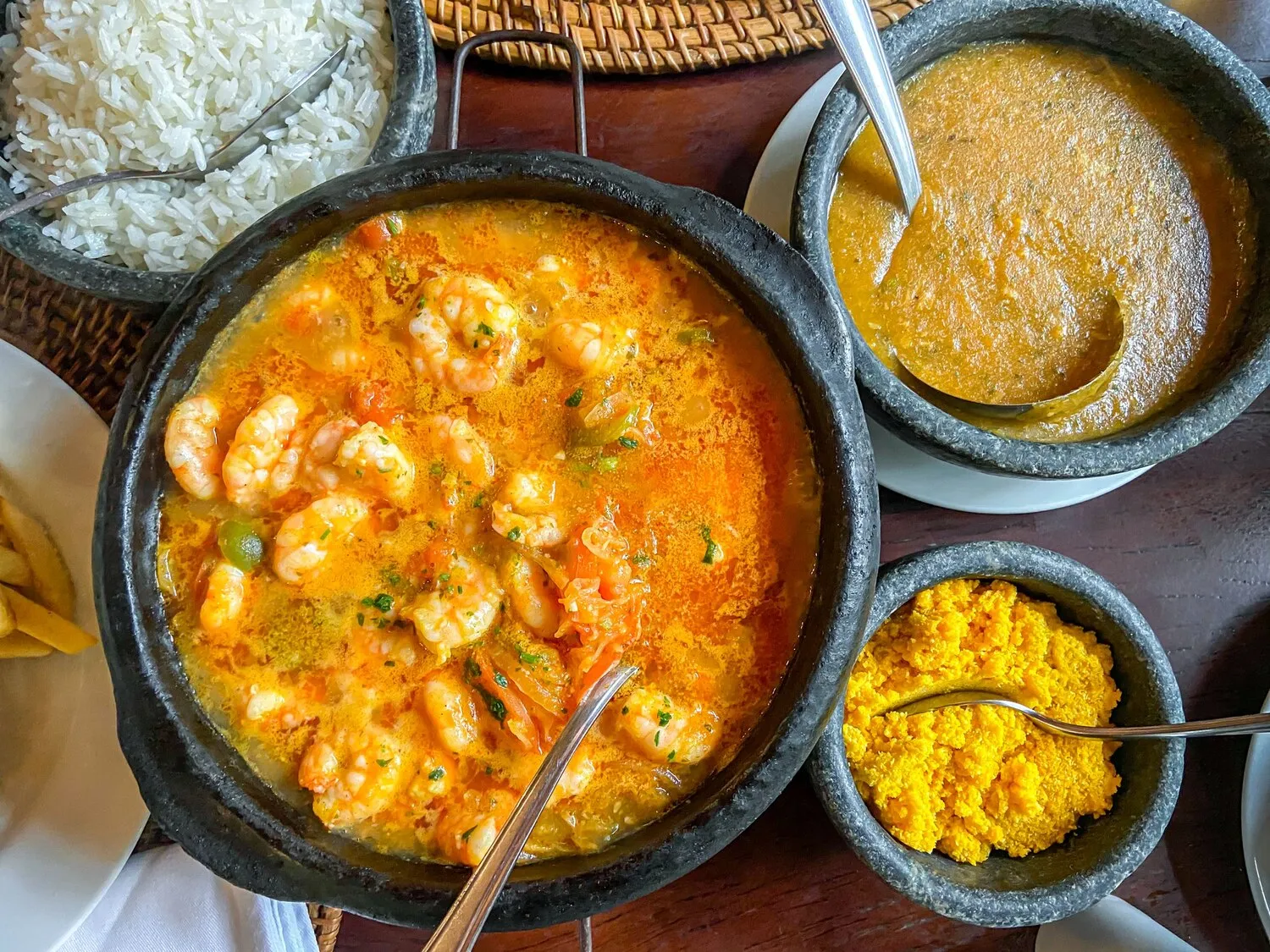

Moqueca Capixaba
Traditional Brazilian seafood stew from Espírito Santo, featuring fish, tomatoes, onions, garlic, and cilantro, cooked in a clay pot.
Valori Nutrizionali
* Il % del Valore Giornaliero (VG) indica quanto un nutriente in una porzione di cibo contribuisce a una dieta giornaliera. 2.000 calorie al giorno sono utilizzate per i consigli nutrizionali generali.
Funzionalità Premium
Uai Beach Búzios
Funzionalità Premium
Moqueca Capixaba's origins are deeply rooted in the indigenous and African culinary traditions of the Espírito Santo region of Brazil. It evolved from simpler stews prepared by indigenous populations using local ingredients and was later influenced by African cooking techniques and flavors brought over during the colonial period. Unlike its Bahian counterpart, it intentionally excludes palm oil and coconut milk, showcasing the unique culinary identity of Espírito Santo.
Funzionalità Premium
Moqueca Capixaba is a symbol of Espírito Santo's culinary heritage and a source of regional pride. It represents a deep connection to the sea and the local ingredients.
Family Tradition
Moqueca Capixaba is often prepared and enjoyed within families, passed down through generations. Recipes vary slightly from household to household, reflecting personal preferences and family traditions.
Regional Identity
The dish is closely associated with Espírito Santo and is often featured in local festivals and celebrations as a representation of the state's unique culinary identity.
Clay Pot Significance
The traditional preparation in a clay pot, known as a 'panela de barro,' is considered essential for achieving the authentic flavor and texture of Moqueca Capixaba. The clay imparts a subtle earthy note to the stew.
Funzionalità Premium
Moqueca Capixaba is characterized by its fresh, light, and savory flavor profile, emphasizing the natural taste of seafood and vegetables.
The dominant flavors are the sweetness of the fish, the acidity of the tomatoes, the pungency of onions and garlic, and the herbaceousness of cilantro. The stew is subtly savory due to the seafood broth created during cooking. It distinguishes itself with its light, clean taste, in sharp contrast to the richness of Moqueca Baiana. The absence of dendê oil (palm oil) gives it a brighter and less heavy character, allowing the natural flavors of the ingredients to shine through.
Funzionalità Premium
Freshness is Key
Use the freshest possible fish and seafood. The quality of the ingredients significantly impacts the final flavor.
Clay Pot Seasoning
If using a brand-new clay pot, cure/season it before first use by soaking it in water for several hours then rubbing it with oil and baking in a low oven. This helps prevent cracking and adds flavor.
Layering Flavors
Layer the ingredients in the pot carefully to allow flavors to meld and develop during cooking. Start with onions and garlic as a base, followed by tomatoes, fish, and cilantro.
Low and Slow
Cook the Moqueca over low heat to prevent the fish from overcooking and ensure the flavors fully develop. Avoid stirring excessively, as this can break up the fish.
Type of Fish
Use firmer white fish such as grouper, sea bass, or snapper. These types hold up well during the cooking process and provide a good texture.
Funzionalità Premium
Esplora piatti e ristoranti aggiuntivi di Seafood Stew
Esplora Seafood StewScopri i migliori ristoranti ed esperienze culinarie a Armação dos Búzios.
Esplora Armação dos BúziosScopri di più sulla cultura gastronomica, la scena dei ristoranti e il patrimonio culinario di Brazil.
Esplora Brazil