
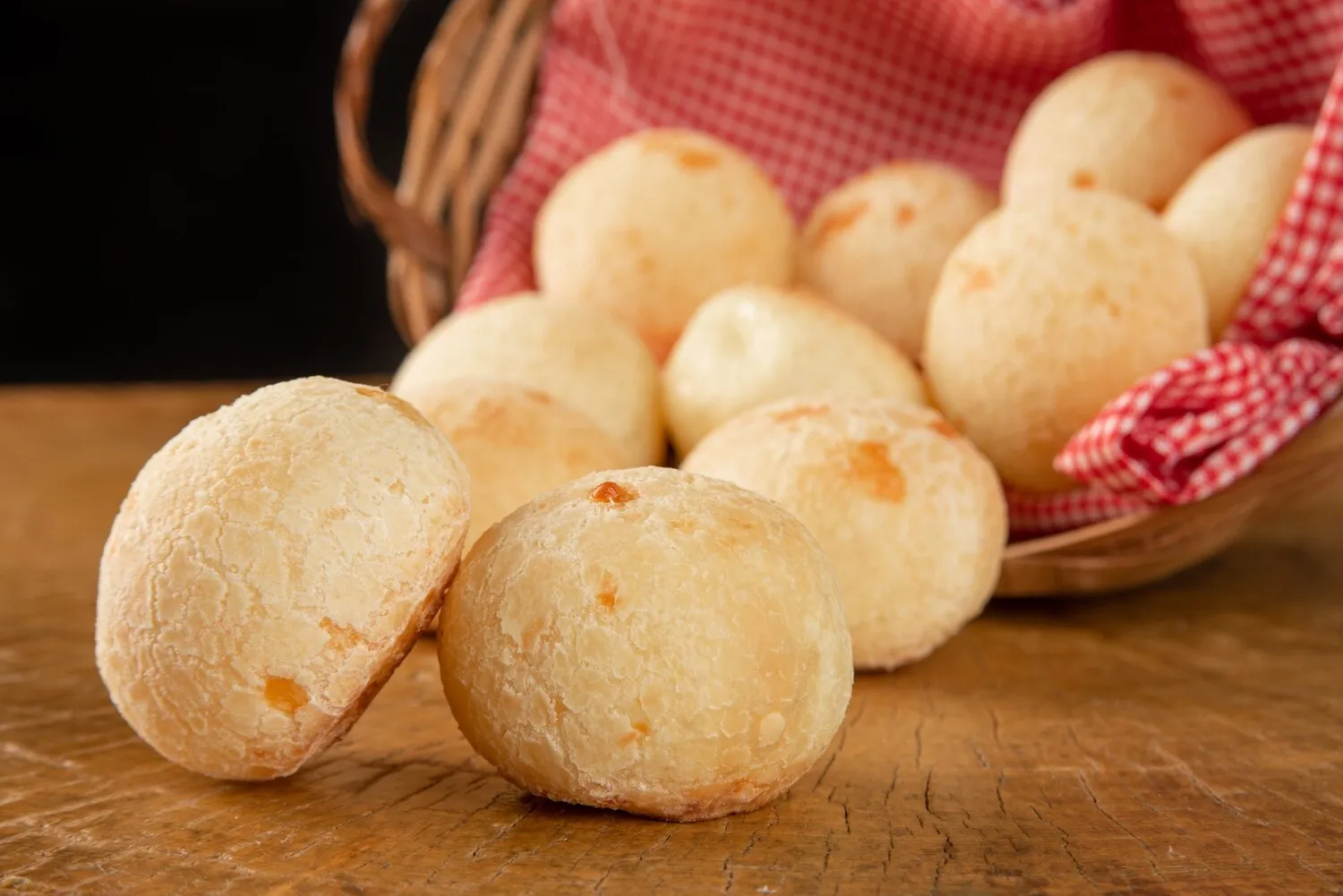

Pão de Queijo
Traditional Brazilian cheese bread, a popular item at bakeries.
Valori Nutrizionali
* Il % del Valore Giornaliero (VG) indica quanto un nutriente in una porzione di cibo contribuisce a una dieta giornaliera. 2.000 calorie al giorno sono utilizzate per i consigli nutrizionali generali.
Funzionalità Premium
Funzionalità Premium
The precise origins of Pão de Queijo are somewhat debated, but it's widely believed to have emerged in the state of Minas Gerais during the 18th century. This was a time when the region was a major producer of cheese and manioc flour (tapioca starch), and the dish likely arose from resourcefulness, making use of readily available ingredients. Some speculate that enslaved Africans may have contributed to its development, drawing on their culinary traditions with roots and tubers.
Funzionalità Premium
Pão de Queijo is deeply ingrained in Brazilian culture, particularly in Minas Gerais, where it is a staple food enjoyed at any time of day.
Breakfast Staple
It is a very popular breakfast item often paired with coffee.
Snack and Appetizer
It's commonly served as a snack throughout the day or as an appetizer before meals.
Social Gathering Food
Pão de Queijo is frequently present at social gatherings and parties, reflecting its versatility and appeal to a wide audience.
Regional Pride
In Minas Gerais, it is considered a source of regional pride and culinary heritage. The quality and variations of Pão de Queijo are often passionately discussed.
Funzionalità Premium
Pão de Queijo offers a unique blend of cheesy, tangy, and subtly starchy flavors with a delightful chewy texture.
The primary flavor comes from the cheese, traditionally 'queijo minas', a fresh, slightly tangy Brazilian cheese. However, other cheeses like parmesan, mozzarella, or provolone are often used in variations. Tapioca starch (polvilho azedo or doce) contributes a mild, slightly sour, and elastic texture. The baking process creates a crispy outer layer and a soft, chewy interior. The flavor profile is savory, with a slight tang and richness from the cheese.
Funzionalità Premium
Tapioca Starch Choice
Using a mix of sweet (doce) and sour (azedo) tapioca starch often yields the best results. The sour starch contributes to the characteristic chewiness and tangy flavor.
Scalding the Starch
Scalding the tapioca starch with hot milk or water is crucial for activating the starch and creating the desired texture. Be sure not to add all the liquid at once, and mix constantly to avoid lumps.
Cheese Quality
The quality of the cheese significantly impacts the flavor. Using a good quality 'queijo minas' or a blend of cheeses is recommended.
Oven Temperature
A hot oven (around 350-400°F or 175-200°C) is essential for creating a crispy exterior and a soft, chewy interior.
Freezing for Later
Pão de Queijo dough can be frozen before baking. Simply shape the dough into balls and freeze them on a baking sheet. Once frozen, transfer them to a freezer bag. Bake from frozen, adding a few extra minutes to the baking time.
Funzionalità Premium
Esplora piatti e ristoranti aggiuntivi di Handy food
Esplora Handy foodScopri i migliori ristoranti ed esperienze culinarie a Betim.
Esplora BetimScopri di più sulla cultura gastronomica, la scena dei ristoranti e il patrimonio culinario di Brazil.
Esplora Brazil