
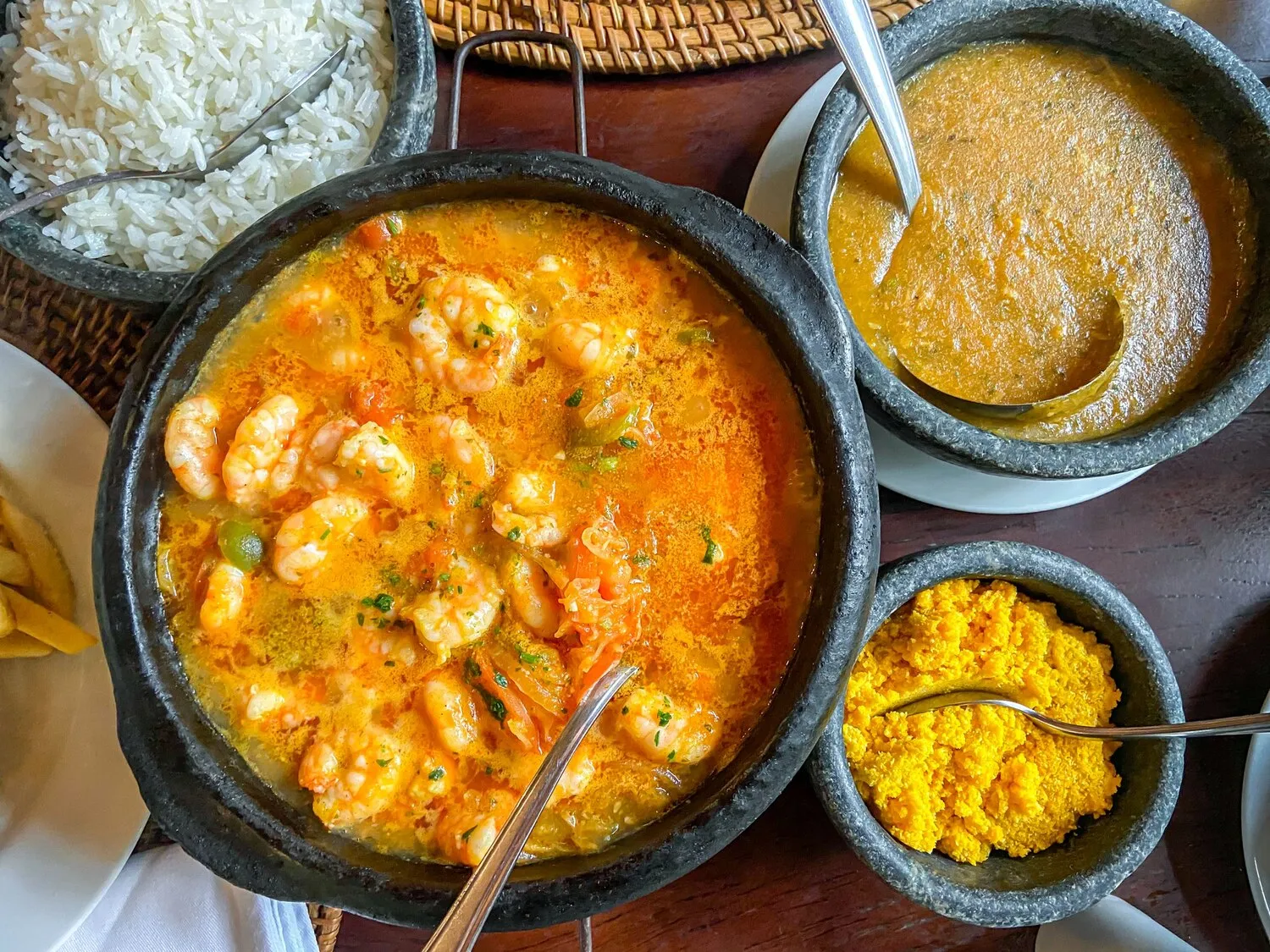

Moqueca Capixaba
A traditional Brazilian seafood stew, often with fish or shrimp, cooked in a clay pot with coconut milk and dendê oil.
Valori Nutrizionali
* Il % del Valore Giornaliero (VG) indica quanto un nutriente in una porzione di cibo contribuisce a una dieta giornaliera. 2.000 calorie al giorno sono utilizzate per i consigli nutrizionali generali.
Funzionalità Premium
Funzionalità Premium
Moqueca Capixaba reflects the rich culinary heritage of Espírito Santo, Brazil. Its origins lie in the blending of indigenous, African, and Portuguese cooking traditions. Indigenous Brazilians were the first to cook fish stews. African influences brought ingredients like dendê oil and coconut milk, while Portuguese colonists contributed ingredients and cooking techniques, creating the distinctive Moqueca Capixaba that is enjoyed today.
Funzionalità Premium
Moqueca Capixaba is more than just a dish; it's a cultural symbol of Espírito Santo. It represents the region's identity, history, and traditions, and is often enjoyed during special occasions and family gatherings.
Clay Pot Cooking
The traditional cooking method in a clay pot is crucial. The clay pot imparts a unique flavor and helps to maintain the heat evenly, resulting in a tender and flavorful stew. The dish is often served directly in the same pot it was cooked in, emphasizing its rustic and authentic character.
Regional Pride
Moqueca Capixaba is a source of immense regional pride for the people of Espírito Santo. It's fiercely defended as the 'true' Moqueca, distinct from its Bahian counterpart (Moqueca Baiana), which includes ingredients like dendê oil and coconut milk, which some consider to overpower the fish's delicate flavor.
Family Gatherings
Preparing and sharing Moqueca Capixaba is often a social event, involving family and friends. It's a dish that brings people together and strengthens community bonds.
Funzionalità Premium
Moqueca Capixaba is characterized by its rich, savory, and slightly sweet flavors derived from fresh seafood, aromatic vegetables, coconut milk, and the distinctive flavor of dendê oil.
The base flavor comes from the seafood, typically fish (like sea bass or grouper) or shrimp. Onions, tomatoes, and bell peppers provide a savory foundation, while cilantro and other herbs contribute freshness. Coconut milk adds a subtle sweetness and creaminess, and dendê oil (palm oil) lends a unique, slightly earthy and nutty flavor, along with a vibrant orange color. Lime juice is often added for brightness and acidity.
Funzionalità Premium
Freshness is Key
Use the freshest seafood available. The quality of the fish or shrimp directly impacts the final flavor of the dish. Look for seafood that is firm, smells fresh, and has bright, clear eyes.
Clay Pot Seasoning
If using a new clay pot, cure it by filling it with water and simmering it for several hours. This helps to prevent cracking during cooking and removes any earthy flavor from the clay.
Layer the Ingredients
Layer the ingredients in the clay pot for even cooking and maximum flavor infusion. Start with a layer of onions, then tomatoes, bell peppers, and herbs, followed by the seafood. Repeat the layers and finish with coconut milk and dendê oil.
Gentle Simmering
Cook the Moqueca Capixaba over low heat, simmering gently. Avoid boiling, as this can toughen the seafood. Allow the flavors to meld together gradually.
Funzionalità Premium
Esplora piatti e ristoranti aggiuntivi di Brazilian
Esplora BrazilianScopri i migliori ristoranti ed esperienze culinarie a Cabo Frio.
Esplora Cabo FrioScopri di più sulla cultura gastronomica, la scena dei ristoranti e il patrimonio culinario di Brazil.
Esplora Brazil