
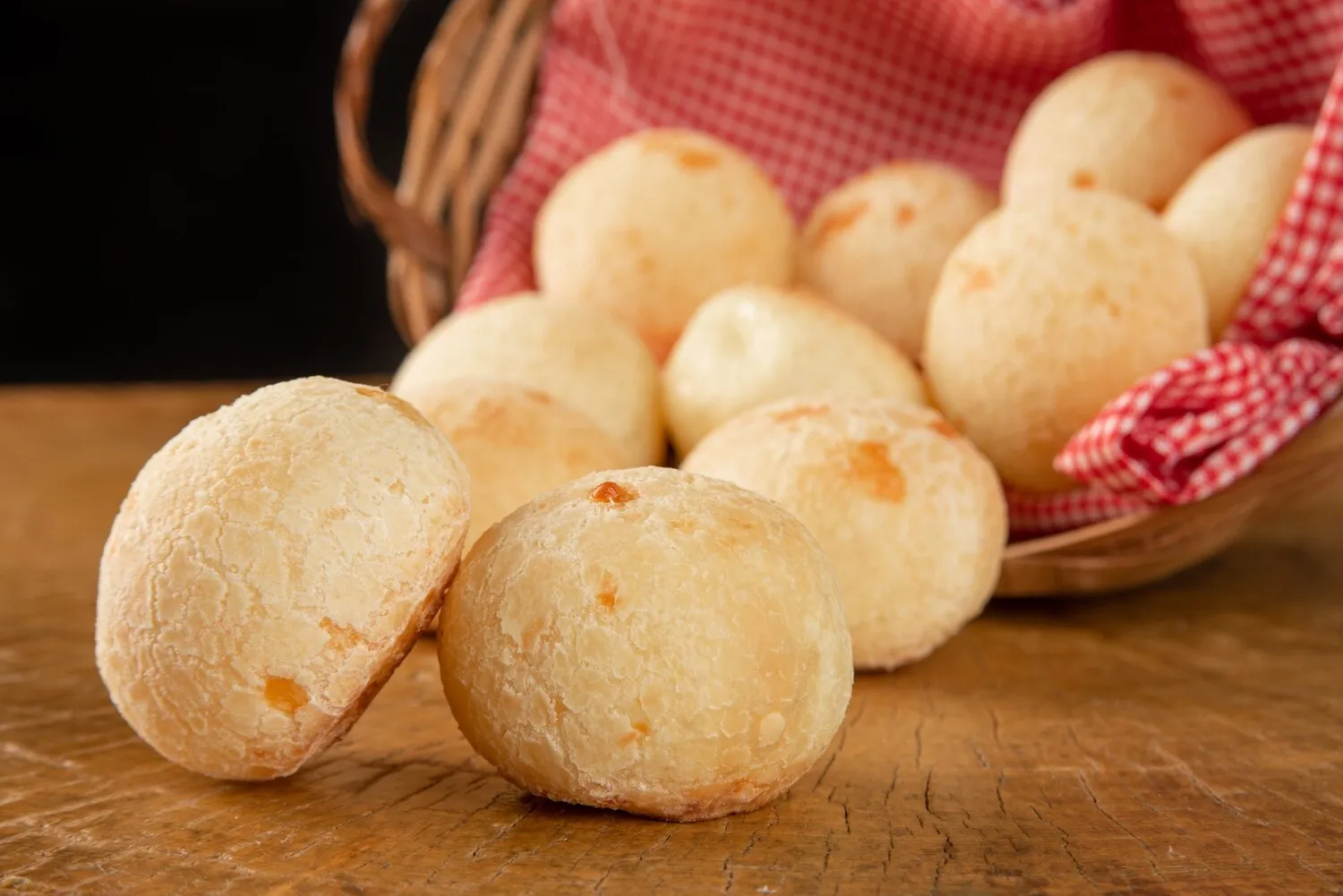

Pão de Queijo
Brazilian cheese bread, a common and well-liked item.
Valori Nutrizionali
* Il % del Valore Giornaliero (VG) indica quanto un nutriente in una porzione di cibo contribuisce a una dieta giornaliera. 2.000 calorie al giorno sono utilizzate per i consigli nutrizionali generali.
Funzionalità Premium
Café São Braz
Funzionalità Premium
Pão de Queijo's origins are somewhat debated, but it's generally believed to have emerged in the state of Minas Gerais during the 18th century. The scarcity of wheat flour, combined with the abundance of cassava starch (tapioca flour) and local cheeses, led to the creation of this unique cheese bread. Slave cooks in the kitchens of Minas Gerais' farms are often credited with its invention, experimenting with readily available ingredients.
Funzionalità Premium
Pão de Queijo holds a significant place in Brazilian culture, particularly as a beloved breakfast staple and snack.
Breakfast Staple
It is a very common breakfast food throughout Brazil, often enjoyed with coffee.
Snack & Social Gathering
Pão de Queijo is also frequently served as a snack or appetizer at parties and gatherings. Its small, bite-sized nature makes it perfect for sharing.
Regional Identity
In Minas Gerais, it is particularly important as part of the regional cuisine. It is a symbol of local pride and tradition.
Convenience Food
Frozen Pão de Queijo is widely available in Brazilian supermarkets, making it a quick and easy snack to prepare at home.
Funzionalità Premium
Pão de Queijo is characterized by its cheesy, slightly tangy, and chewy flavor profile.
The dominant flavor is undoubtedly cheese, typically a blend of Minas cheeses, which contribute a mild tanginess and creamy texture. The tapioca flour lends a subtle earthy flavor and, most importantly, its signature chewy texture. The addition of oil (often vegetable or sunflower) adds richness and helps with browning. Salt is, of course, essential for balancing the flavors. Depending on the recipe, milk or water contributes to the dough's consistency. The overall experience is a harmonious blend of savory, cheesy, and slightly sweet notes, with a delightful textural contrast between the crispy exterior and the soft, chewy interior.
Funzionalità Premium
Tapioca Flour Type
Use sour tapioca starch (polvilho azedo) for a chewier texture and a more pronounced flavor, or sweet tapioca starch (polvilho doce) for a milder flavor and a slightly less chewy texture. A blend of both is also common.
Cheese Quality
The quality of the cheese significantly impacts the flavor. Use good quality Minas cheeses or a blend of cheeses like mozzarella, parmesan, and provolone if Minas cheese is unavailable. Experiment with different cheese combinations to find your preferred flavor profile.
Dough Consistency
The dough should be thick and slightly sticky. If it's too dry, add a little more milk or water. If it's too wet, add a bit more tapioca flour. The consistency will influence the final texture of the bread.
Baking Temperature
Bake at a high temperature (around 375-400°F / 190-200°C) to ensure a crispy exterior and a soft interior. The baking time may vary depending on the size of the bread and the oven, so keep a close watch.
Freezing
Pão de Queijo dough can be frozen for later use. Simply shape the dough into balls and freeze them individually. Bake directly from frozen, adding a few extra minutes to the baking time.
Funzionalità Premium
Esplora piatti e ristoranti aggiuntivi di Handy food
Esplora Handy foodScopri i migliori ristoranti ed esperienze culinarie a Campina Grande.
Esplora Campina GrandeScopri di più sulla cultura gastronomica, la scena dei ristoranti e il patrimonio culinario di Brazil.
Esplora Brazil