
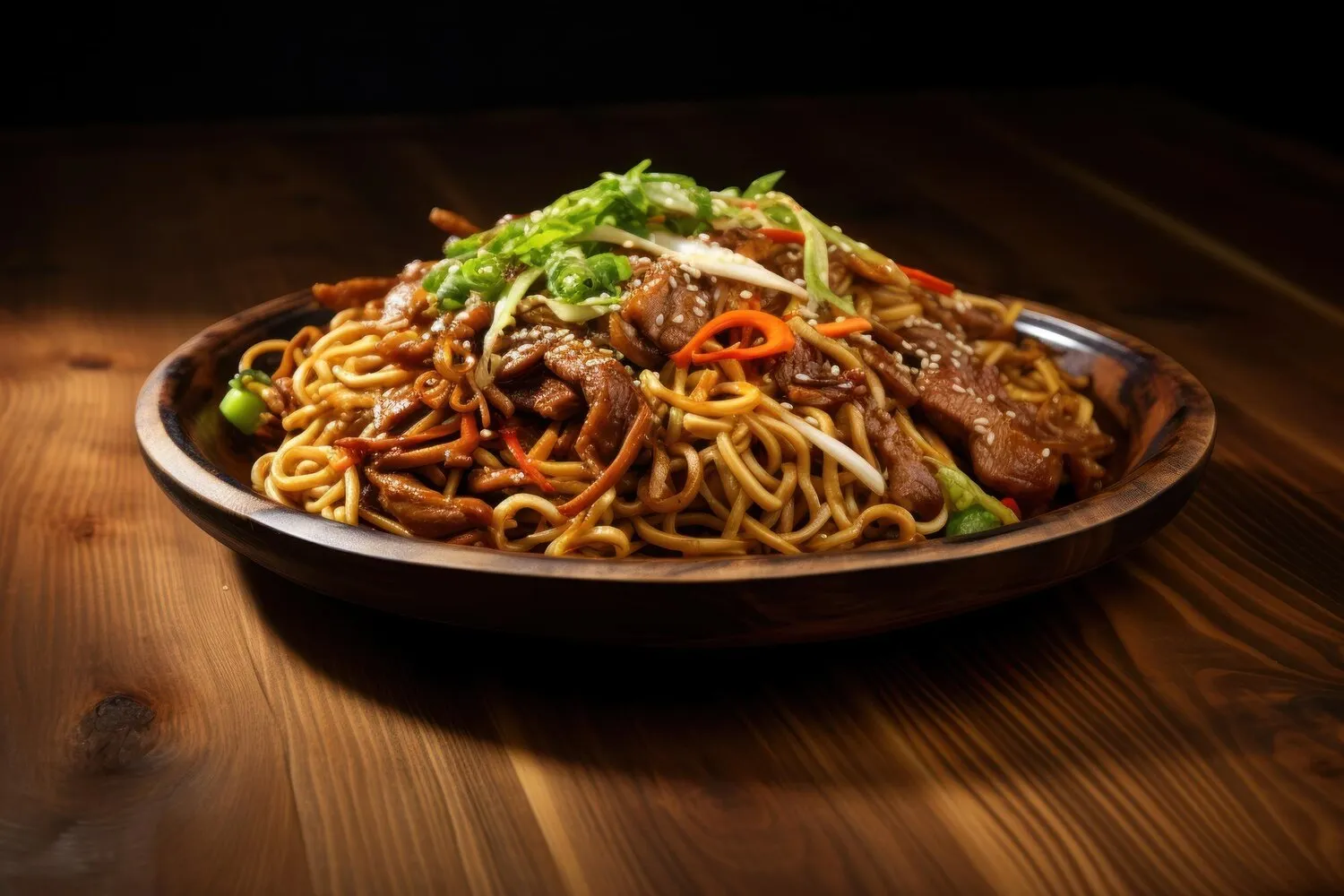

Yakisoba
Stir-fried noodles with vegetables and meat (beef, chicken, or shrimp).
Valori Nutrizionali
* Il % del Valore Giornaliero (VG) indica quanto un nutriente in una porzione di cibo contribuisce a una dieta giornaliera. 2.000 calorie al giorno sono utilizzate per i consigli nutrizionali generali.
Funzionalità Premium
Funzionalità Premium
Yakisoba, meaning 'fried noodles', emerged in Japan in the early 20th century, likely influenced by Chinese stir-fried noodle dishes. It gained popularity as a cheap and filling food option, particularly after World War II when wheat flour became more readily available. Over time, it has evolved into a staple of Japanese street food and casual dining.
Funzionalità Premium
Yakisoba is deeply ingrained in Japanese culture as a comfort food, a festival favorite, and a common dish served at home. Its accessibility and versatility have made it a beloved staple across generations.
Street Food Staple
Yakisoba is a ubiquitous street food, often sold at festivals (matsuri), summer events, and roadside stalls. It's quick, affordable, and satisfying, making it a popular choice for on-the-go meals.
Okonomiyaki Companion
In some regions, particularly around Hiroshima, yakisoba is a key ingredient in okonomiyaki, a savory pancake. It's layered within the okonomiyaki to add texture and flavor.
Home Cooking
Yakisoba is easy to prepare at home with readily available ingredients, making it a common weeknight meal. Families often have their own variations and preferred ingredients.
Regional Variations
Different regions of Japan boast unique yakisoba variations, often featuring locally sourced ingredients or distinct sauces. For example, Yokote yakisoba uses a sweet and savory sauce with a fried egg on top, while Fujinomiya yakisoba features a unique noodle and pork lard.
Funzionalità Premium
Yakisoba is characterized by a savory, slightly sweet, and tangy flavor profile, achieved through a combination of soy sauce-based sauce, umami-rich ingredients, and the subtle char from stir-frying.
The primary flavor comes from the yakisoba sauce, typically a blend of soy sauce, Worcestershire sauce, oyster sauce, ketchup, and other seasonings, resulting in a complex umami taste. The stir-frying process caramelizes the sauce and ingredients, adding depth and smoky notes. The dish features wheat noodles (yakisoba noodles), thinly sliced meat (often pork, but beef, chicken, or shrimp are also used), shredded cabbage, onions, carrots, and other vegetables like bean sprouts. Benishoga (pickled ginger), aonori (dried seaweed flakes), and katsuobushi (dried bonito flakes) are common toppings that add brightness, umami, and textural contrast.
Funzionalità Premium
High Heat is Key
Use a wok or large frying pan over high heat to ensure the ingredients cook quickly and develop a good char. This prevents the vegetables from becoming soggy.
Don't Overcrowd the Pan
Cook the ingredients in batches to avoid overcrowding the pan, which can lower the temperature and lead to steaming instead of frying. This ensures even cooking and browning.
Noodle Preparation
If using refrigerated yakisoba noodles, loosen them before adding them to the pan. You can steam or microwave them briefly to make them easier to separate. Fresh noodles are often preferred for their texture.
Sauce Timing
Add the yakisoba sauce towards the end of the cooking process to prevent it from burning or becoming too thick. Toss the noodles and ingredients thoroughly to coat evenly.
Experiment with Toppings
Don't be afraid to experiment with different toppings like benishoga (pickled ginger), aonori (dried seaweed flakes), katsuobushi (dried bonito flakes), Japanese mayonnaise, or even a fried egg for added flavor and texture.
Funzionalità Premium
Esplora piatti e ristoranti aggiuntivi di Noodle Dish
Esplora Noodle DishScopri i migliori ristoranti ed esperienze culinarie a Campo Grande.
Esplora Campo GrandeScopri di più sulla cultura gastronomica, la scena dei ristoranti e il patrimonio culinario di Brazil.
Esplora Brazil