
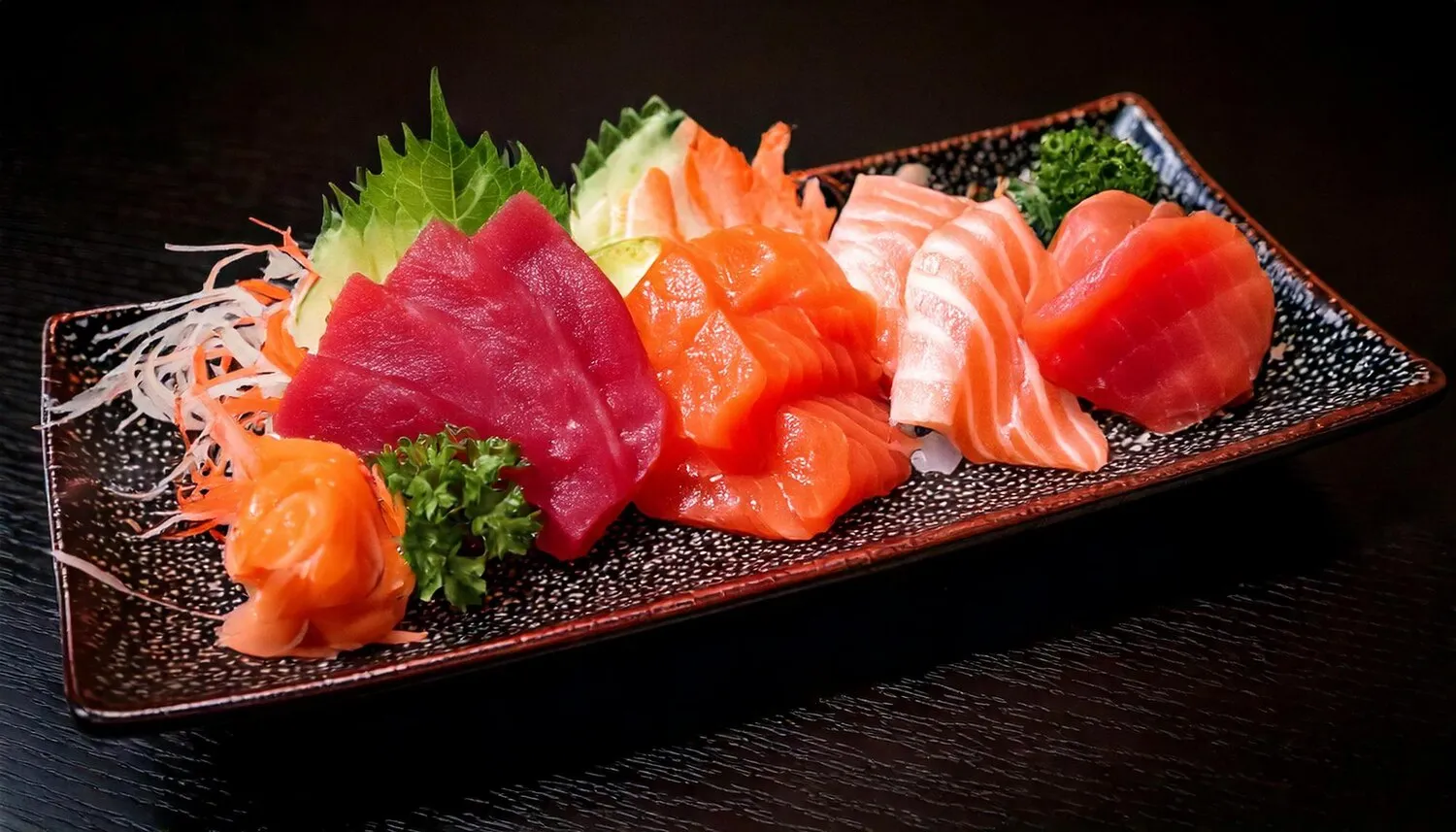

Sashimi
Thinly sliced raw fish served without rice.
Valori Nutrizionali
* Il % del Valore Giornaliero (VG) indica quanto un nutriente in una porzione di cibo contribuisce a una dieta giornaliera. 2.000 calorie al giorno sono utilizzate per i consigli nutrizionali generali.
Funzionalità Premium
Imakay
Funzionalità Premium
The origins of sashimi can be traced back to ancient Japan, where the practice of eating raw fish emerged as a way to appreciate the natural flavors and textures of seafood. Initially, it was reserved for the elite due to the challenges of preserving fish and the association with purity and freshness. Over time, as preservation techniques improved and access to seafood broadened, sashimi became more widely available.
Funzionalità Premium
Sashimi holds significant cultural importance in Japan, representing a reverence for nature, a commitment to culinary artistry, and a celebration of freshness and simplicity. It is often served as a centerpiece of formal meals and symbolizes respect for both the ingredients and the guests.
Ingredient Quality
The quality of the fish is paramount. Chefs spend years learning to select the best cuts, understanding seasonality, and knowing which suppliers provide the freshest and most sustainable seafood.
Knife Skills
The art of slicing sashimi is highly regarded. Precise cuts are essential for both aesthetics and taste, as the texture and surface area affect the eating experience. Different knives are used for different types of fish and specific cuts.
Presentation
Presentation is an integral part of the sashimi experience. The arrangement of the slices, the choice of garnish, and the selection of serving dishes all contribute to the overall aesthetic appeal.
Funzionalità Premium
Sashimi offers a delicate and nuanced flavor profile, emphasizing the natural taste of the fish. The freshness and quality of the ingredients are paramount, allowing subtle variations in texture and sweetness to shine through.
The flavor of sashimi varies greatly depending on the type of fish. Tuna (maguro) offers a rich, meaty flavor, while salmon (sake) provides a buttery and slightly sweet taste. Yellowtail (hamachi) is known for its clean, crisp flavor, and sea bream (tai) is appreciated for its delicate and refined taste. Common accompaniments include soy sauce, wasabi, and ginger, which enhance the flavors and provide contrasting elements. The texture ranges from firm and chewy to melt-in-your-mouth tenderness, depending on the cut and type of fish.
Funzionalità Premium
Soy Sauce Usage
Avoid drowning the sashimi in soy sauce. Dip only the edge of the fish, not the entire piece, to avoid overpowering the delicate flavor. High-quality soy sauce with lower sodium is preferred.
Wasabi Application
Apply a small amount of wasabi directly to the fish, not to the soy sauce. This prevents the wasabi from clumping and allows you to control the level of spiciness.
Eating Order
It's generally recommended to start with lighter-flavored fish and gradually move towards richer, more oily varieties. This allows you to fully appreciate the subtle differences in flavor.
Funzionalità Premium
Esplora piatti e ristoranti aggiuntivi di Sushi
Esplora SushiScopri i migliori ristoranti ed esperienze culinarie a Campo Grande.
Esplora Campo GrandeScopri di più sulla cultura gastronomica, la scena dei ristoranti e il patrimonio culinario di Brazil.
Esplora Brazil