
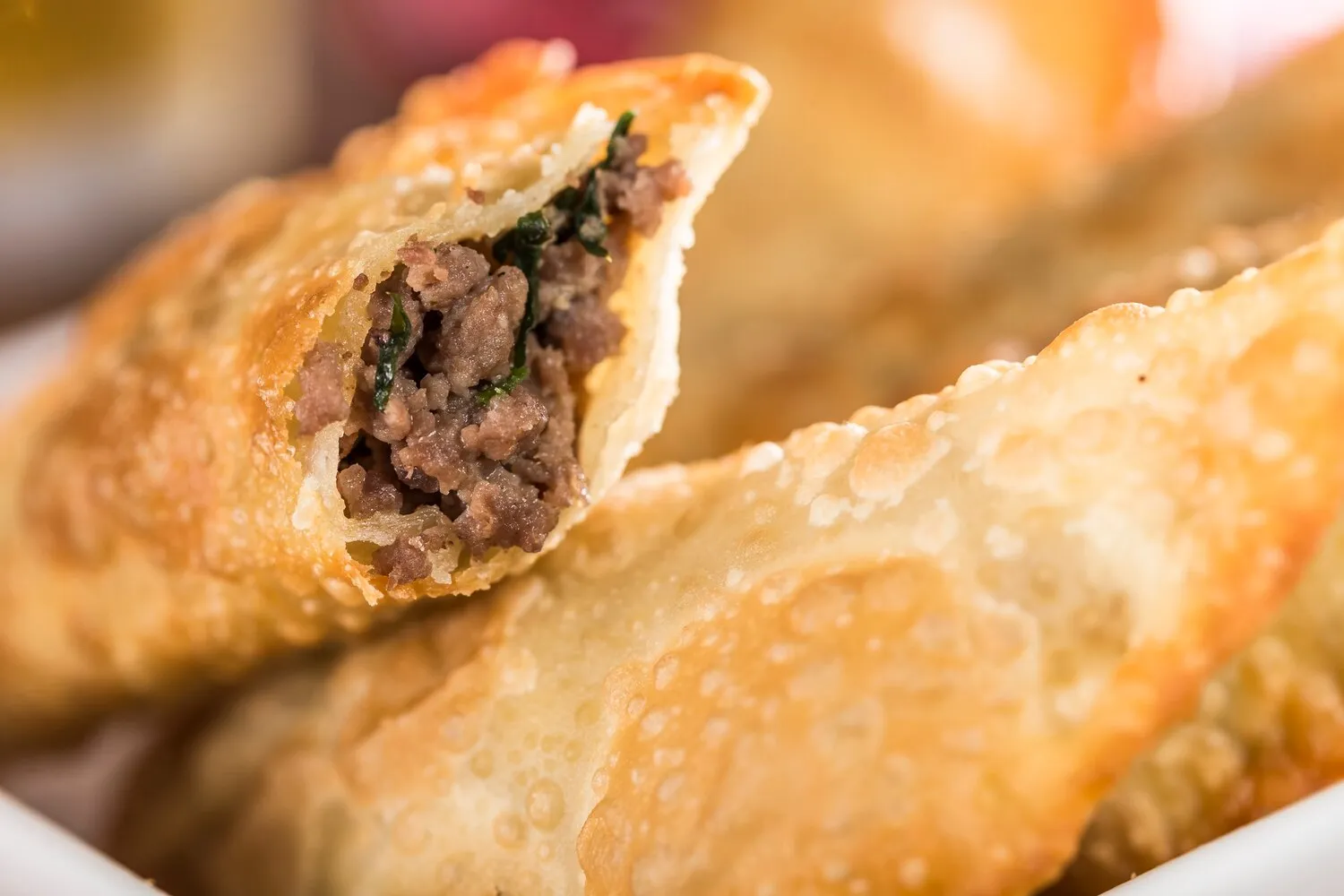

Pastel
A savory fried pastry filled with various ingredients such as cheese, meat, or vegetables.
Valori Nutrizionali
* Il % del Valore Giornaliero (VG) indica quanto un nutriente in una porzione di cibo contribuisce a una dieta giornaliera. 2.000 calorie al giorno sono utilizzate per i consigli nutrizionali generali.
Funzionalità Premium
Picadinho Lanches
Funzionalità Premium
The pastel's origins are believed to trace back to Chinese immigrants who adapted fried wontons to local tastes when they arrived in Brazil during the 20th century. Japanese immigrants also played a significant role in popularizing the pastel, often selling them at street markets to make a living. The dish gained widespread popularity during World War II, partly due to the limited availability of other food options.
Funzionalità Premium
Pastels are deeply ingrained in Brazilian street food culture and are a popular and affordable snack enjoyed by people from all walks of life.
Street Food Staple
Pastels are a quintessential street food found at markets, fairs, and lanchonetes (snack bars) across Brazil. It's almost impossible to visit a Brazilian market without encountering a pastel stand.
Fair and Market Food
They are particularly popular at open-air markets (feiras), where vendors often fry them fresh to order. The aroma of frying pastel is part of the feira experience.
Social Gathering Food
Pastels are often enjoyed with a cold drink, like sugarcane juice (caldo de cana) or beer, making them a popular choice for casual social gatherings.
Funzionalità Premium
Pastel flavors are primarily savory, with a satisfying combination of crispy pastry and flavorful fillings.
The defining flavor comes from the deep-fried, thin pastry shell, which offers a delightful crunch. Fillings vary widely but typically include ground beef (carne), cheese (queijo), heart of palm (palmito), chicken (frango), or pizza flavors (presunto, queijo, tomate, or ham, cheese and tomato). Often, a vinegar-based hot sauce is added to give a spicy kick. The exact taste depends heavily on the specific filling used.
Funzionalità Premium
Dough Consistency
The dough should be thin and elastic enough to be stretched without tearing, but not so thin that it becomes soggy when fried. A slightly acidic element like cachaça or vinegar is sometimes added to the dough to improve its texture and prevent excessive oil absorption.
Filling Moisture
Avoid overly wet fillings, as they can cause the pastry to become soggy and burst during frying. Drain excess liquid from the fillings before using them.
Oil Temperature
Maintain a consistent oil temperature (around 180°C or 350°F) for crispy, golden-brown pastels. Too low and the pastel will be greasy; too high and it will burn before the filling is heated through.
Serving Immediately
Pastels are best enjoyed immediately after frying while they are still hot and crispy. Letting them sit for too long will cause them to lose their texture.
Funzionalità Premium
Esplora piatti e ristoranti aggiuntivi di Pastry
Esplora PastryScopri i migliori ristoranti ed esperienze culinarie a Campo Grande.
Esplora Campo GrandeScopri di più sulla cultura gastronomica, la scena dei ristoranti e il patrimonio culinario di Brazil.
Esplora Brazil