
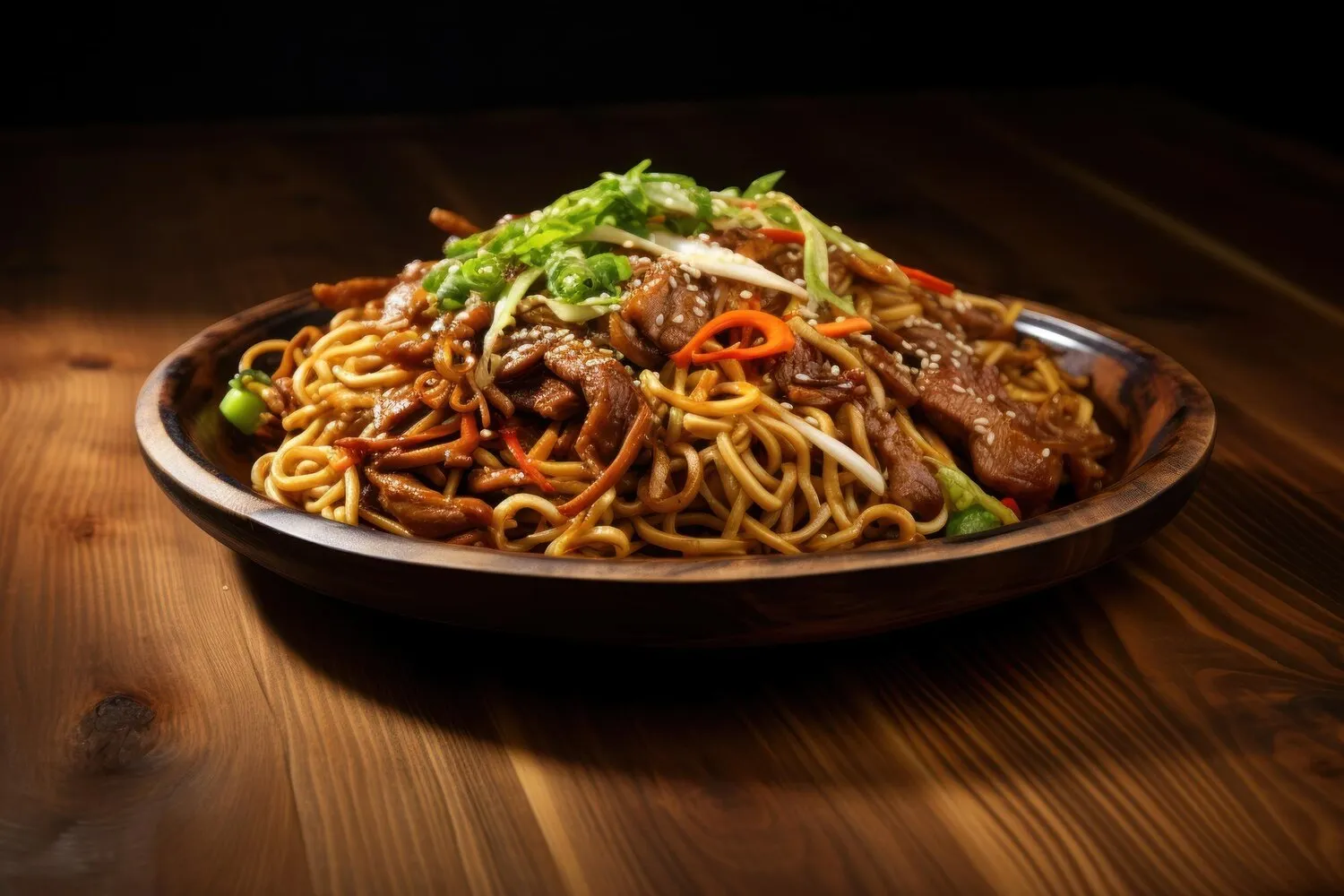

Yakisoba
Stir-fried noodles with vegetables and meat (usually beef or chicken).
Valori Nutrizionali
* Il % del Valore Giornaliero (VG) indica quanto un nutriente in una porzione di cibo contribuisce a una dieta giornaliera. 2.000 calorie al giorno sono utilizzate per i consigli nutrizionali generali.
Funzionalità Premium
Taberna Temakeria
Funzionalità Premium
Yakisoba's origins are somewhat murky, with some tracing it back to Chinese stir-fried noodles. However, the modern iteration as a distinctly Japanese dish evolved in the early 20th century, likely as a street food or festival staple. The use of Worcestershire sauce as a key flavoring is a notable Western influence.
Funzionalità Premium
Yakisoba is a popular and accessible dish in Japanese culture, often associated with festivals, street food, and casual dining. It's considered a comfort food and is easily adaptable to individual preferences.
Festival Food
Yakisoba is a ubiquitous sight at Japanese festivals (matsuri), sold from food stalls alongside other popular treats like takoyaki and okonomiyaki. It's a quick, satisfying, and affordable meal for festival-goers.
Street Food Staple
Found in many street food stalls and casual restaurants, yakisoba offers a quick and tasty meal option for those on the go.
Home Cooking
Yakisoba is a common dish prepared at home, offering versatility and allowing for customization with different ingredients and sauces.
Funzionalità Premium
Yakisoba is characterized by its savory, slightly sweet, and tangy flavor profile. The Worcestershire sauce provides a complex umami base, complemented by the freshness of vegetables and the richness of the meat.
The primary flavor driver is the yakisoba sauce, which is typically a blend of Worcestershire sauce, soy sauce, oyster sauce, ketchup, and sometimes sugar or mirin. This creates a complex umami flavor. The stir-frying process imparts a slightly smoky flavor. The vegetables contribute freshness and texture. The choice of meat (often pork, chicken, or beef) adds richness and protein. Pickled ginger (beni shoga) is a common topping, offering a sharp, refreshing contrast to the savory noodles.
Funzionalità Premium
Noodle Preparation
Loosen the noodles before cooking to prevent clumping during stir-frying. Some cooks recommend briefly boiling or steaming the noodles before adding them to the wok.
High Heat Stir-Frying
Stir-fry the ingredients over high heat to achieve a slightly charred, smoky flavor. This also helps to prevent the noodles from becoming soggy.
Sauce Application
Add the sauce towards the end of the cooking process, allowing it to coat the noodles evenly and caramelize slightly. Avoid adding too much sauce at once, as this can make the noodles too salty.
Ingredient Preparation
Cut the vegetables and meat into uniform sizes to ensure even cooking. Have all your ingredients prepped and ready to go before you start stir-frying, as the cooking process is relatively quick.
Funzionalità Premium
Esplora piatti e ristoranti aggiuntivi di Noodles
Esplora NoodlesScopri i migliori ristoranti ed esperienze culinarie a Chapecó.
Esplora ChapecóScopri di più sulla cultura gastronomica, la scena dei ristoranti e il patrimonio culinario di Brazil.
Esplora Brazil