
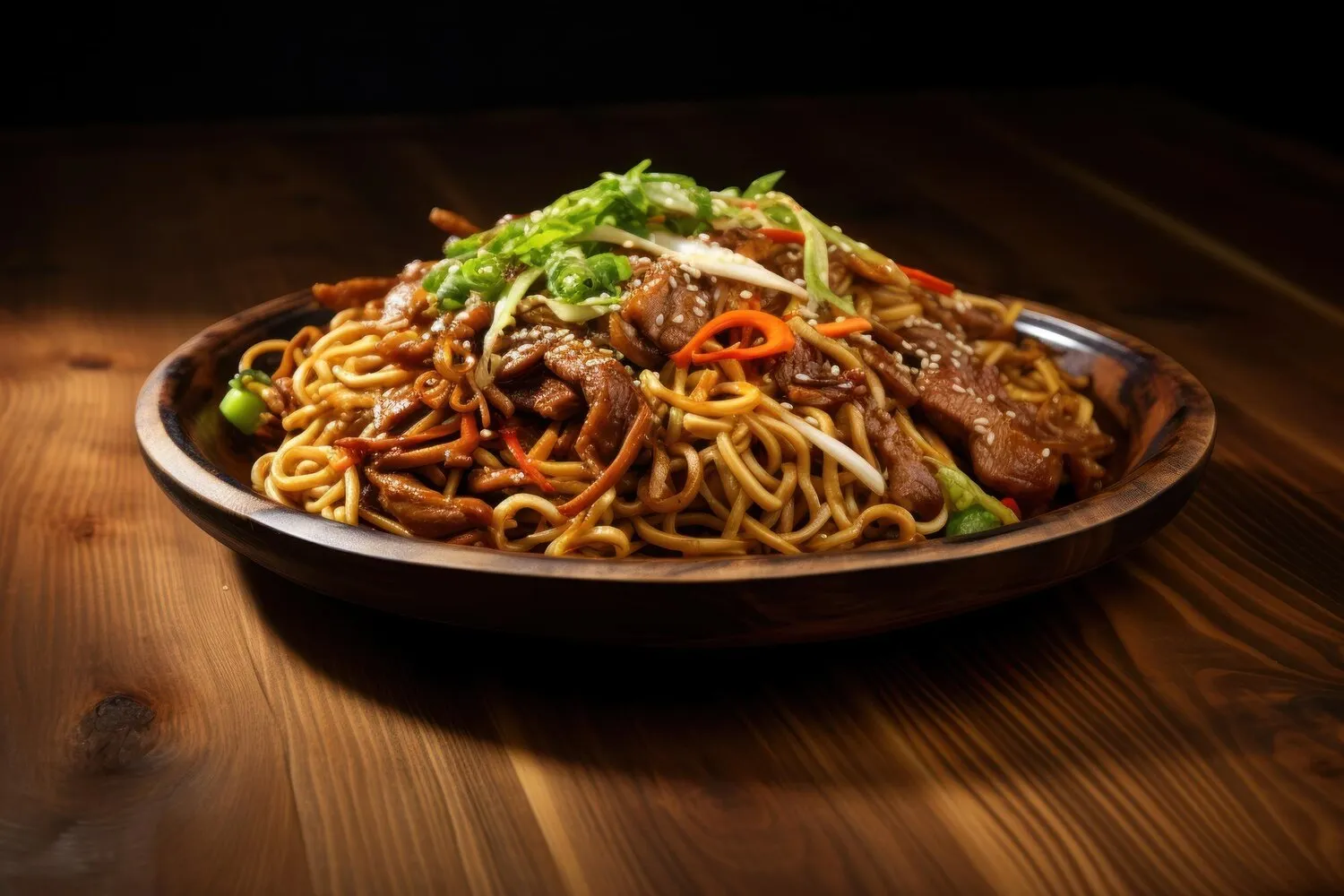

Yakisoba
Traditional stir-fried noodles with meat and vegetables.
Valori Nutrizionali
* Il % del Valore Giornaliero (VG) indica quanto un nutriente in una porzione di cibo contribuisce a una dieta giornaliera. 2.000 calorie al giorno sono utilizzate per i consigli nutrizionali generali.
Funzionalità Premium
Funzionalità Premium
Yakisoba's history is intertwined with the introduction of Chinese noodles to Japan and the subsequent adaptation of stir-frying techniques. It evolved as a popular and affordable dish, particularly after World War II, as wheat flour became more readily available.
Funzionalità Premium
Yakisoba is deeply ingrained in Japanese popular culture, often associated with festivals, street food, and casual dining experiences.
Festival Food
Yakisoba is a staple at Japanese festivals (matsuri), where vendors cook large portions on teppanyaki grills, serving it in paper trays to hungry attendees.
Street Food Staple
Similar to festivals, yakisoba is a popular street food item found at food stalls and mobile vendors throughout Japan.
Everyday Meal
Yakisoba is also a common dish prepared at home, often served as a quick and satisfying lunch or dinner. Pre-made yakisoba noodle kits and sauces are readily available in supermarkets.
Pan-Cultural Dish
In some instances Yakisoba is served on a slice of white bread as an everyday cheap snack called 'Yakisoba-pan'.
Funzionalità Premium
Yakisoba boasts a savory and slightly sweet flavor profile, balanced by the umami richness of the Worcestershire-based sauce and the freshness of the vegetables.
The primary flavor comes from the yakisoba sauce, typically a blend of Worcestershire sauce, soy sauce, oyster sauce, ketchup, and other seasonings. This sauce coats the noodles, vegetables (such as cabbage, carrots, and onions), and protein (usually pork, but sometimes chicken or seafood) creating a deeply savory and slightly tangy taste. Other contributing flavors include the smoky char from the stir-frying process, the sweetness of mirin (sweet rice wine) often added to the sauce, and the optional addition of ingredients like aonori (dried seaweed flakes), beni shoga (pickled ginger), and katsuobushi (dried bonito flakes).
Funzionalità Premium
Noodle Preparation
Loosen the yakisoba noodles before stir-frying to prevent clumping. Blanching them briefly in hot water can help. Adding a bit of oil to the noodles also assists in separation.
Stir-Fry Technique
Stir-fry the ingredients in batches, starting with the protein and vegetables before adding the noodles and sauce. This ensures even cooking and prevents overcrowding the pan.
Sauce Consistency
Adjust the amount of yakisoba sauce according to your preference. Adding a small amount of water or sake can help thin the sauce if it's too thick.
High Heat is Key
Use a high heat when stir-frying to achieve that signature smoky flavor. A wok is the ideal pan, but a large skillet will work too.
Don't Overcook the Noodles
Be careful not to overcook the noodles, as they can become mushy. Cook them just until they're heated through and coated in sauce.
Funzionalità Premium
Esplora piatti e ristoranti aggiuntivi di Asian
Esplora AsianScopri i migliori ristoranti ed esperienze culinarie a Chapecó.
Esplora ChapecóScopri di più sulla cultura gastronomica, la scena dei ristoranti e il patrimonio culinario di Brazil.
Esplora Brazil