
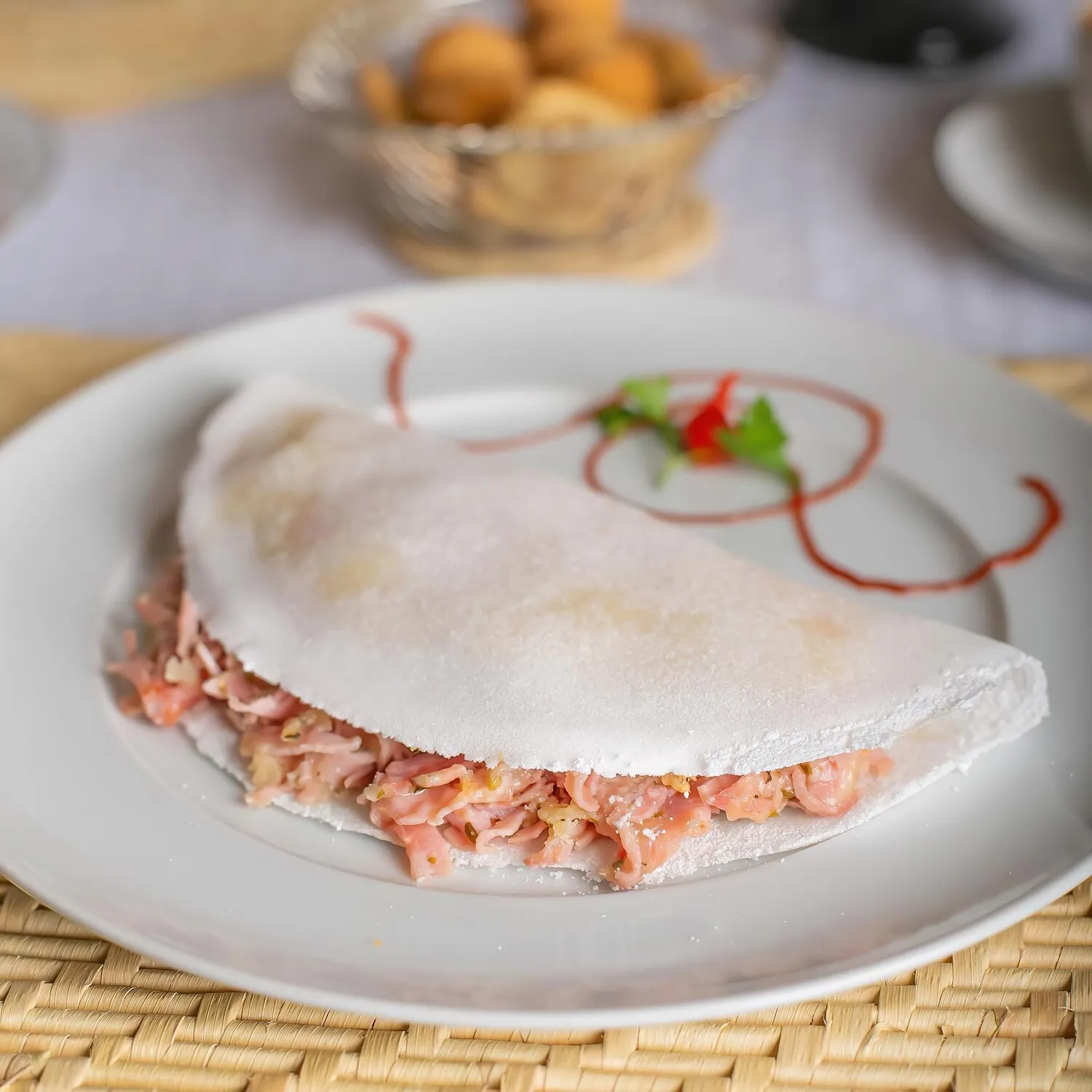

Tapioca
Tapioca with various fillings (sweet and savory)
Valori Nutrizionali
* Il % del Valore Giornaliero (VG) indica quanto un nutriente in una porzione di cibo contribuisce a una dieta giornaliera. 2.000 calorie al giorno sono utilizzate per i consigli nutrizionali generali.
Funzionalità Premium
Funzionalità Premium
Tapioca's history is deeply intertwined with the indigenous peoples of Brazil, who cultivated the cassava plant (from which tapioca is derived) long before European colonization. Portuguese colonizers adopted tapioca as a food source, and it gradually spread throughout Brazil and beyond, evolving into various culinary forms.
Funzionalità Premium
Tapioca holds a significant place in Brazilian cuisine and culture, often consumed as a quick and easy breakfast, snack, or dessert. It's also a common street food, readily available from vendors across the country.
Regional Variations
Different regions of Brazil have their own unique ways of preparing and enjoying tapioca. In some areas, it's more common to find sweet fillings, while others favor savory options. Ingredients also vary based on local availability.
Street Food Staple
Tapioca crepes (beijus) are a popular street food, cooked on a griddle and filled with a variety of ingredients. Street vendors often offer a wide range of sweet and savory options, catering to diverse tastes.
Breakfast and Snack Food
Tapioca is frequently eaten as a quick and convenient breakfast or snack, providing a source of carbohydrates and energy. It's a readily accessible and affordable food option for many Brazilians.
Gluten-Free Alternative
Tapioca is naturally gluten-free, making it a popular choice for individuals with celiac disease or gluten sensitivities.
Funzionalità Premium
Tapioca's inherent flavor is very mild, making it a versatile canvas for both sweet and savory flavors. The flavor profile is heavily influenced by the fillings and accompanying ingredients.
Plain tapioca pearls or crepes have a slightly starchy, almost neutral taste. Sweet tapioca dishes often feature flavors like coconut, condensed milk, chocolate, fruits (such as strawberries, bananas, or mangoes), and spices like cinnamon or cloves. Savory tapioca preparations can incorporate cheese, ham, chicken, vegetables (tomatoes, onions, peppers), herbs (cilantro, parsley), and spices such as garlic, paprika, or chili. The final flavor depends almost entirely on the chef's imagination and the combination of fillings.
Funzionalità Premium
Hydration
Proper hydration is key for tapioca pearls. Follow package instructions for soaking times, as under-hydrated pearls will be hard and chewy, while over-hydrated pearls will be mushy.
Crepe Consistency
For tapioca crepes, use tapioca starch (goma de tapioca hidratada) that is lightly moistened. The starch should be damp but not wet, forming a slightly crumbly texture that will bind together when cooked on a hot griddle.
Heat Control
Cook tapioca over medium heat to prevent burning. The goal is to gently cook the tapioca until it becomes translucent and slightly sticky, allowing the filling to melt and bind the crepe together.
Filling Placement
Add fillings to the center of the tapioca crepe while it's still on the griddle. This allows the heat to melt cheeses or soften other ingredients, creating a cohesive and flavorful filling.
Tapioca Pearl Rinsing
After cooking tapioca pearls, rinse them under cold water to stop the cooking process and prevent them from sticking together. This will result in a smoother, more pleasant texture.
Funzionalità Premium
Esplora piatti e ristoranti aggiuntivi di Snack/Main Course
Esplora Snack/Main CourseScopri i migliori ristoranti ed esperienze culinarie a Itaboraí.
Esplora ItaboraíScopri di più sulla cultura gastronomica, la scena dei ristoranti e il patrimonio culinario di Brazil.
Esplora Brazil