
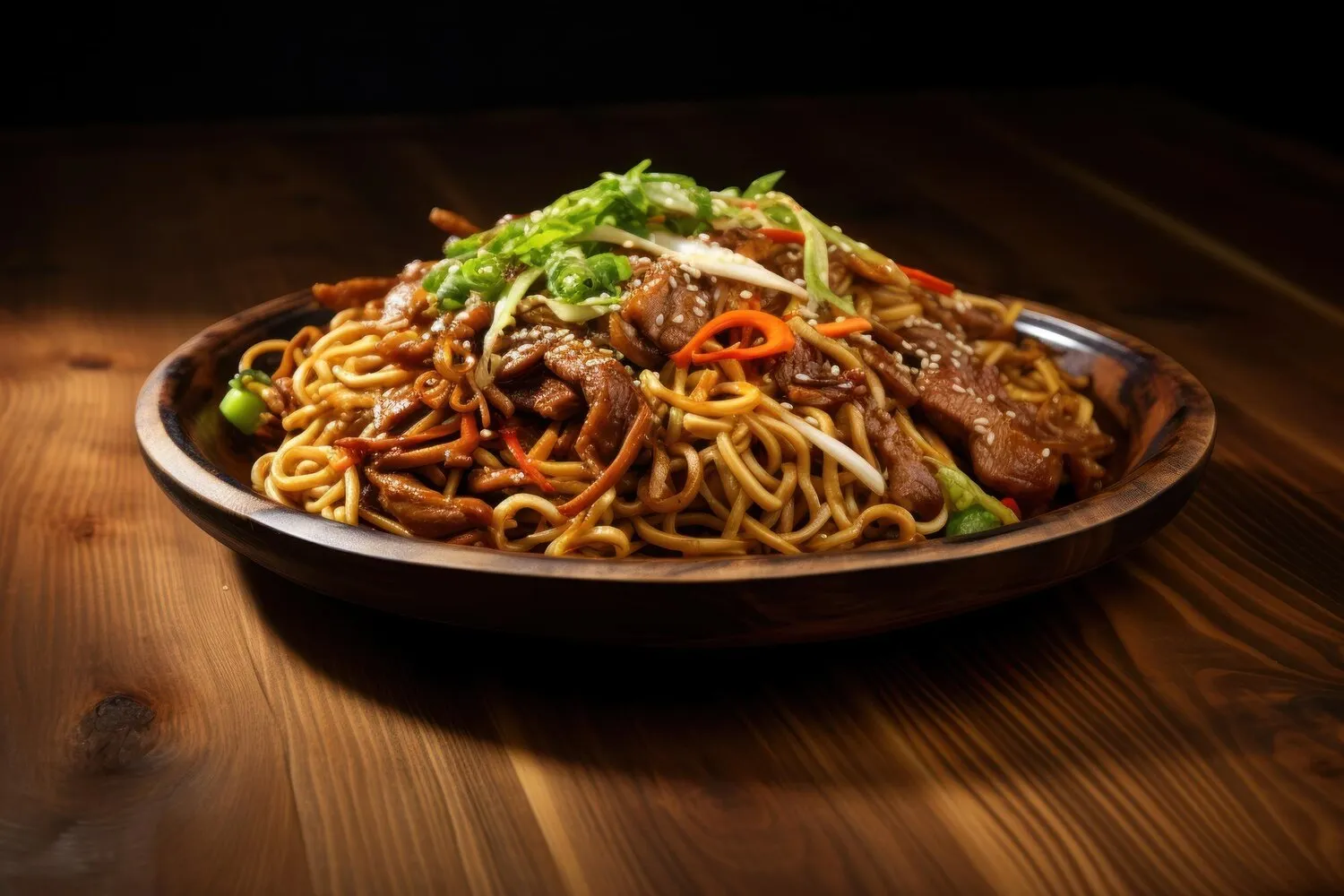

Yakisoba
Fried noodles with seafood and vegetables.
Valori Nutrizionali
* Il % del Valore Giornaliero (VG) indica quanto un nutriente in una porzione di cibo contribuisce a una dieta giornaliera. 2.000 calorie al giorno sono utilizzate per i consigli nutrizionali generali.
Funzionalità Premium
Higuchi Sea Food
Funzionalità Premium
Yakisoba's origins can be traced back to the post-World War II era in Japan, a time of scarcity and resourcefulness. The dish likely evolved as a cheap and filling way to use readily available ingredients, taking inspiration from Chinese stir-fried noodle dishes.
Funzionalità Premium
Yakisoba is a popular and accessible dish in Japan, widely enjoyed at festivals, street food stalls, and casual restaurants. It represents a fusion of culinary influences and a reflection of Japan's post-war economic recovery and evolving food culture.
Street Food Staple
Yakisoba is a common sight at Japanese festivals (matsuri) and street food vendors. It's considered an easy-to-eat and affordable option, making it a favorite among festival-goers.
Teppanyaki Connection
Yakisoba is frequently prepared on a teppan (griddle), especially in restaurants specializing in teppanyaki cuisine. This method allows for high-heat cooking and flavorful caramelization.
Family Meal
Yakisoba is also often prepared at home as a quick and satisfying family meal. The recipe can be easily adapted to include whatever meats and vegetables are available.
Funzionalità Premium
Yakisoba is a savory and umami-rich dish with a slightly sweet and tangy sauce. The flavors are a harmonious blend of soy sauce, Worcestershire sauce (or a Yakisoba sauce equivalent), and the inherent tastes of the various meats, seafood, and vegetables included.
The primary flavor profile is savory, stemming from the soy sauce base and the meaty or seafood components. The yakisoba sauce, often containing Worcestershire sauce, oyster sauce, ketchup, and other ingredients, adds a distinctive sweetness and tanginess. Vegetables like cabbage, carrots, and onions contribute a mild sweetness and freshness. Added toppings like aonori (dried seaweed flakes) and beni shoga (pickled ginger) contribute umami and a tangy, refreshing counterpoint to the richer flavors.
Funzionalità Premium
Noodle Choice
Use pre-cooked yakisoba noodles, often sold in packages. If unavailable, try fresh or dried ramen noodles that have been boiled and cooled. Avoid using Italian pasta as it won't have the correct texture.
Sauce Consistency
Adjust the amount of yakisoba sauce based on your taste preference and the moisture content of the ingredients. A thicker sauce will cling to the noodles better.
Cooking Order
Cook the meat/seafood first until browned, then add the vegetables in order of hardness (e.g., carrots before cabbage). This ensures that everything cooks evenly.
High Heat
Use high heat to stir-fry the yakisoba. This helps to prevent the noodles from becoming soggy and adds a slight char to the vegetables and meat.
Funzionalità Premium
Esplora piatti e ristoranti aggiuntivi di Asian
Esplora AsianScopri i migliori ristoranti ed esperienze culinarie a Mogi das Cruzes.
Esplora Mogi das CruzesScopri di più sulla cultura gastronomica, la scena dei ristoranti e il patrimonio culinario di Brazil.
Esplora Brazil