
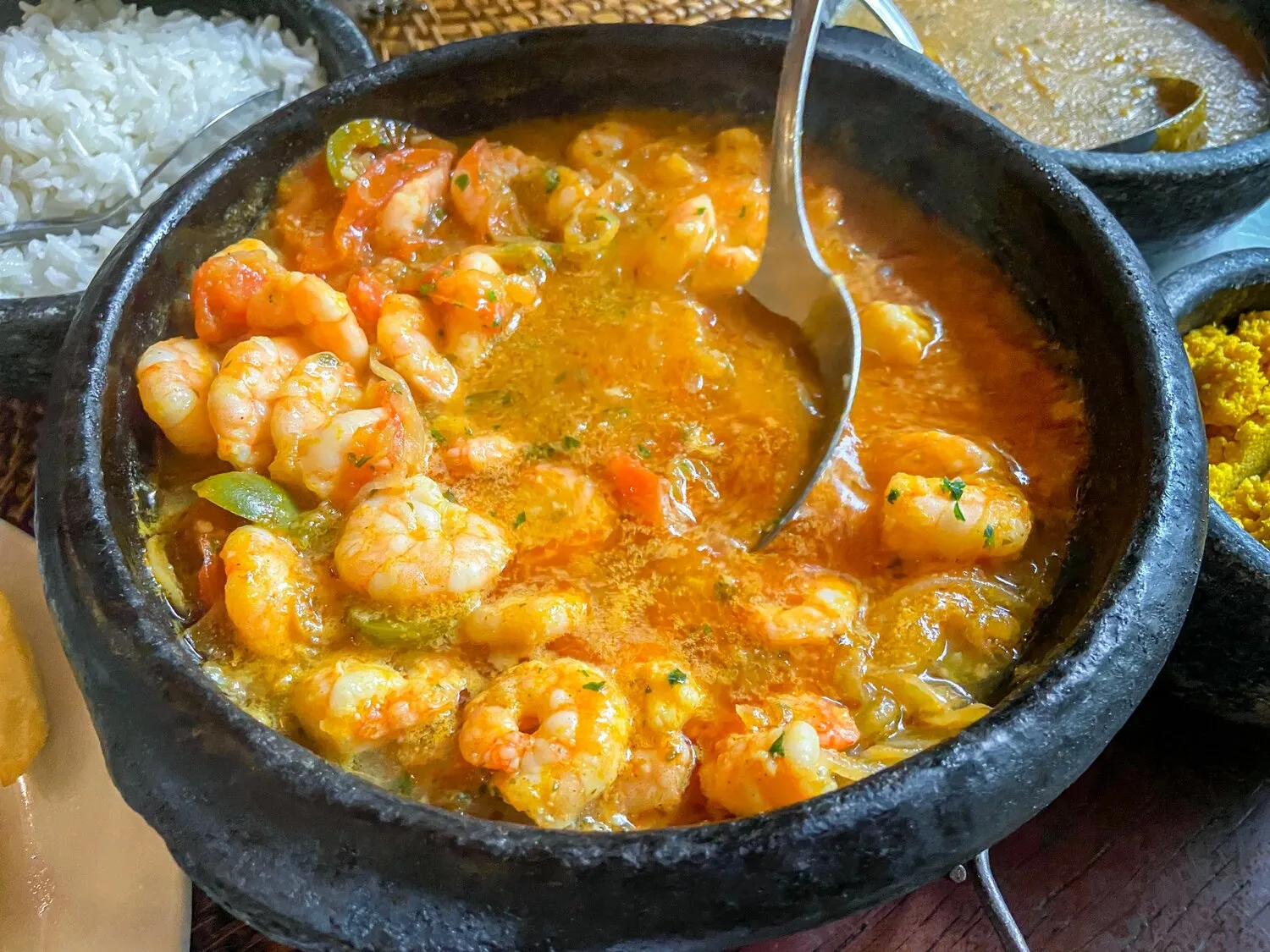

Moqueca de Camarão
Shrimp stew cooked in coconut milk and dendê oil, a traditional Brazilian dish.
Valori Nutrizionali
* Il % del Valore Giornaliero (VG) indica quanto un nutriente in una porzione di cibo contribuisce a una dieta giornaliera. 2.000 calorie al giorno sono utilizzate per i consigli nutrizionali generali.
Funzionalità Premium
Petrópolis Restaurante
Funzionalità Premium
Moqueca reflects a blend of Indigenous, African, and Portuguese culinary traditions. Indigenous Brazilians used clay pots to cook fish and seafood. African influence is evident in the use of dendê oil (palm oil) and coconut milk, while Portuguese contributions include ingredients like tomatoes, onions, and bell peppers, shaping the dish into what it is today.
Funzionalità Premium
Moqueca is more than just a dish; it's a cultural symbol, particularly in the coastal states of Bahia and Espírito Santo. It represents community, celebration, and the rich culinary heritage of Brazil.
Regional Variations
There are two main types of Moqueca: Baiana (from Bahia) and Capixaba (from Espírito Santo). The Baiana version includes dendê oil and coconut milk, while the Capixaba version typically does not use dendê oil and is considered lighter and more delicate. Each region fiercely defends its version as the 'authentic' one.
Social Gatherings
Moqueca is often prepared and enjoyed during special occasions, family gatherings, and festive events. It's a communal dish, meant to be shared and enjoyed with loved ones, often served directly from the pot at the table.
Culinary Identity
Moqueca is a significant part of Brazil's culinary identity, showcasing the country's diverse ingredients and cooking techniques. It is a staple dish in many Brazilian restaurants, both domestically and internationally.
Funzionalità Premium
Moqueca de Camarão offers a rich and savory flavor profile, characterized by the sweetness of coconut milk, the distinctive taste of dendê oil, and the freshness of seafood, all complemented by aromatic vegetables and herbs.
The primary flavor components are: shrimp (providing a sweet and briny seafood taste), coconut milk (adding creaminess and sweetness), dendê oil (imparting a unique, slightly smoky and earthy flavor and vibrant orange color), tomatoes, onions, garlic, and bell peppers (contributing a savory base), and cilantro and other herbs (providing freshness and aromatic notes). Lime juice is often added for brightness.
Funzionalità Premium
Freshness is Key
Use the freshest shrimp and vegetables possible for the best flavor. Avoid frozen shrimp if possible, opting for fresh, locally sourced shrimp.
Don't Overcook the Shrimp
Shrimp cooks quickly, so be careful not to overcook it. Overcooked shrimp will be rubbery and tough. Add the shrimp towards the end of the cooking process and cook until just pink and opaque.
Layer the Flavors
Sauté the aromatics (onions, garlic, bell peppers) first to build a flavorful base. Allow them to soften before adding the tomatoes and other ingredients.
Simmer Gently
Simmer the moqueca gently to allow the flavors to meld together. Avoid boiling it vigorously, as this can toughen the shrimp and reduce the sauce.
Adjust Seasoning
Taste and adjust the seasoning as needed. Moqueca should be well-seasoned, but not overly salty. Consider adding a squeeze of lime juice at the end to brighten the flavors.
Funzionalità Premium
Esplora piatti e ristoranti aggiuntivi di Stew
Esplora StewScopri i migliori ristoranti ed esperienze culinarie a Natal.
Esplora NatalScopri di più sulla cultura gastronomica, la scena dei ristoranti e il patrimonio culinario di Brazil.
Esplora Brazil