
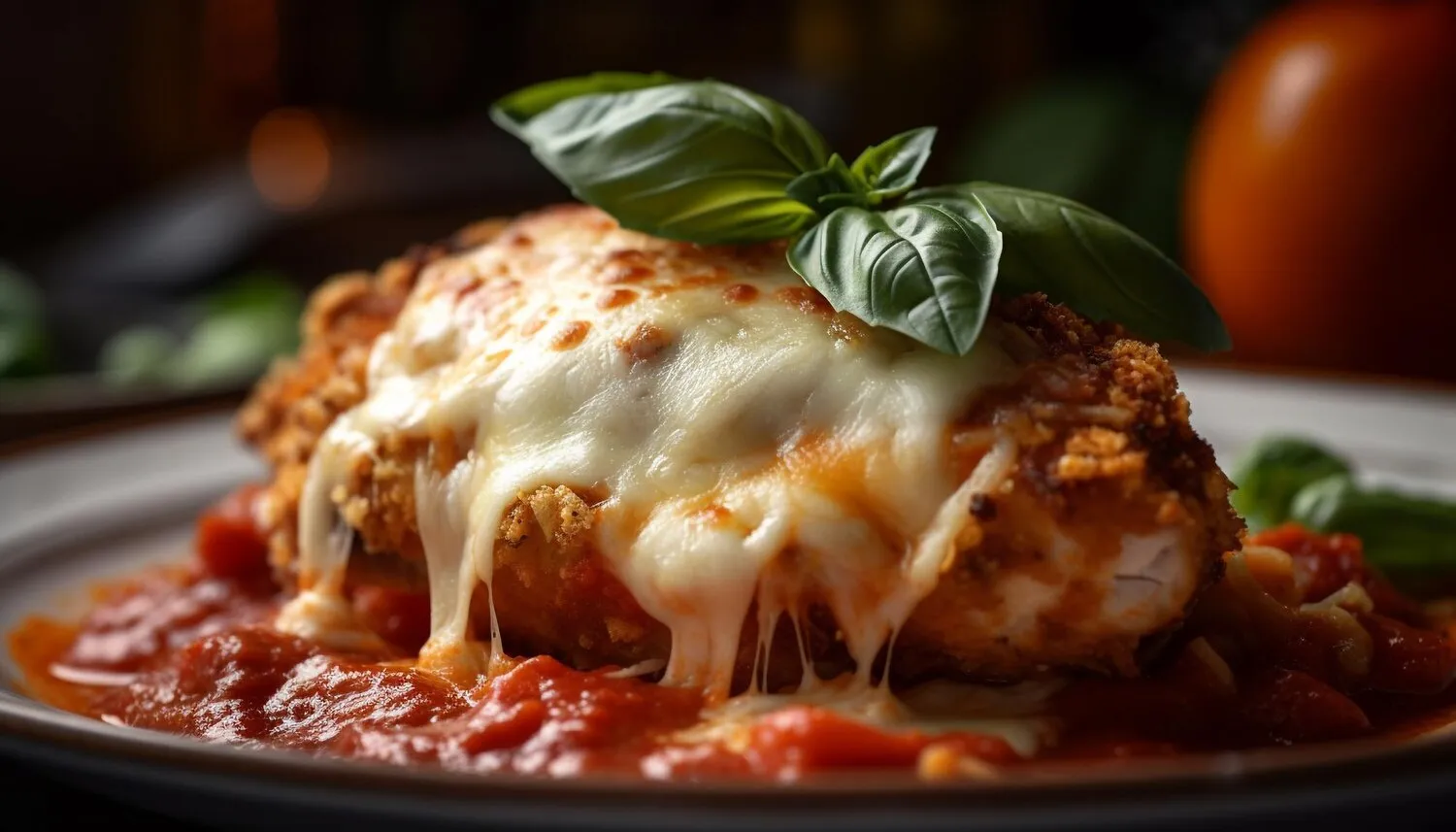

Parmegiana
Classic Parmegiana, breaded cutlet covered with tomato sauce and melted cheese, served with rice and fries or pasta.
Valori Nutrizionali
* Il % del Valore Giornaliero (VG) indica quanto un nutriente in una porzione di cibo contribuisce a una dieta giornaliera. 2.000 calorie al giorno sono utilizzate per i consigli nutrizionali generali.
Funzionalità Premium
Bravissimo Ristorante
Funzionalità Premium
The exact origins of Parmigiana are debated, with claims from Campania, Sicily, and other Southern Italian regions. Its history is intertwined with the introduction of eggplants to Italy by the Arabs and the subsequent development of tomato cultivation. Some speculate that it's inspired by a similar Middle Eastern dish.
Funzionalità Premium
Parmigiana is a beloved and iconic dish in Italian cuisine, often associated with home cooking and family gatherings. It represents the resourcefulness of Southern Italian cooking, utilizing simple, readily available ingredients to create a complex and delicious meal.
Regional Variations
Different regions of Italy have their own variations of Parmigiana. Some use provolone instead of mozzarella, while others add hard-boiled eggs or ham. Sicilian versions often include basil and sometimes even a touch of sugar to balance the acidity of the tomatoes.
Family Tradition
Parmigiana is often made in large batches and shared among family and friends. The preparation is often a collaborative effort, with different family members contributing to different stages of the process. It's a dish that evokes feelings of warmth, comfort, and togetherness.
Sunday Lunch Staple
In many Italian households, Parmigiana is a traditional dish served for Sunday lunch, a time when families gather to share a meal and spend quality time together.
Funzionalità Premium
Parmigiana boasts a rich, savory, and slightly tangy flavor profile. The combination of fried eggplant, sweet tomato sauce, and salty, melted cheese creates a deeply satisfying and comforting taste.
The primary flavor comes from the fried eggplant, which absorbs the oil and develops a tender, slightly smoky taste. The tomato sauce adds sweetness and acidity, while the Parmigiano-Reggiano cheese provides a salty, nutty, and umami-rich counterpoint. The mozzarella adds a creamy texture and mild flavor that binds the dish together. Herbs like basil contribute aromatic freshness.
Funzionalità Premium
Eggplant Preparation
Salting the eggplant before frying is crucial for drawing out excess moisture and preventing it from becoming soggy. Use coarse salt and let it sit for at least 30 minutes, then rinse and pat dry before frying.
Frying Technique
Fry the eggplant slices in batches to avoid overcrowding the pan and lowering the oil temperature. Ensure the oil is hot enough to achieve a golden-brown color and crispy texture.
Cheese Selection
Use high-quality Parmigiano-Reggiano cheese for the best flavor. Fresh mozzarella is also recommended for its creamy texture and mild flavor. Consider using a combination of mozzarella and provolone for a more complex flavor profile.
Sauce Consistency
The tomato sauce should be thick enough to coat the eggplant slices evenly without being watery. Simmer the sauce for at least an hour to allow the flavors to meld together.
Layering Order
Start with a thin layer of tomato sauce on the bottom of the baking dish, followed by a layer of eggplant, then cheese. Repeat the layers until all the ingredients are used, finishing with a generous layer of cheese on top.
Funzionalità Premium
Esplora piatti e ristoranti aggiuntivi di Classic Dish
Esplora Classic DishScopri i migliori ristoranti ed esperienze culinarie a Piracicaba.
Esplora PiracicabaScopri di più sulla cultura gastronomica, la scena dei ristoranti e il patrimonio culinario di Brazil.
Esplora Brazil