
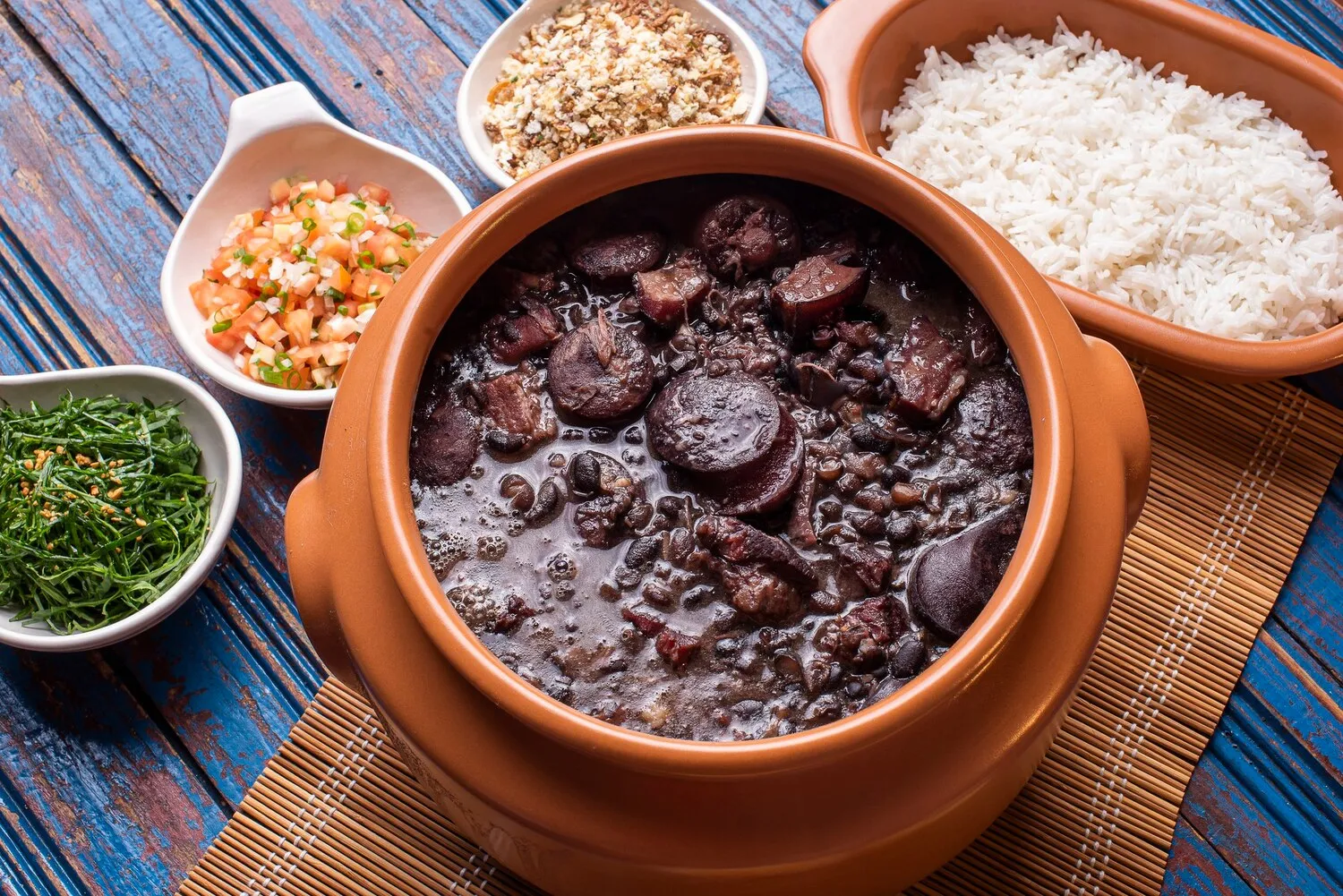

Feijoada
A hearty stew of black beans with various smoked and salted meats.
Valori Nutrizionali
* Il % del Valore Giornaliero (VG) indica quanto un nutriente in una porzione di cibo contribuisce a una dieta giornaliera. 2.000 calorie al giorno sono utilizzate per i consigli nutrizionali generali.
Funzionalità Premium
Funzionalità Premium
Feijoada's origins are debated, but the popular belief is that it emerged during the colonial period. Enslaved Africans, given the less desirable parts of the pig discarded by the slave owners (such as ears, feet, and tails), combined these with black beans, a staple food, to create a nourishing and flavorful stew. However, some historians argue that feijoada is a more recent creation, developed in urban centers and drawing inspiration from various European stews.
Funzionalità Premium
Feijoada is considered Brazil's national dish and holds significant cultural importance. It's more than just a meal; it's a symbol of Brazilian identity, culinary heritage, and social gathering.
Sunday Tradition
Feijoada is traditionally eaten on Saturdays or Sundays as a leisurely, communal meal with family and friends. The preparation is time-consuming, making it a special occasion dish.
Regional Variations
While the basic concept of feijoada remains consistent, regional variations exist throughout Brazil. Different regions may use different types of meats or add unique ingredients specific to their local cuisine.
Sides and Accompaniments
Feijoada is typically served with a variety of side dishes, including white rice, collard greens (couve), farofa (toasted cassava flour), orange slices, and a spicy pepper sauce.
Social Event
Preparing and eating feijoada is often a social event involving multiple people. The cooking process can be a shared activity, and the meal itself is an opportunity for socializing and celebrating Brazilian culture.
Funzionalità Premium
Feijoada is a rich and savory dish, characterized by a complex interplay of smoky, salty, and earthy flavors. The black beans provide a creamy base, while the assortment of meats infuses the stew with deep umami notes and varying textures.
The flavor profile is dominated by the smoked and salted meats, including dried beef (carne seca), smoked sausages (linguica), bacon (bacon), pork ribs (costela de porco), and sometimes parts like the pig's ear, tail, and feet. These ingredients contribute a powerful saltiness and smokiness. Black beans offer a subtle earthiness and creamy texture that complements the robust meats. Aromatics like garlic, onions, and bay leaves are essential for building the flavor base. Optional additions like orange slices are often served on the side and can help cut through the richness with a hint of citrus.
Funzionalità Premium
Soaking the Beans
Soak the black beans overnight (or for at least 8 hours) to reduce cooking time and improve their digestibility.
Desalting the Meats
Soak the salted meats in water for several hours (or even overnight, changing the water frequently) to remove excess salt. This is crucial for balancing the flavors.
Cooking Time
Allow ample time for the feijoada to simmer slowly. The longer it cooks, the more the flavors will meld together and the meat will become tender.
Serving Order
Traditionally, feijoada is served in stages. First, the beans and broth are served, followed by the different meats in order of intensity.
Portioning
Feijoada is a very filling dish, so be mindful of portion sizes.
Funzionalità Premium
Esplora piatti e ristoranti aggiuntivi di Classic Brazilian
Esplora Classic BrazilianScopri i migliori ristoranti ed esperienze culinarie a Piracicaba.
Esplora PiracicabaScopri di più sulla cultura gastronomica, la scena dei ristoranti e il patrimonio culinario di Brazil.
Esplora Brazil