
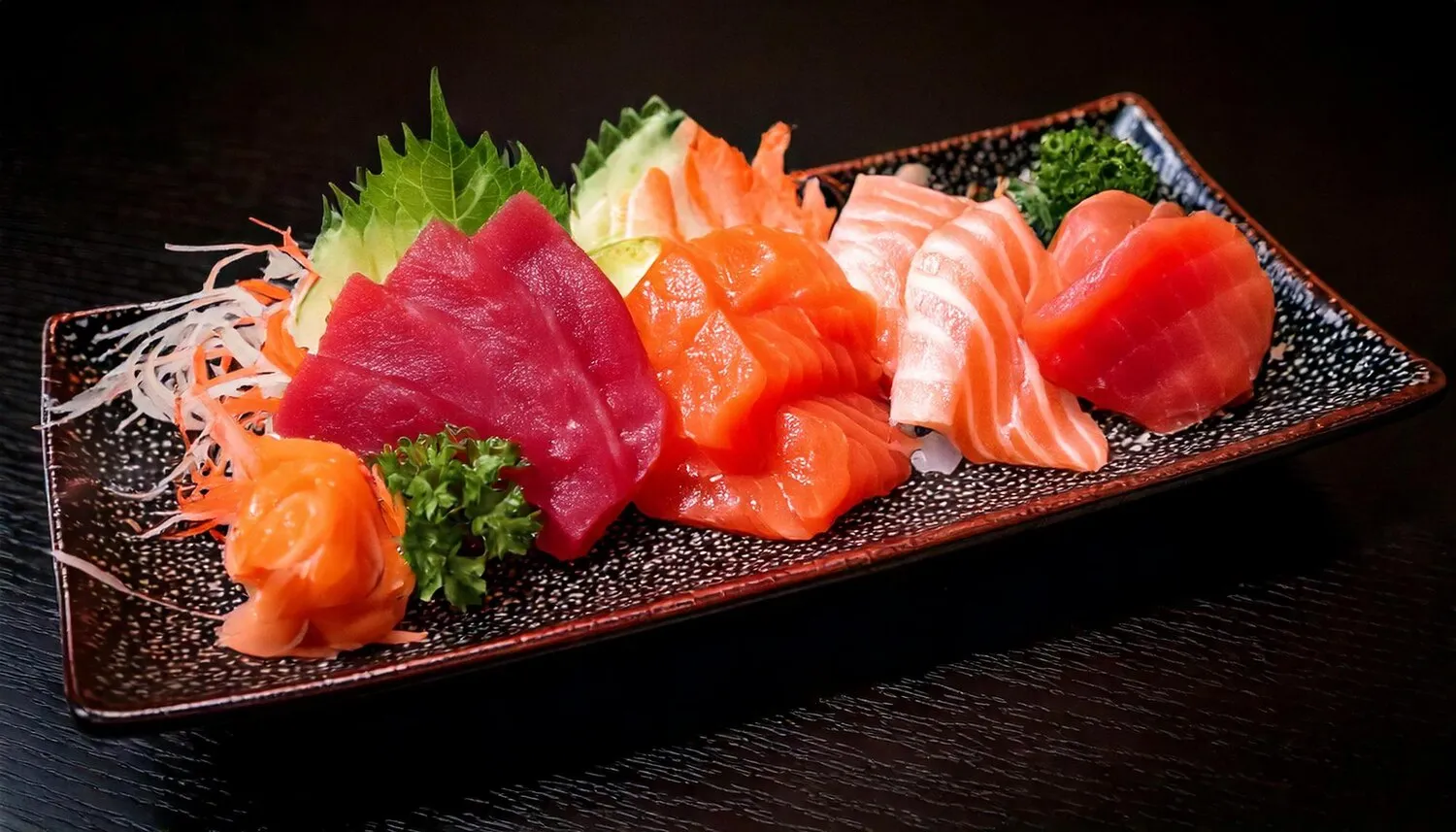

Sashimi
Thinly sliced raw fish, served without rice.
Valori Nutrizionali
* Il % del Valore Giornaliero (VG) indica quanto un nutriente in una porzione di cibo contribuisce a una dieta giornaliera. 2.000 calorie al giorno sono utilizzate per i consigli nutrizionali generali.
Funzionalità Premium
Everton Sushiman
Funzionalità Premium
Sashimi's origins trace back to ancient Japan, predating the widespread availability of refrigeration. Techniques for preserving fish, like salting and fermentation, were crucial. As methods improved and culinary artistry evolved, sashimi developed as a distinct dish emphasizing the freshness and quality of the fish.
Funzionalità Premium
Sashimi is deeply embedded in Japanese culinary culture, representing respect for the ingredients, the skill of the chef, and the appreciation of seasonal flavors.
Presentation and Artistry
Sashimi is meticulously presented, often resembling miniature works of art. The arrangement of the fish, garnishes, and sauces is carefully considered to enhance the visual appeal and overall dining experience. This reflects the Japanese emphasis on aesthetics and harmony.
Emphasis on Freshness and Quality
Sashimi underscores the importance of using only the freshest, highest-quality ingredients. The skill of the chef lies in selecting the best fish and expertly slicing it to showcase its texture and flavor. This emphasis on freshness and quality reflects a deep respect for nature and the ingredients it provides.
Seasonal Considerations
Certain types of fish are preferred during specific seasons, reflecting the Japanese appreciation for seasonality. Chefs often select fish that are at their peak flavor and texture during a particular time of year, adding another layer of depth to the dining experience.
Funzionalità Premium
The primary flavors of sashimi are clean, delicate, and umami, highlighting the natural taste of the fresh fish. Secondary flavors come from the accompanying condiments.
The core flavor is the pure, unadulterated taste of high-quality raw fish. The type of fish dictates the specific flavor profile. Tuna (maguro) offers a rich, meaty taste, while salmon (sake) has a buttery, slightly sweet flavor. Yellowtail (hamachi) is known for its firm texture and clean taste. Condiments such as soy sauce (shoyu), wasabi, and pickled ginger (gari) complement and enhance the fish's natural flavors. Soy sauce adds saltiness and umami, wasabi provides a pungent kick, and pickled ginger cleanses the palate between bites.
Funzionalità Premium
Wasabi Usage
Apply a small amount of wasabi directly to the fish rather than mixing it into the soy sauce. This allows you to control the level of spiciness and better appreciate the flavors of both the fish and the wasabi.
Soy Sauce Dipping
Dip the sashimi lightly into the soy sauce, being careful not to oversaturate it. Too much soy sauce can mask the delicate flavors of the fish. Just a quick dip is all you need.
Eating Order
Start with the lighter-flavored fish and progress to the richer, more flavorful types. This allows you to fully appreciate the nuances of each fish without overpowering your palate. It's best to eat the white fish first, and then move to more fatty fish such as tuna.
Palate Cleansing
Use the pickled ginger (gari) to cleanse your palate between different types of sashimi. This will help you to fully appreciate the distinct flavors of each fish.
Funzionalità Premium
Esplora piatti e ristoranti aggiuntivi di Raw Fish
Esplora Raw FishScopri i migliori ristoranti ed esperienze culinarie a Porto Velho.
Esplora Porto VelhoScopri di più sulla cultura gastronomica, la scena dei ristoranti e il patrimonio culinario di Brazil.
Esplora Brazil