
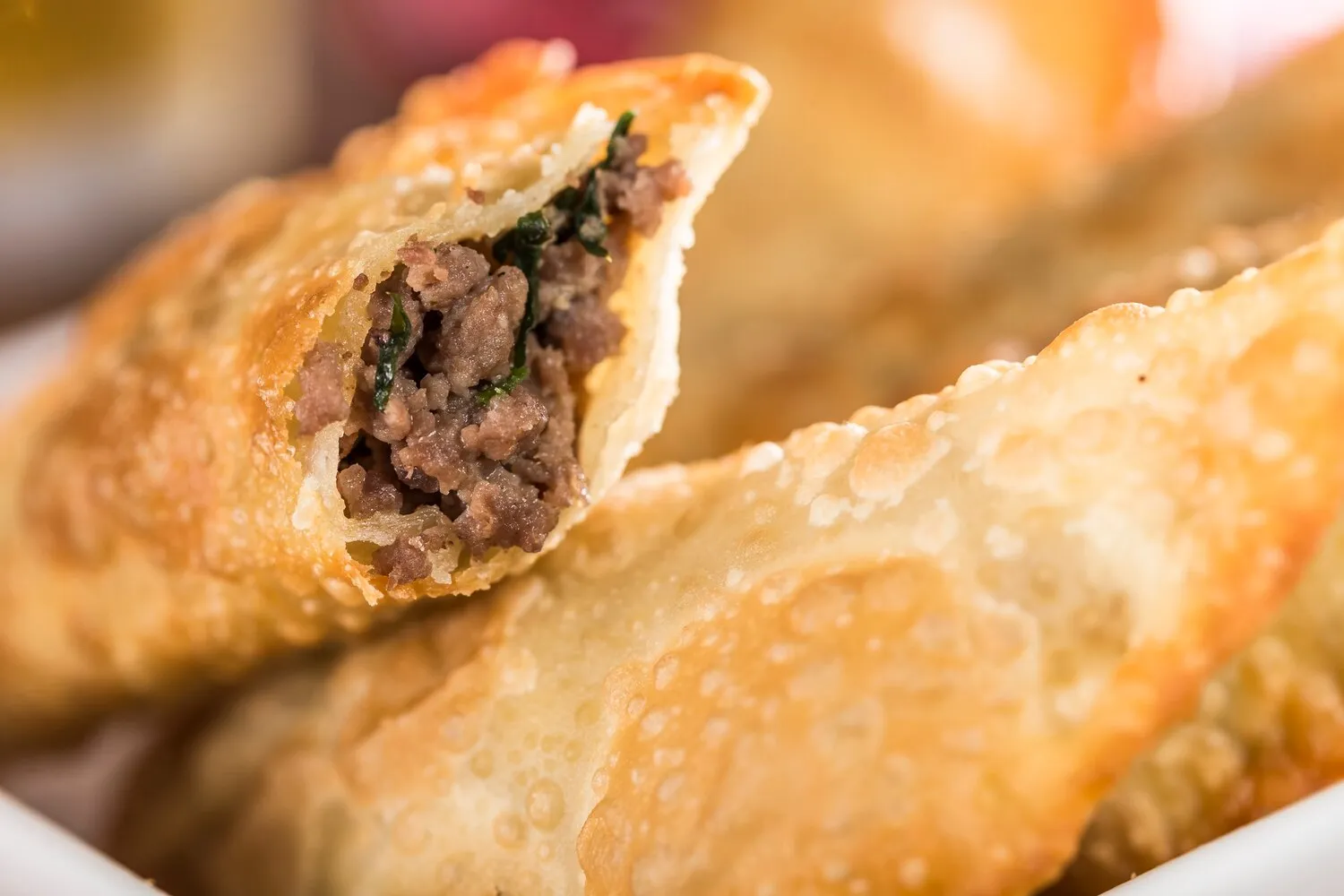

Pastel
Variety of Pastels
Valori Nutrizionali
* Il % del Valore Giornaliero (VG) indica quanto un nutriente in una porzione di cibo contribuisce a una dieta giornaliera. 2.000 calorie al giorno sono utilizzate per i consigli nutrizionali generali.
Funzionalità Premium
Funzionalità Premium
The pastel's origins are believed to trace back to Chinese egg rolls brought to Brazil by Japanese immigrants during World War II. Due to wartime anti-Japanese sentiment, they adapted the recipe and sold them as 'pasteles' to avoid prejudice and integrate into Brazilian society. They were originally sold at street markets, quickly becoming a popular and affordable snack.
Funzionalità Premium
Pastel is deeply ingrained in Brazilian street food culture, particularly found in "feiras" (street markets). It represents an affordable and accessible treat enjoyed by people of all social classes. It is a symbol of cultural fusion, reflecting the contributions of Asian immigrants to Brazilian cuisine.
Street Market Staple
Pastels are a ubiquitous sight at Brazilian street markets, or "feiras". Vendors often set up large frying stations, cooking pastels fresh and serving them hot.
Family Treat
It's common for families to enjoy pastels together as a quick and satisfying meal or snack, especially when visiting street markets or fairs.
Cultural Fusion
The pastel is a culinary example of cultural exchange and adaptation, showcasing how Japanese immigrants integrated into Brazilian society through food.
Regional Variations
While the core concept remains the same, regional variations in fillings and even the dough itself can be found throughout Brazil, reflecting local tastes and ingredients.
Funzionalità Premium
Pastel flavors are incredibly diverse, ranging from savory to sweet, with crispy dough as a common element. The most common fillings include ground beef, cheese, hearts of palm, and chicken, but modern variations are virtually limitless.
The core flavor profile relies on the filling, which is encased in a thin, rectangular or square pastry. The dough is deep-fried, creating a characteristic crispy and bubbly texture. Savory fillings often include onions, garlic, and various spices to enhance the flavor. Cheese fillings usually melt and create a gooey interior. Sweet variations might include chocolate, guava paste, or dulce de leche. A common accompaniment is 'molho de pimenta' (hot sauce) to add a spicy kick.
Funzionalità Premium
Dough Consistency
The dough should be thin and pliable, but not too sticky. Overworking the dough can result in a tough pastel.
Filling Moisture
Ensure the filling isn't too wet, as this can cause the pastel to become soggy. Drain excess liquid from ground beef or vegetables before filling the dough.
Frying Temperature
Maintain a consistent oil temperature of around 350°F (175°C) for optimal crispiness. Too low, and the pastel will absorb too much oil; too high, and it will burn quickly.
Sealing the Edges
Ensure the edges of the pastel are properly sealed to prevent the filling from leaking out during frying. Use a fork to press the edges together firmly.
Serving Immediately
Pastels are best enjoyed hot and fresh, immediately after frying, to maximize their crispiness and flavor.
Funzionalità Premium
Esplora piatti e ristoranti aggiuntivi di Brazilian Snack
Esplora Brazilian SnackScopri i migliori ristoranti ed esperienze culinarie a Santarém.
Esplora SantarémScopri di più sulla cultura gastronomica, la scena dei ristoranti e il patrimonio culinario di Brazil.
Esplora Brazil