
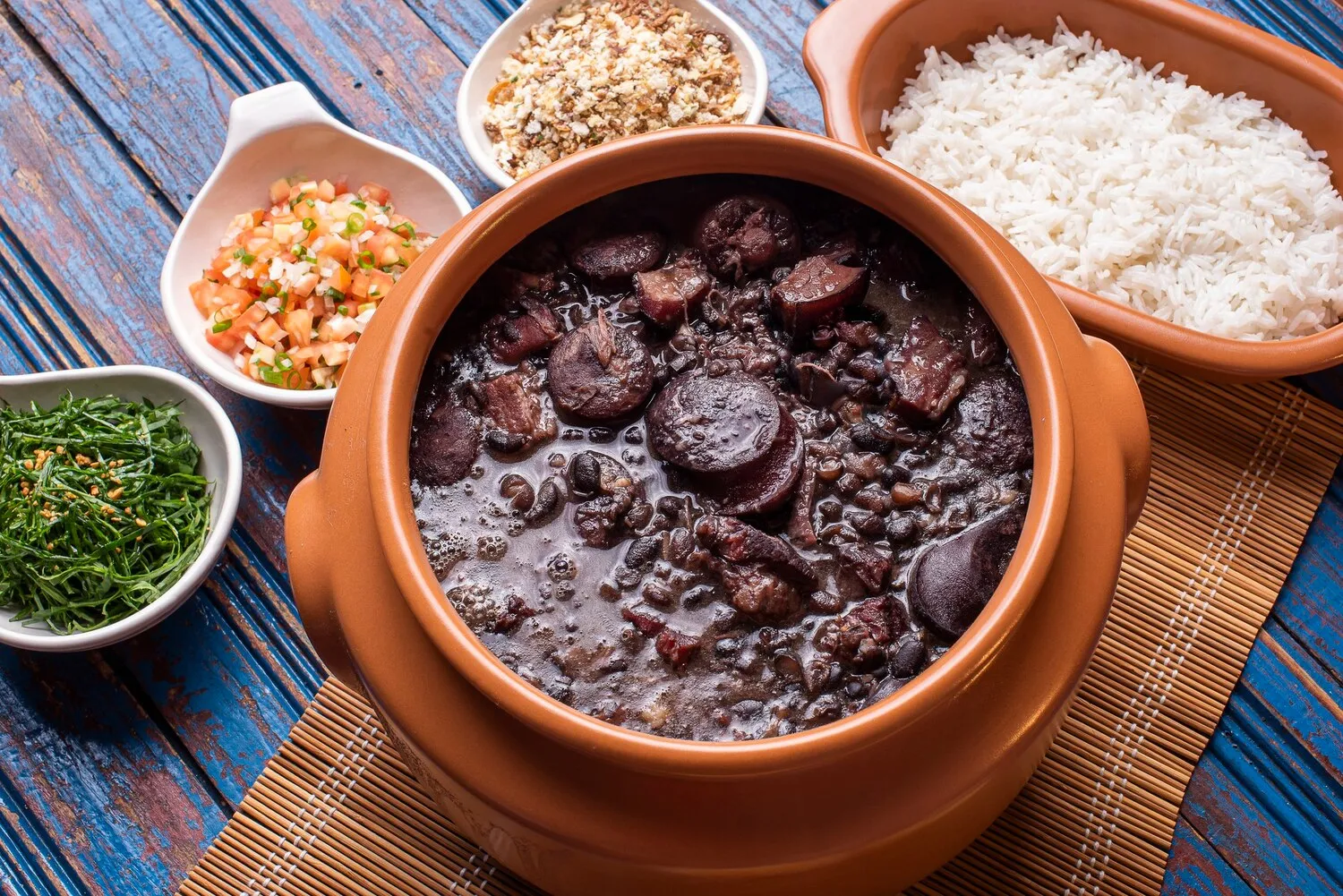

Feijoada
A hearty stew of black beans with various smoked pork and beef cuts, served with rice, collard greens, farofa, and orange slices.
Valori Nutrizionali
* Il % del Valore Giornaliero (VG) indica quanto un nutriente in una porzione di cibo contribuisce a una dieta giornaliera. 2.000 calorie al giorno sono utilizzate per i consigli nutrizionali generali.
Funzionalità Premium
Adriano's Restaurante
Funzionalità Premium
Feijoada's origins are debated, with some believing it originated among enslaved Africans who combined discarded pork and beef scraps with black beans. Others suggest it evolved from European stews brought by Portuguese colonizers, adapted with local ingredients. Regardless of its precise origins, feijoada became a staple of Brazilian cuisine, representing a blend of cultures and ingredients.
Funzionalità Premium
Feijoada is more than just a meal; it's a cultural event in Brazil, often served on weekends, especially Saturdays, as a communal gathering. It symbolizes hospitality, family, and Brazilian identity.
Communal Meal
Feijoada is typically prepared in large quantities and shared among family and friends, fostering a sense of community.
Weekend Tradition
Serving feijoada on Saturdays is a long-standing tradition in Brazil, allowing people to relax and enjoy a leisurely meal together.
Regional Variations
While the basic recipe remains consistent, regional variations exist, with different types of meats and accompaniments used depending on the region.
Symbol of Brazilian Identity
Feijoada is often considered a national dish of Brazil, representing the country's diverse cultural heritage and culinary traditions.
Funzionalità Premium
Feijoada boasts a rich and savory flavor profile, characterized by smoky meats, earthy black beans, and subtle spices. The combination creates a hearty and satisfying dish.
The primary flavors come from the black beans, which provide an earthy and slightly sweet base. The various smoked pork and beef cuts contribute a deep, savory, and smoky taste. Common meats include dried beef (carne seca), smoked pork ribs, sausage (such as linguiça or paio), and bacon. Bay leaves and garlic are often used to enhance the flavor. The traditional accompaniments – rice, collard greens, farofa (toasted cassava flour), and orange slices – offer contrasting textures and flavors that complement the richness of the stew. Orange slices provide a refreshing citrus counterpoint, while farofa adds a crunchy texture.
Funzionalità Premium
Soaking the Beans
Soak the black beans overnight or for at least 4-6 hours. This helps to soften them and reduce cooking time.
Desalting the Meats
Salted meats, such as carne seca, need to be desalted before cooking. Soak them in water for several hours, changing the water frequently.
Cooking Time
Feijoada requires a long cooking time, typically several hours, to allow the flavors to meld together and the meats to become tender. Low and slow cooking is key.
Layering the Flavors
Add the meats in stages, starting with the ones that require the longest cooking time. This ensures that all the meats are cooked properly and contribute to the overall flavor of the stew.
Accompaniments are Key
Don't skip the accompaniments! Rice, collard greens, farofa, and orange slices are essential for balancing the richness of the feijoada.
Funzionalità Premium
Esplora piatti e ristoranti aggiuntivi di Brazilian
Esplora BrazilianScopri i migliori ristoranti ed esperienze culinarie a Santo André.
Esplora Santo AndréScopri di più sulla cultura gastronomica, la scena dei ristoranti e il patrimonio culinario di Brazil.
Esplora Brazil