
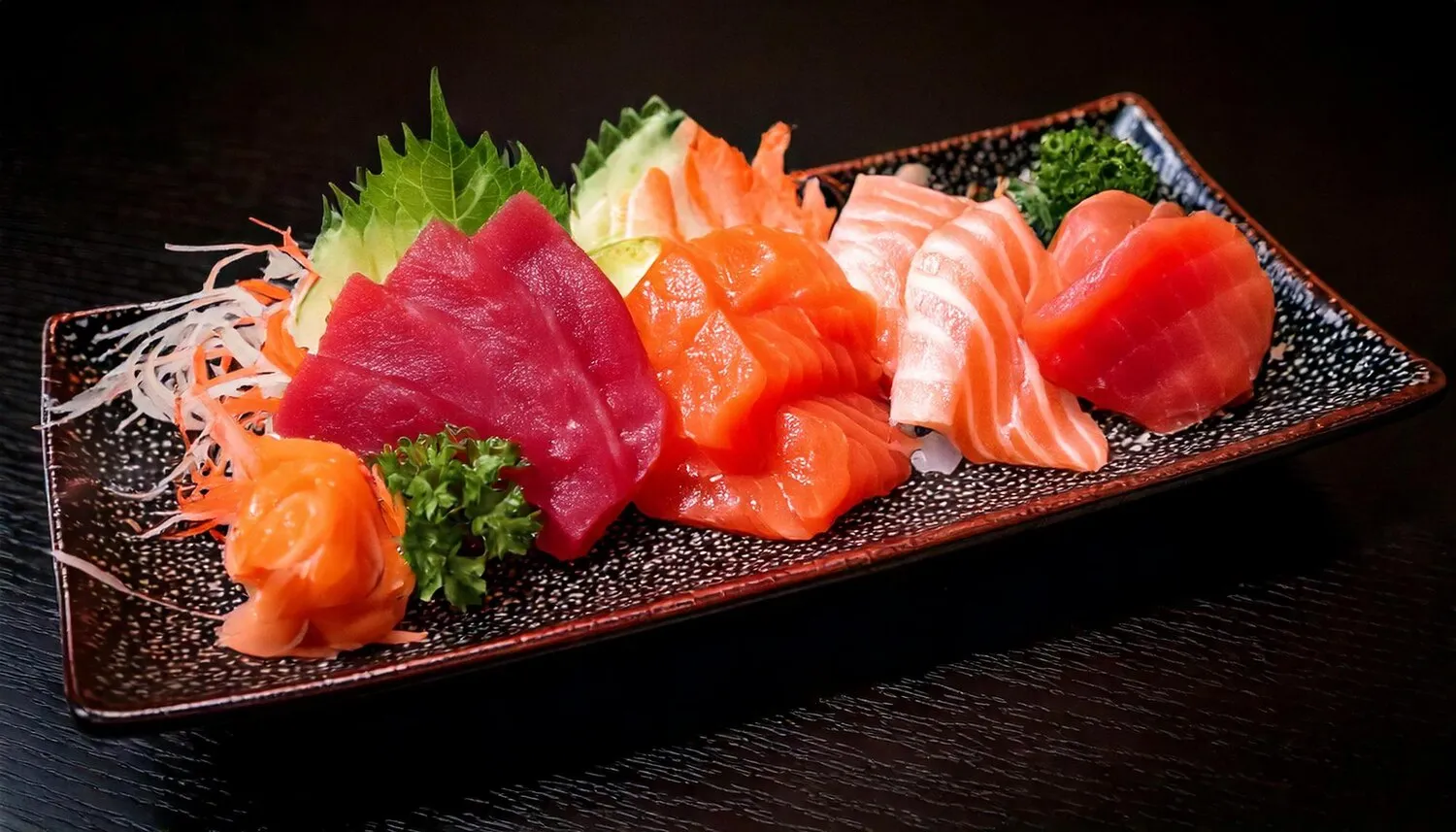

Sashimi
Thinly sliced raw fish, usually salmon, tuna, or white fish.
Valori Nutrizionali
* Il % del Valore Giornaliero (VG) indica quanto un nutriente in una porzione di cibo contribuisce a una dieta giornaliera. 2.000 calorie al giorno sono utilizzate per i consigli nutrizionali generali.
Funzionalità Premium
Funzionalità Premium
The origins of sashimi can be traced back to ancient Japan, where the need to preserve and serve fresh fish led to the development of specialized cutting techniques and presentation methods. Early forms of sashimi likely involved preserving fish in vinegar or soy sauce. As Buddhist influence discouraged eating meat, seafood gained prominence, and with it, the art of preparing and presenting raw fish.
Funzionalità Premium
Sashimi is deeply intertwined with Japanese culinary tradition and holds significant cultural value, representing respect for the ingredients and the skill of the chef.
Freshness and Quality
The freshness and quality of the fish are paramount. Sashimi-grade fish must be incredibly fresh and handled with utmost care to prevent spoilage and ensure safety.
Knife Skills
The preparation of sashimi requires highly skilled knife work. Different cutting techniques are used to enhance the texture and flavor of different types of fish. The chef's skill is judged on the precision and artistry of the cuts.
Presentation
Presentation is crucial. Sashimi is typically arranged artfully on a plate, often with garnishes like seaweed, daikon radish, shiso leaves, and edible flowers. The arrangement is intended to be aesthetically pleasing and to reflect the season.
Etiquette
There is proper etiquette for eating sashimi. Typically, a small amount of wasabi is placed directly on the fish, and then the fish is dipped lightly into soy sauce. Avoid mixing wasabi into the soy sauce, as this is considered impolite. Eat each piece in one bite to fully appreciate the flavor and texture.
Funzionalità Premium
Sashimi offers a clean and delicate flavor profile, emphasizing the natural taste and texture of the fish.
The primary flavor is the pure, unadulterated taste of the fish itself. Salmon provides a rich, buttery flavor. Tuna has a meatier, more robust taste, with variations depending on the cut (e.g., akami, chutoro, otoro). White fish such as sea bream (tai) or yellowtail (hamachi) offer a lighter, more subtle flavor with a firmer texture. Common accompaniments like soy sauce add umami and saltiness, while wasabi provides a pungent, spicy kick that complements the fish's flavor. Ginger is used as a palate cleanser between different types of sashimi.
Funzionalità Premium
Choosing Sashimi
Look for sashimi that has a vibrant color and a fresh, clean smell. Avoid fish that looks dull or has a fishy odor.
Proper Handling
Sashimi-grade fish should be stored and handled with extreme care to prevent bacterial growth. It should be kept refrigerated until just before serving.
Accompanying Drinks
Sake (Japanese rice wine) is a traditional accompaniment to sashimi. Dry, crisp white wines or light beers can also complement the flavors of the fish.
Using Condiments
Use wasabi sparingly. Its purpose is to enhance, not overpower, the flavor of the fish. Freshly grated wasabi is preferable. Soy sauce should be used lightly to avoid masking the fish's natural flavor.
Funzionalità Premium
Esplora piatti e ristoranti aggiuntivi di Sashimi
Esplora SashimiScopri i migliori ristoranti ed esperienze culinarie a Taubaté.
Esplora TaubatéScopri di più sulla cultura gastronomica, la scena dei ristoranti e il patrimonio culinario di Brazil.
Esplora Brazil