
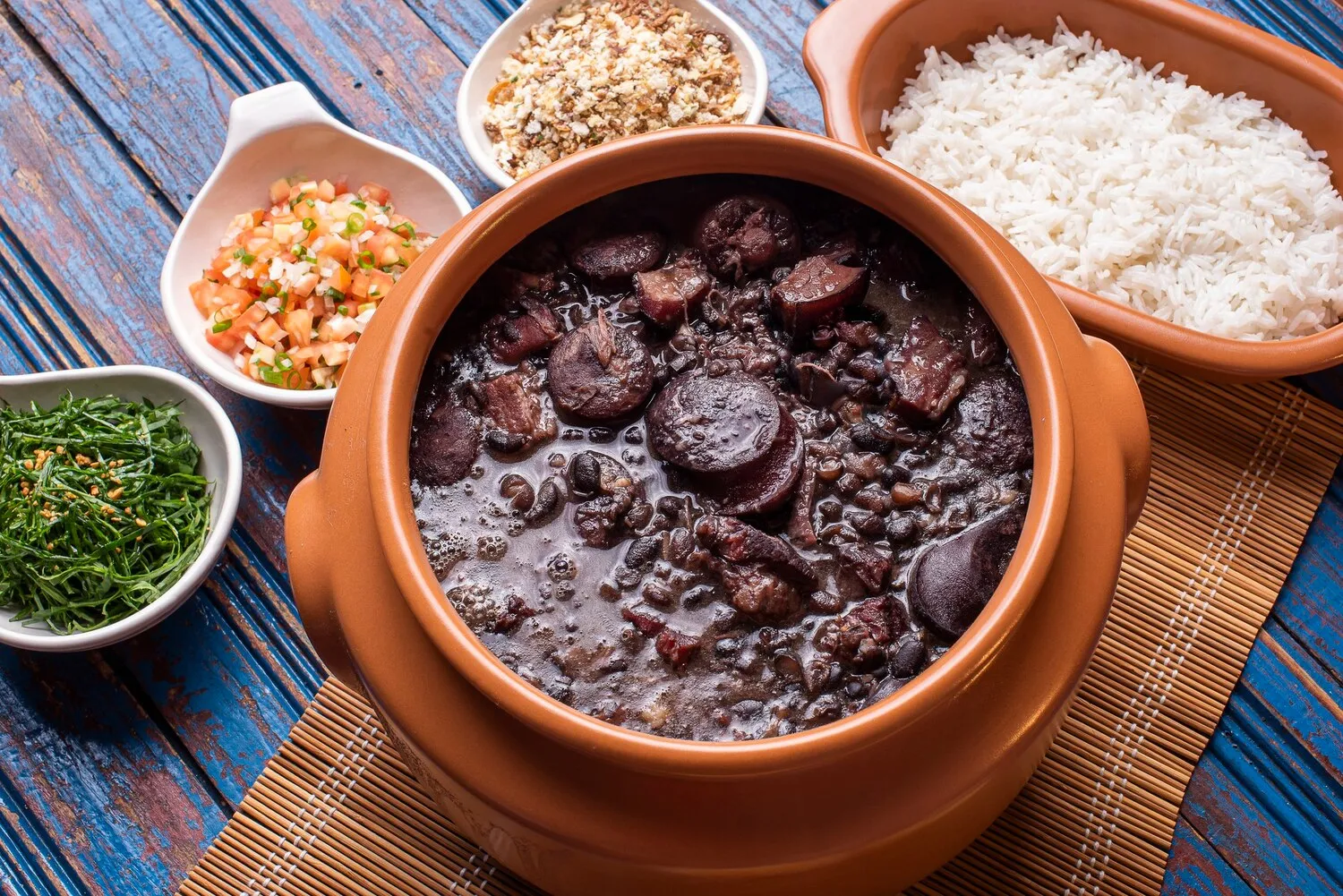

Feijoada
Classic Brazilian black bean stew with pork and beef.
Valori Nutrizionali
* Il % del Valore Giornaliero (VG) indica quanto un nutriente in una porzione di cibo contribuisce a una dieta giornaliera. 2.000 calorie al giorno sono utilizzate per i consigli nutrizionali generali.
Funzionalità Premium
Funzionalità Premium
Feijoada's origins are debated. A popular, though possibly apocryphal, theory suggests it evolved from slaves combining leftover pork scraps with black beans, readily available to them. However, scholars argue that it's more likely a fusion dish reflecting Portuguese influence (similar stews existed in Portugal) and indigenous Brazilian ingredients like beans. The inclusion of various meats likely developed over time as the dish became more widely consumed by different social classes.
Funzionalità Premium
Feijoada is considered Brazil's national dish and is deeply ingrained in Brazilian culture. It's more than just a meal; it's a social event, a celebration, and a representation of Brazilian heritage.
Sunday Lunch Tradition
Feijoada is traditionally eaten on Wednesdays and Saturdays and especially on Sundays as a large family meal. It's an occasion for gathering loved ones and enjoying a leisurely meal together.
Regional Variations
While the core ingredients remain consistent, regional variations exist across Brazil. For example, some regions might use different cuts of pork or incorporate local vegetables and spices.
Served with Accompaniments
Feijoada is almost always served with accompaniments that balance the richness of the stew. These typically include white rice, collard greens (couve), orange slices, farofa (toasted cassava flour), and hot pepper sauce.
Funzionalità Premium
Feijoada is characterized by its rich, savory, and smoky flavors, underpinned by the earthiness of black beans. The variety of pork cuts contributes a complex depth of taste, while spices and herbs add aromatic nuances.
The primary flavor profile is savory, driven by the black beans and assortment of smoked and cured pork. Salt pork, dried beef (carne seca), sausages (such as linguiça and paio), and bacon contribute salty, smoky, and umami notes. Garlic, onions, bay leaves, and sometimes peppers add aromatic complexity. Some regional variations include oranges or other citrus fruits, which provide a contrasting acidity to balance the richness.
Funzionalità Premium
Soak the Beans
Soaking the black beans overnight is crucial. It reduces cooking time and helps remove indigestible sugars that can cause bloating.
Desalt the Meats
Salted pork and dried beef (carne seca) need to be desalted before cooking. Soak them in water for 24-48 hours, changing the water regularly.
Cook Time
Feijoada requires slow cooking to allow the flavors to meld and the meats to become tender. Be patient and allow ample time for simmering.
Control the Fat
Feijoada can be quite rich due to the pork. Consider skimming excess fat from the surface during cooking and serving to lighten the dish. A good rule is to add each ingredient, layer by layer, to allow the fats to release over time.
Pairing
Brazilians often drink caipirinhas or chilled beer with feijoada. The acidity of the lime in a caipirinha cuts through the richness of the stew, and the beer provides a refreshing contrast.
Funzionalità Premium
Esplora piatti e ristoranti aggiuntivi di Stew
Esplora StewScopri i migliori ristoranti ed esperienze culinarie a Taubaté.
Esplora TaubatéScopri di più sulla cultura gastronomica, la scena dei ristoranti e il patrimonio culinario di Brazil.
Esplora Brazil