
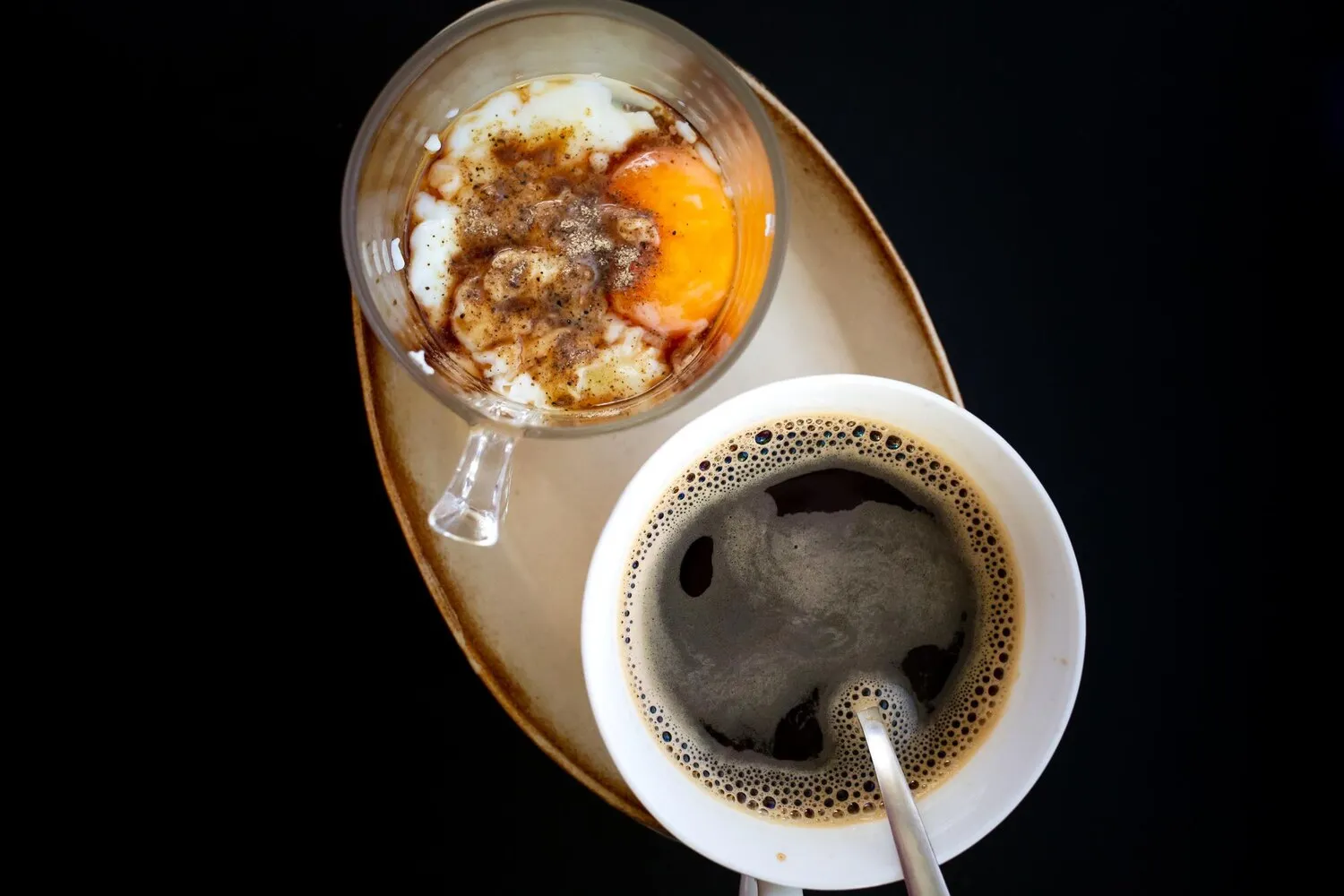

Espresso
A concentrated coffee beverage brewed by forcing hot water through finely-ground coffee beans.
Valori Nutrizionali
* Il % del Valore Giornaliero (VG) indica quanto un nutriente in una porzione di cibo contribuisce a una dieta giornaliera. 2.000 calorie al giorno sono utilizzate per i consigli nutrizionali generali.
Funzionalità Premium
Funzionalità Premium
Espresso's origins are rooted in late 19th-century Turin, Italy. Angelo Moriondo is credited with patenting a device in 1884 that produced coffee in bulk. Later, Luigi Bezzera improved the design, and in 1905, Desiderio Pavoni purchased Bezzera's patent and, with the help of engineer Giovanni Gaggia, significantly refined the espresso machine, leading to its widespread adoption.
Funzionalità Premium
Espresso is deeply ingrained in Italian culture and has become a global phenomenon. It's not just a drink; it's a social ritual, often enjoyed quickly at a bar or cafe while socializing.
Italian Coffee Culture
In Italy, espresso is typically consumed standing at the bar, often in a single gulp. Ordering a 'caffè' will almost always get you an espresso. It's a quick and efficient caffeine boost, and a common part of daily life.
Social Ritual
Espresso is often enjoyed with friends or colleagues as a social activity. Coffee breaks are common, and espresso is a central part of these gatherings.
Basis for other drinks
Espresso serves as the foundation for a wide range of coffee beverages, including cappuccinos, lattes, macchiatos, and Americanos, each with its unique preparation and cultural associations.
Funzionalità Premium
Espresso is characterized by its intense, concentrated coffee flavor, often described as rich, bold, and slightly bitter. The crema, a reddish-brown froth, contributes to the flavor and mouthfeel.
The flavor profile of espresso is complex and depends heavily on the coffee bean origin, roast level, grind size, and extraction process. Common flavor notes include chocolate, caramel, nuts, fruit, and spice. The crema, formed by emulsified oils and dissolved gases, adds a velvety texture and enhances the aroma. Bitterness is a key characteristic, but a well-extracted espresso maintains a balance with sweetness and acidity.
Funzionalità Premium
Bean Selection
Choose high-quality, freshly roasted coffee beans. Arabica beans are typically preferred for espresso due to their balanced flavor and acidity. Experiment with different origins and roast levels to find your preference.
Grind Size
Grind the coffee beans finely and consistently. The grind size significantly impacts the extraction. Too coarse, and the espresso will be weak and sour; too fine, and it will be bitter and over-extracted.
Tamping
Tamp the ground coffee evenly and firmly in the portafilter to create a consistent puck. This ensures that the water flows through the coffee evenly.
Extraction Time
Aim for an extraction time of around 25-30 seconds. Adjust the grind size and tamping pressure to achieve the desired extraction time.
Water Temperature
Maintain a consistent water temperature of around 195-205°F (90-96°C). Water that is too hot can burn the coffee, while water that is too cold can result in under-extraction.
Funzionalità Premium
Esplora piatti e ristoranti aggiuntivi di Coffee
Esplora CoffeeScopri i migliori ristoranti ed esperienze culinarie a Uberaba.
Esplora UberabaScopri di più sulla cultura gastronomica, la scena dei ristoranti e il patrimonio culinario di Brazil.
Esplora Brazil