
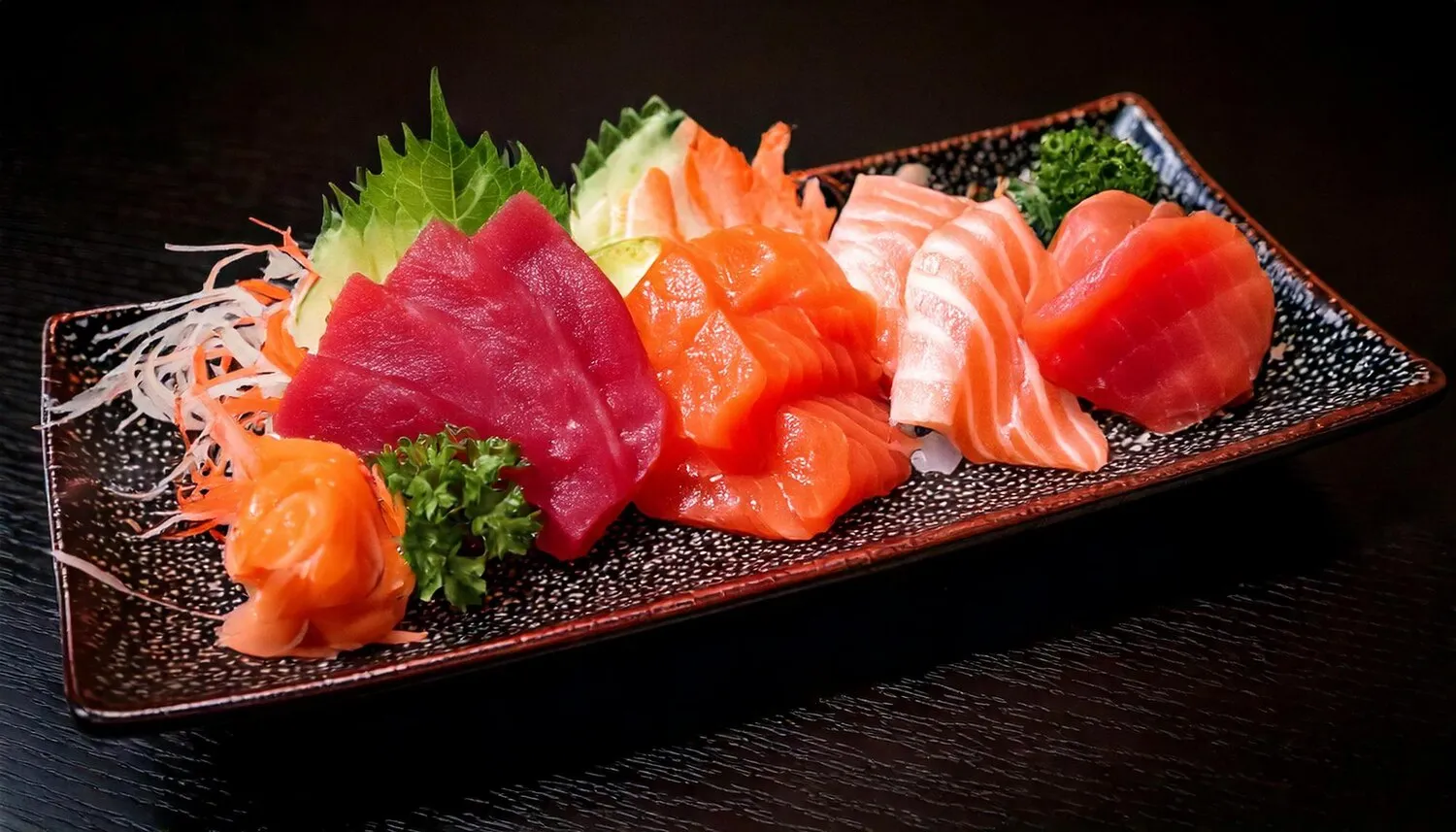

Sashimi
Thinly sliced raw fish.
Valori Nutrizionali
* Il % del Valore Giornaliero (VG) indica quanto un nutriente in una porzione di cibo contribuisce a una dieta giornaliera. 2.000 calorie al giorno sono utilizzate per i consigli nutrizionali generali.
Funzionalità Premium
Funzionalità Premium
The origins of sashimi can be traced back to ancient Japan, where raw fish was consumed shortly after being caught, ensuring freshness and avoiding spoilage, which was a significant challenge before modern refrigeration. Over time, techniques for preparing and presenting raw fish evolved, leading to the refined art form that sashimi is today.
Funzionalità Premium
Sashimi is deeply intertwined with Japanese culture, representing a respect for freshness, quality, and the natural flavors of the ingredients.
Freshness is Paramount
The quality of sashimi hinges on the freshness of the fish. Traditionally, fish is prepared immediately after being caught to maintain optimal flavor and texture. Skilled chefs prioritize sourcing high-quality, fresh fish daily.
Knife Skills
The precise cutting technique used to prepare sashimi is crucial. A sharp knife and expert skill are required to slice the fish properly, ensuring a smooth texture and optimal presentation. Different cuts are used for different types of fish to enhance their unique qualities.
Presentation
The aesthetic presentation of sashimi is as important as its flavor. Chefs meticulously arrange the slices on a plate, often incorporating garnishes such as seaweed, daikon radish, and shiso leaves to create a visually appealing and harmonious dish.
Seasonal Delicacy
Certain types of sashimi are enjoyed seasonally, reflecting the Japanese appreciation for seasonal ingredients. The flavor and texture of fish can vary significantly depending on the time of year, making seasonal sashimi a special treat.
Funzionalità Premium
Sashimi offers a pure and delicate flavor profile, emphasizing the natural taste of the fish.
The taste of sashimi varies greatly depending on the type of fish. Tuna (maguro) can range from mild and buttery to rich and intensely flavored. Salmon (sake) is known for its fatty and smooth texture. Yellowtail (hamachi) provides a firm texture and slightly sweet taste. Other common types include sea bream (tai), squid (ika), and octopus (tako), each offering unique textures and flavors. Wasabi provides a pungent kick, while soy sauce adds umami and saltiness. Ginger offers a palate-cleansing effect.
Funzionalità Premium
Wasabi Usage
Apply a small amount of wasabi directly to the fish, rather than mixing it into the soy sauce. This allows you to control the intensity of the wasabi flavor and avoid overpowering the delicate taste of the fish.
Soy Sauce Dipping
Dip only the edge of the sashimi in soy sauce to avoid oversaturating the fish. The goal is to enhance, not mask, the natural flavor of the fish.
Order of Consumption
Generally, it's recommended to start with milder-flavored sashimi and progress to richer, more flavorful types. This allows you to appreciate the nuances of each fish without overwhelming your palate.
Chewing
Chew sashimi thoroughly to release its full flavor and appreciate its texture. Take your time and savor each bite.
Funzionalità Premium
Esplora piatti e ristoranti aggiuntivi di Raw Fish
Esplora Raw FishScopri i migliori ristoranti ed esperienze culinarie a Vitória da Conquista.
Esplora Vitória da ConquistaScopri di più sulla cultura gastronomica, la scena dei ristoranti e il patrimonio culinario di Brazil.
Esplora Brazil