
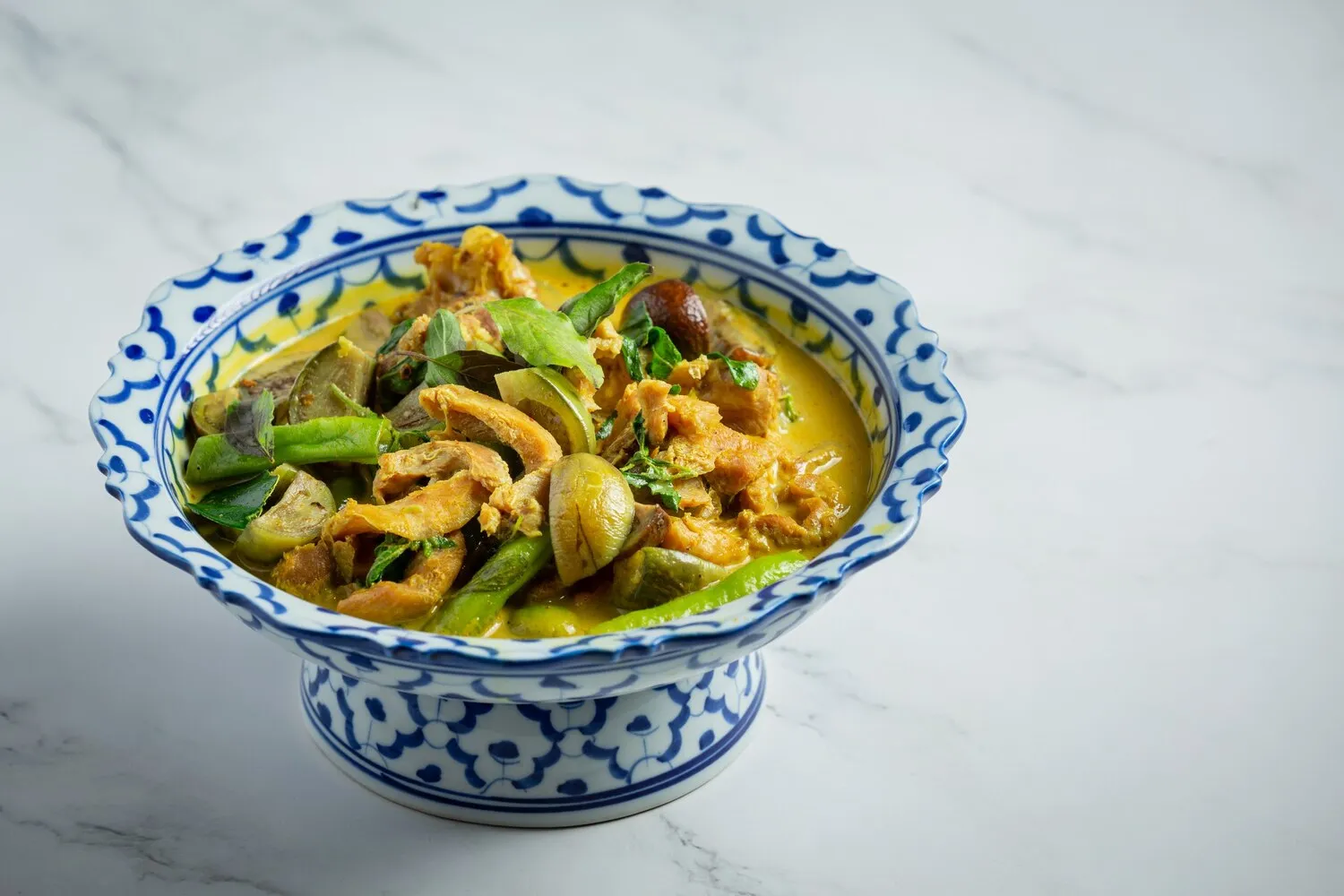

Green Curry
Thai green curry with coconut milk, bamboo shoots, bell peppers, and basil.
Valori Nutrizionali
* Il % del Valore Giornaliero (VG) indica quanto un nutriente in una porzione di cibo contribuisce a una dieta giornaliera. 2.000 calorie al giorno sono utilizzate per i consigli nutrizionali generali.
Funzionalità Premium
White Elephant Thai Cuisine at Chestermere Station
Funzionalità Premium
Thai green curry, or 'gaeng keow wan,' reflects centuries of culinary influences. The introduction of chili peppers from the Americas via Portuguese traders in the 16th century significantly impacted Thai cuisine, leading to the creation of unique curry pastes. Coconut milk, a staple in Thai cuisine, likely originated from Southeast Asia and has been used for centuries in various dishes. The dish evolved over time, incorporating local herbs and spices to create the complex and aromatic flavor profile we know today. Influences from Indian curries are also notable, albeit adapted to local ingredients and preferences.
Funzionalità Premium
Green curry is a deeply ingrained part of Thai culture, often enjoyed in family meals and served at special occasions. It represents the Thai emphasis on balance and harmony in flavor and is a symbol of Thai culinary identity.
Social Dining
Green curry is frequently enjoyed family-style, where multiple dishes are shared among diners. It fosters a sense of community and togetherness around the meal.
Regional Variations
While the core ingredients remain consistent, regional variations exist. Some areas may use different types of chilies, adding different levels of spice or sweetness. The specific vegetables used can also vary depending on local availability and preference.
Religious Significance
While not directly tied to a specific religious ceremony, the sharing of food, including curries like green curry, is often part of merit-making activities in Buddhism, particularly when offering food to monks.
Funzionalità Premium
Green curry is characterized by its vibrant, fragrant, and balanced flavors. It's a harmonious blend of spicy, sweet, savory, and creamy elements.
The primary flavor profile comes from the green curry paste, which typically includes green chilies (providing the heat), lemongrass (for citrusy aroma), galangal (similar to ginger, but more citrusy and piney), kaffir lime leaves (for intense citrus fragrance), coriander root (for earthy depth), garlic, shallots, shrimp paste (for umami), and white peppercorns (for subtle heat and complexity). Coconut milk contributes richness and sweetness, while fish sauce adds a salty and savory dimension. Palm sugar often balances the spice and salt, lending a subtle sweetness. Bamboo shoots provide a slightly bitter and crunchy texture, while bell peppers offer sweetness and color. Fresh Thai basil adds a final burst of anise-like aroma and flavor.
Funzionalità Premium
Homemade Curry Paste
Using homemade green curry paste elevates the dish significantly. Freshly ground spices and herbs create a more vibrant and complex flavor compared to store-bought versions. Roasting the spices beforehand enhances their aroma.
Coconut Milk Quality
Full-fat coconut milk is crucial for achieving the creamy texture and rich flavor that defines green curry. Avoid using low-fat or light coconut milk.
Balancing Flavors
Taste frequently and adjust the balance of sweet, salty, spicy, and sour to your preference. A squeeze of lime juice at the end can brighten the flavors and add a fresh zest.
Adding Meat
The most popular meat options with green curry are chicken, beef, and shrimp. Vegetarian options, such as tofu, are also commonly available.
Funzionalità Premium
Esplora piatti e ristoranti aggiuntivi di Curry
Esplora CurryScopri i migliori ristoranti ed esperienze culinarie a Chestermere.
Esplora ChestermereScopri di più sulla cultura gastronomica, la scena dei ristoranti e il patrimonio culinario di Canada.
Esplora Canada