
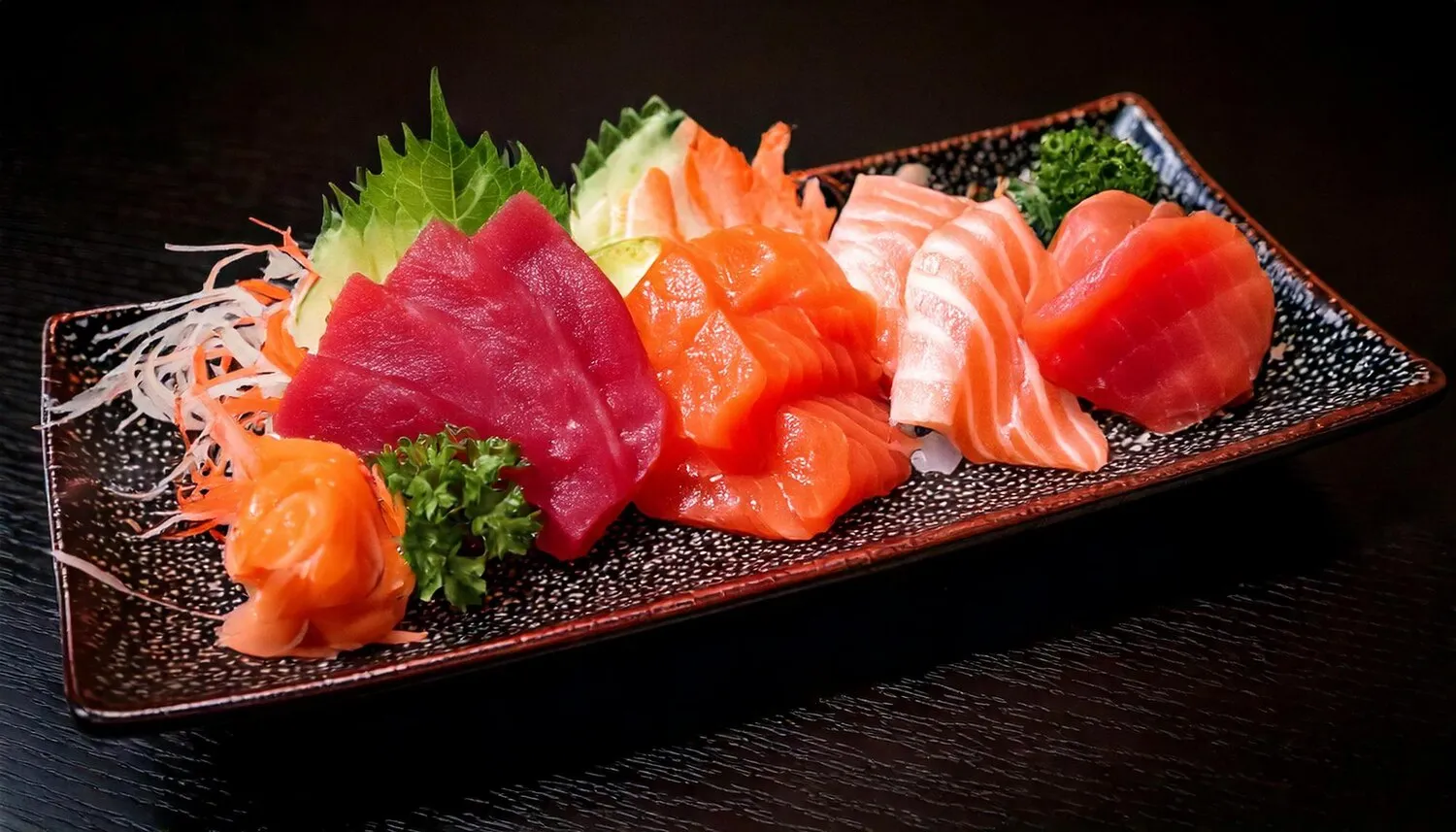

Sashimi
Like sushi, sashimi is a standard offering at Insushi, providing fresh, thinly sliced raw fish. Specific types and popularity vary.
Valori Nutrizionali
* Il % del Valore Giornaliero (VG) indica quanto un nutriente in una porzione di cibo contribuisce a una dieta giornaliera. 2.000 calorie al giorno sono utilizzate per i consigli nutrizionali generali.
Funzionalità Premium
Funzionalità Premium
The origins of sashimi can be traced back to the Muromachi period (1336–1573) in Japan. Before refrigeration, a need arose to distinguish fresh raw fish from fish that was no longer safe to eat. Sashimi initially focused on preserving freshness and showcasing the natural flavor of the fish, a practice deeply connected to Shinto beliefs emphasizing purity and respect for nature.
Funzionalità Premium
Sashimi is more than just food in Japanese culture; it represents artistry, respect for nature, and meticulous craftsmanship. Its presentation and consumption are steeped in tradition and etiquette.
Presentation
The arrangement of sashimi on a plate is a carefully considered art form. The colors, shapes, and textures of the fish are arranged to create a visually appealing and balanced composition, often incorporating garnishes like daikon radish or seaweed to enhance the aesthetic.
Etiquette
There's a certain etiquette associated with eating sashimi. It's generally recommended to dip the fish lightly into soy sauce to avoid overpowering its delicate flavor. Wasabi should be used sparingly and placed directly on the fish, not mixed into the soy sauce. It is important to appreciate the quality and freshness of the fish.
Seasonal Significance
Certain types of fish are considered best during specific seasons, reflecting the Japanese emphasis on eating foods at their peak flavor and freshness. Seasonal availability plays a significant role in selecting the type of fish used for sashimi.
Funzionalità Premium
Sashimi offers clean, delicate flavors primarily focused on the inherent taste and texture of the fish itself. Minimal seasoning allows the fish's natural umami and subtle nuances to shine.
The flavor of sashimi varies greatly depending on the type of fish used. Tuna (maguro) offers a rich, buttery taste, while salmon (sake) has a fattier, smoother profile. White fish like sea bream (tai) provide a firmer texture and a cleaner, more subtle taste. Wasabi, soy sauce, and ginger are condiments used to enhance and complement the fish's natural flavor; Wasabi adds a pungent kick, soy sauce provides saltiness and umami, and ginger cleanses the palate between bites.
Funzionalità Premium
Selecting Fresh Fish
Look for fish with a vibrant color, a firm texture, and a fresh, clean smell. Avoid fish that appears dull, feels slimy, or has a fishy odor. Reputable fishmongers or sushi restaurants are the best sources for high-quality sashimi-grade fish.
Proper Knife Skills
The quality of the cut significantly impacts the texture and flavor of sashimi. Thin, precise slices are essential for optimal taste and mouthfeel. Specialized knives, like the yanagiba, are often used to achieve the desired results.
Serving Temperature
Sashimi is best served chilled but not ice-cold, as extreme temperatures can mask the subtle flavors of the fish. Allow the fish to come to a slightly warmer temperature before serving to enhance its taste.
Complementary Flavors
Pairing sashimi with the right condiments can elevate the dining experience. Experiment with different types of soy sauce, wasabi, and ginger to find your preferred flavor combinations. Some people enjoy adding a squeeze of lemon or lime to certain types of fish.
Funzionalità Premium
Esplora piatti e ristoranti aggiuntivi di Sashimi
Esplora SashimiScopri i migliori ristoranti ed esperienze culinarie a Bolzano.
Esplora BolzanoScopri di più sulla cultura gastronomica, la scena dei ristoranti e il patrimonio culinario di Italy.
Esplora Italy