
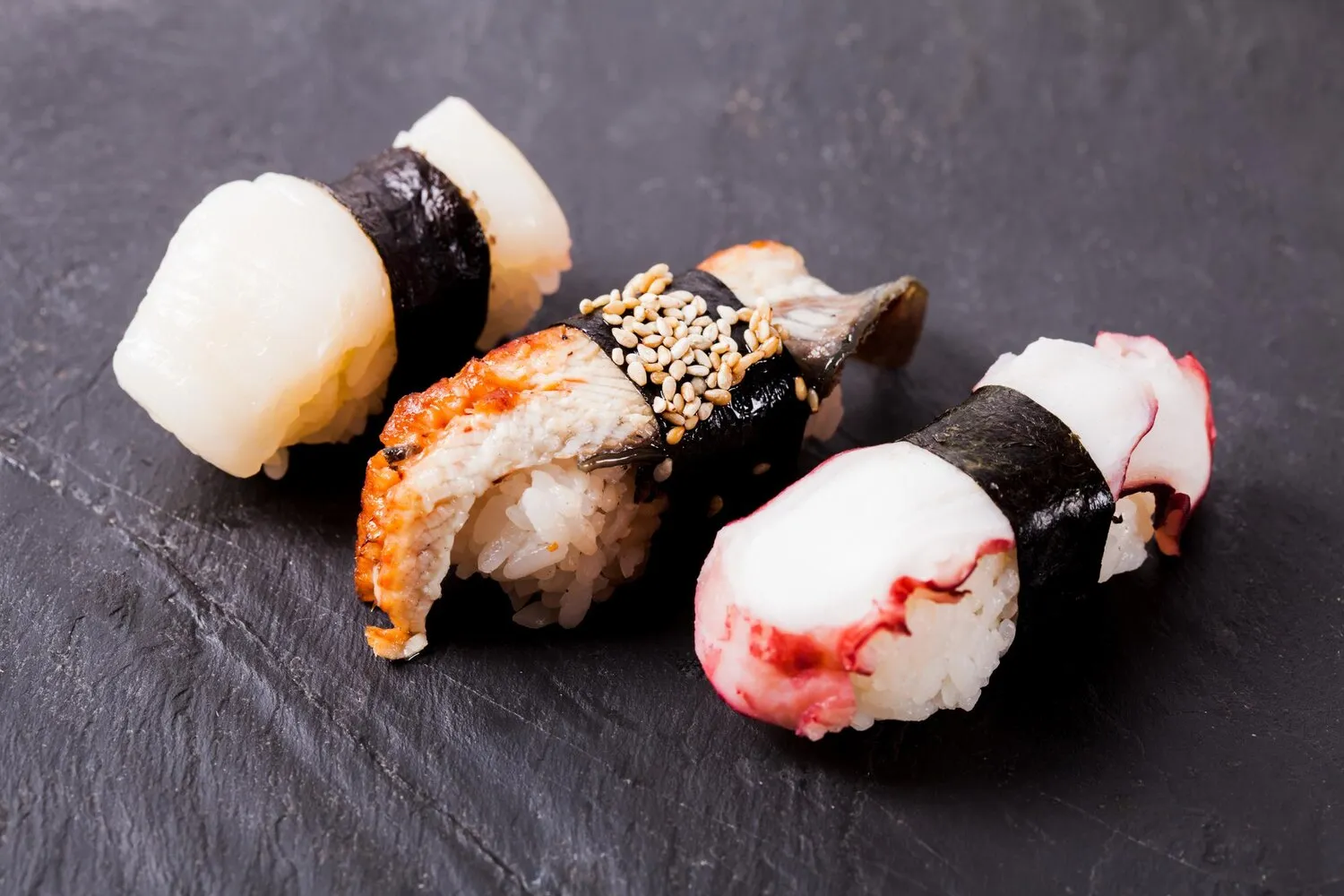

Nigiri
Various types of nigiri.
Valori Nutrizionali
* Il % del Valore Giornaliero (VG) indica quanto un nutriente in una porzione di cibo contribuisce a una dieta giornaliera. 2.000 calorie al giorno sono utilizzate per i consigli nutrizionali generali.
Funzionalità Premium
Funzionalità Premium
Nigiri sushi emerged in Edo-era (Tokyo) Japan during the early 19th century as a quick and affordable street food. Hanaya Yohei is often credited with popularizing the style, which focused on fresh, readily available fish and a vinegared rice base, appealing to busy city dwellers.
Funzionalità Premium
Nigiri sushi represents more than just food in Japanese culture; it's a symbol of artistry, tradition, and respect for ingredients. The meticulous preparation and presentation reflect a deep appreciation for simplicity and elegance.
Sushi Etiquette
Proper sushi etiquette is essential. It's common to use chopsticks, but using your fingers is also acceptable, especially for nigiri. Dip only the fish, not the rice, into the soy sauce. Eating nigiri in one or two bites is preferred, to fully appreciate the flavors. Avoid rubbing chopsticks together, as it implies you doubt the quality of the utensils.
The Role of the Chef (Itamae)
Sushi chefs undergo years of rigorous training to master the art of nigiri making. Their skills are not only in preparing the ingredients, but also in understanding the nuances of each fish, and crafting perfect rice. The itamae (sushi chef) is highly respected for their dedication and artistry.
Seasonal Ingredients
Seasonality is crucial in sushi. Chefs select the freshest ingredients available at specific times of the year. The taste of certain fish varies significantly depending on the season, offering diners a diverse and continually evolving culinary experience.
Funzionalità Premium
The flavor profile of nigiri is characterized by a harmonious balance of the fresh, clean taste of seafood, the slightly sweet and tangy flavor of vinegared rice (shari), and the subtle umami notes from soy sauce and wasabi.
The main flavors come from the topping (neta), which is usually a slice of raw or cooked fish, shellfish, or other seafood. The vinegared rice (shari) provides a slightly sweet and acidic counterpoint to the richness of the fish. Wasabi adds a pungent kick, while soy sauce (shoyu) enhances the umami and saltiness. The quality of ingredients is paramount, especially the freshness of the fish, which should have a clean and delicate taste. Depending on the fish, fattiness may be a factor (e.g. Toro is fattier and richer).
Funzionalità Premium
Ordering Sushi
Consider ordering omakase (chef's choice) to experience a variety of seasonal nigiri selected by the chef. Start with lighter-flavored fish and move towards richer, fattier options to cleanse the palate. Ask your chef any questions you may have. This will enhance your experience.
Soy Sauce Usage
Be mindful of soy sauce usage. Over-dipping can overwhelm the delicate flavors of the fish. Use only a small amount, and only dip the fish side of the nigiri.
Wasabi
Wasabi is traditionally used to cleanse the palate between different types of nigiri and to complement the flavors of the fish. Use sparingly, as it can be quite potent.
Funzionalità Premium
Esplora piatti e ristoranti aggiuntivi di Nigiri
Esplora NigiriScopri i migliori ristoranti ed esperienze culinarie a La Spezia.
Esplora La SpeziaScopri di più sulla cultura gastronomica, la scena dei ristoranti e il patrimonio culinario di Italy.
Esplora Italy