
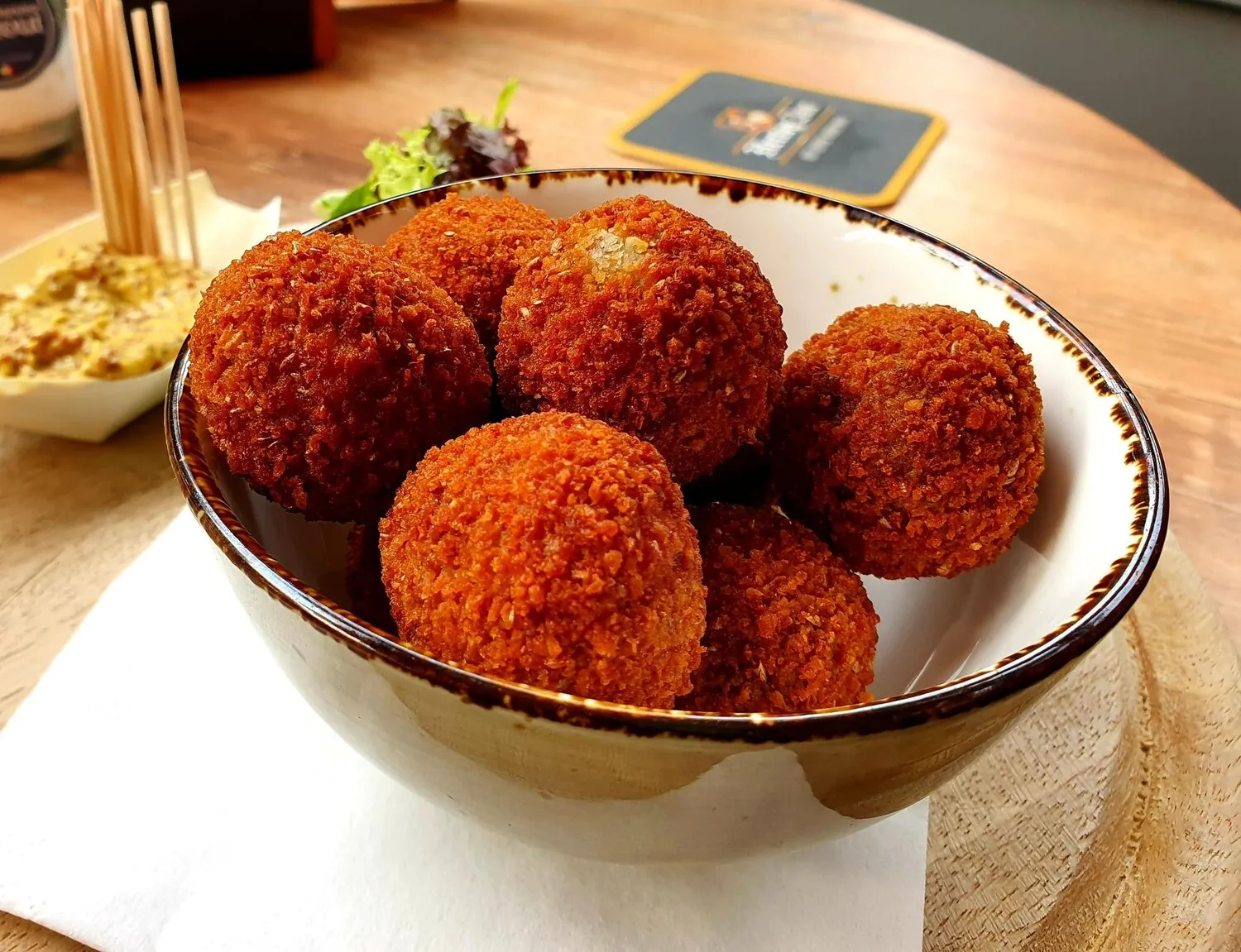

Bitterballen
A classic Dutch snack, often served as a starter or with drinks.
Valori Nutrizionali
* Il % del Valore Giornaliero (VG) indica quanto un nutriente in una porzione di cibo contribuisce a una dieta giornaliera. 2.000 calorie al giorno sono utilizzate per i consigli nutrizionali generali.
Funzionalità Premium
Funzionalità Premium
Bitterballen evolved from the earlier Dutch 'kroketten' (croquettes), influenced by French cuisine. During times when refrigeration was limited, leftover meat from stews and roasts was minced, bound with a roux, spiced, and fried to prevent waste and create a savory snack. The round shape, smaller size, and focus on a crispy exterior distinguished bitterballen from their larger croquette counterparts.
Funzionalità Premium
Bitterballen are a staple of Dutch 'gezelligheid' (coziness) and are deeply ingrained in Dutch social life, particularly in pubs and at social gatherings.
Pub Culture
Bitterballen are almost always served in pubs and bars alongside drinks, especially beer. They are a quintessential 'borrelhapje' (snack served with drinks).
Social Gatherings
They are often served at parties, celebrations, and informal gatherings, offering a quick and easy snack that everyone enjoys. Sharing a plate of bitterballen promotes a sense of community.
Koningsdag (King's Day)
During Koningsdag celebrations, bitterballen are a common street food item, contributing to the festive atmosphere.
Funzionalità Premium
Bitterballen offer a savory, rich, and slightly creamy flavor profile balanced by a crispy, golden-brown exterior and the sharp tang of mustard.
The dominant flavor comes from the slow-cooked beef or veal, often combined with beef broth for a deep, umami richness. Aromatics like onions, parsley, nutmeg, and pepper contribute complexity. The creamy interior is achieved by incorporating a thick roux made with butter and flour, acting as a binder for the meat. The breadcrumb coating adds a textural contrast, giving way to a soft interior. The mustard dip provides acidity and a spicy kick that complements the richness of the meat.
Funzionalità Premium
Roux Consistency
The roux must be cooked thoroughly to avoid a floury taste. It should be thick enough to hold its shape when cooled, but not so stiff that it's difficult to work with.
Meat Quality
Using high-quality beef or veal, and simmering it slowly in broth, yields the best flavor. Leftover roast can also be used for a more rustic taste.
Double Coating
For an extra crispy exterior, consider double-coating the bitterballen in breadcrumbs. This ensures a thicker, more protective layer.
Frying Temperature
Maintain a consistent frying temperature of around 350-375°F (175-190°C) for even cooking and optimal crispiness. Avoid overcrowding the fryer to prevent the oil temperature from dropping.
Serving Temperature
Serve bitterballen hot immediately after frying for the best texture and flavor. Cold bitterballen are not as appetizing.
Funzionalità Premium
Esplora piatti e ristoranti aggiuntivi di Snacks
Esplora SnacksScopri i migliori ristoranti ed esperienze culinarie a Delft.
Esplora DelftScopri di più sulla cultura gastronomica, la scena dei ristoranti e il patrimonio culinario di Netherlands.
Esplora Netherlands