
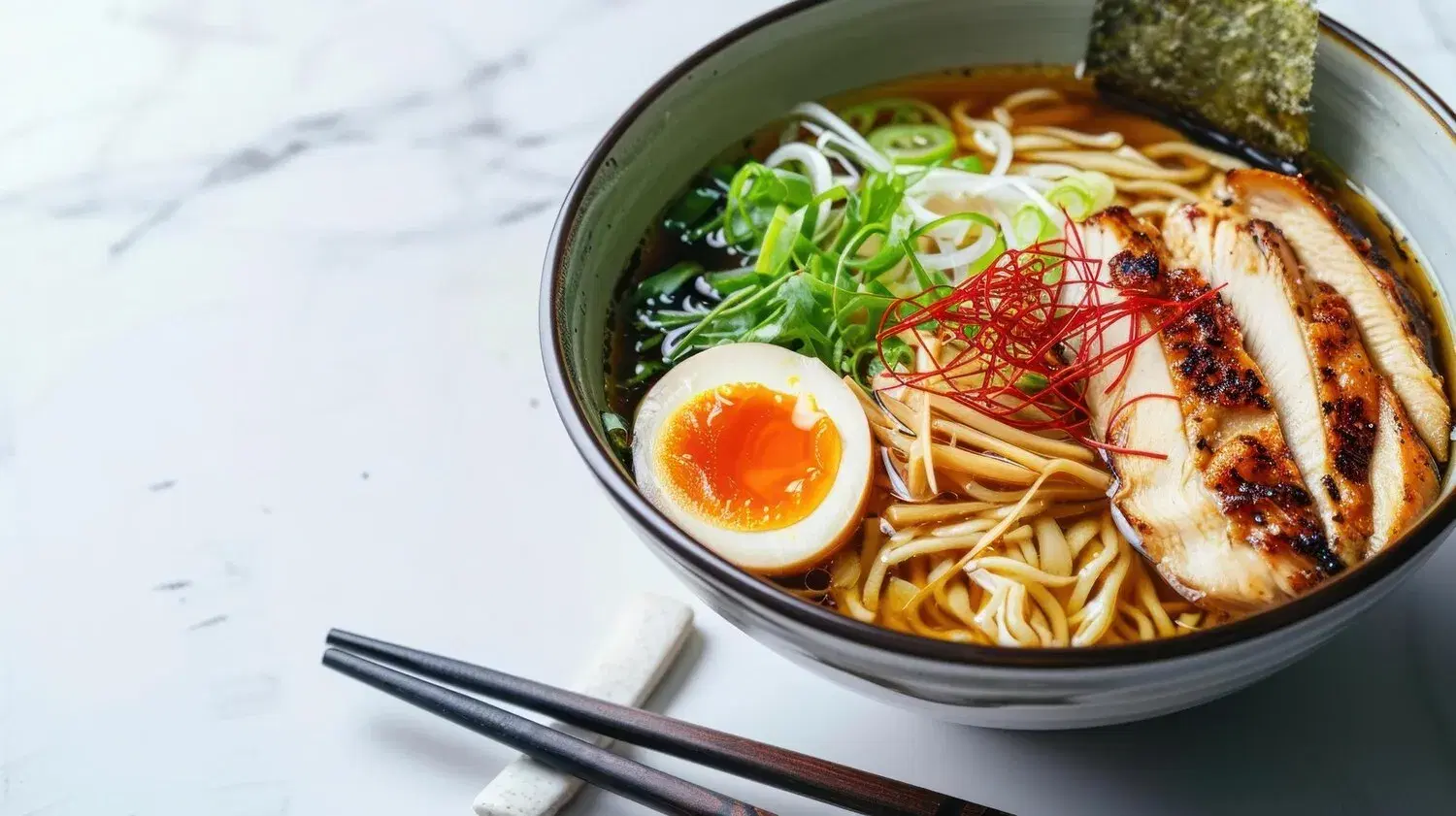

Ramen
A Japanese noodle soup dish. Different types of ramen can be found, usually featuring wheat noodles served in a meat or fish-based broth, often flavored with soy sauce or miso.
Valori Nutrizionali
* Il % del Valore Giornaliero (VG) indica quanto un nutriente in una porzione di cibo contribuisce a una dieta giornaliera. 2.000 calorie al giorno sono utilizzate per i consigli nutrizionali generali.
Funzionalità Premium
Funzionalità Premium
Ramen's roots trace back to Chinese wheat noodles introduced to Japan in the late 19th or early 20th century. Over time, regional variations and innovations transformed it into the iconic Japanese dish we know today, diverging significantly from its Chinese ancestors.
Funzionalità Premium
Ramen is more than just a meal; it's a cultural phenomenon in Japan. It represents regional identity, culinary artistry, and is often a source of comfort food.
Regional Variations
Each region in Japan boasts its unique ramen style, reflecting local ingredients and preferences. Examples include Hakata ramen (tonkotsu), Sapporo ramen (miso), and Kitakata ramen (soy sauce).
Ramen Shops (Ramen-ya)
Ramen shops are ubiquitous throughout Japan, ranging from small, family-run establishments to large chains. They are often specialized in a particular style of ramen.
Slurping Etiquette
Slurping ramen is considered polite and even encouraged in Japan, as it enhances the aroma and flavors while also cooling the noodles.
Ramen as a Culinary Art
Many ramen chefs dedicate years to perfecting their broth and noodle recipes, treating ramen preparation as a serious craft.
Funzionalità Premium
Ramen's flavor profile is deeply savory and umami-rich, derived from a complex broth, seasoned with soy sauce, miso, or salt. The toppings add layers of texture and complementary tastes.
The core flavor lies in the broth, typically made from pork bones (tonkotsu), chicken (chintan), or fish. The 'tare' or seasoning base (shoyu (soy sauce), miso, or shio (salt)) adds a distinct identity. Common toppings include chashu (braised pork belly), menma (fermented bamboo shoots), negi (green onions), nori (dried seaweed), ajitama (soft-boiled egg), and mayu (black garlic oil), each contributing specific textures and tastes.
Funzionalità Premium
Customize Your Order
Many ramen shops allow you to customize your order, specifying noodle firmness, broth richness, and topping preferences.
Try Different Styles
Explore the diverse range of ramen styles to discover your personal favorite. Don't be afraid to venture beyond the familiar.
Add Condiments
Experiment with condiments like rayu (chili oil), shichimi togarashi (seven-spice blend), and sesame seeds to enhance the flavor of your ramen.
Eat It Quickly
Ramen is best enjoyed hot and fresh. The noodles tend to absorb the broth over time, so eat it promptly to prevent them from becoming soggy.
Funzionalità Premium
Esplora piatti e ristoranti aggiuntivi di Noodle Soup
Esplora Noodle SoupScopri i migliori ristoranti ed esperienze culinarie a Luzern.
Esplora LuzernScopri di più sulla cultura gastronomica, la scena dei ristoranti e il patrimonio culinario di Switzerland.
Esplora Switzerland