
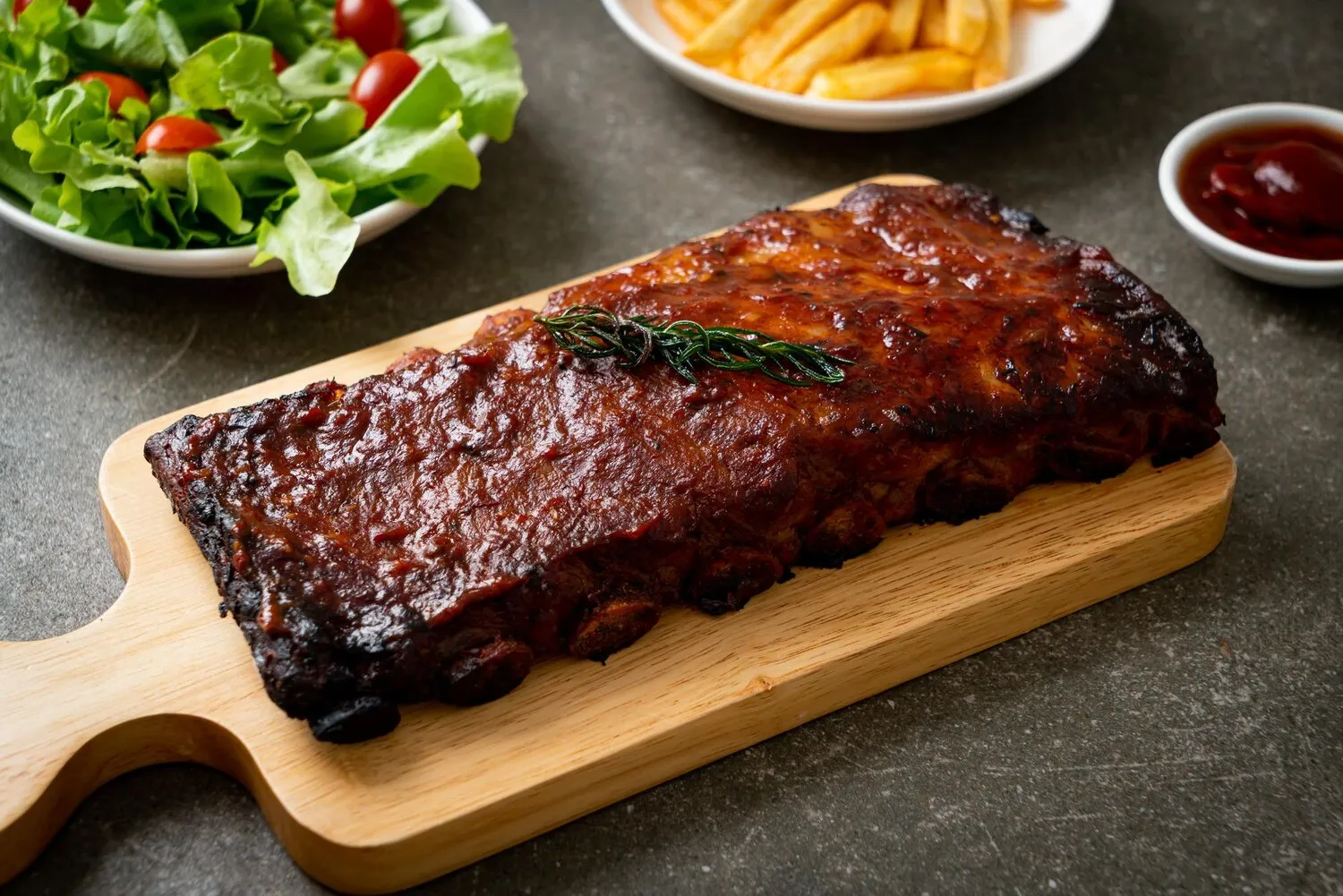

Ribs
Slow-cooked ribs
Valori Nutrizionali
* Il % del Valore Giornaliero (VG) indica quanto un nutriente in una porzione di cibo contribuisce a una dieta giornaliera. 2.000 calorie al giorno sono utilizzate per i consigli nutrizionali generali.
Funzionalità Premium
Firestone Grill
Funzionalità Premium
The practice of smoking and slow-cooking meats, including ribs, has roots in indigenous techniques for preserving food. European settlers brought their own butchering practices and spice preferences, leading to the regional variations we see today. African American culinary traditions, particularly in the South, heavily influenced the development of barbecue as a cooking method and ribs as a staple dish.
Funzionalità Premium
Ribs are deeply ingrained in American barbecue culture and are often associated with social gatherings, celebrations, and regional pride.
Barbecue Competitions
Barbecue competitions are a significant part of rib culture, with cooks showcasing their skills and regional variations. These competitions often feature categories specifically for ribs and attract large crowds.
Family Gatherings
Ribs are often served at family gatherings and backyard barbecues, representing a communal and celebratory meal. Sharing ribs is a social activity that promotes togetherness.
Regional Variations
Different regions of the United States have distinct styles of ribs and barbecue sauce. For example, Memphis ribs are often dry-rubbed, while Kansas City ribs are known for their thick, sweet barbecue sauce. Texas ribs are often cooked with a simple salt and pepper rub.
Funzionalità Premium
Slow-cooked ribs offer a balance of smoky, savory, and often sweet flavors, with tender, fall-off-the-bone texture.
The primary flavor comes from the meat itself, typically pork or beef, which is enhanced by a dry rub or marinade. Common dry rub ingredients include salt, pepper, paprika, garlic powder, onion powder, brown sugar, and chili powder. The smoking process, often using woods like hickory, mesquite, or applewood, imparts a distinct smoky flavor. Barbecue sauces, which vary widely by region, add sweetness, tanginess, and spiciness to the ribs. Common sauce ingredients include ketchup, vinegar, Worcestershire sauce, mustard, brown sugar, honey, and various spices.
Funzionalità Premium
Meat Preparation
Remove the membrane from the back of the ribs for a more tender result. Score the membrane side lightly to help the rub penetrate.
Temperature Control
Maintain a low and consistent temperature (around 225-250°F) for slow cooking. Use a meat thermometer to monitor the internal temperature and ensure the ribs are cooked to the desired doneness (around 190-203°F).
The 3-2-1 Method
Consider the 3-2-1 method for pork spare ribs: 3 hours of smoking uncovered, 2 hours wrapped in foil with liquid (apple juice or broth), and 1 hour uncovered with sauce.
Wood Choice
Choose your wood carefully to impart the desired flavor. Hickory is a classic choice for a strong, smoky flavor, while applewood provides a milder, sweeter smoke.
Funzionalità Premium
Esplora piatti e ristoranti aggiuntivi di Barbecue
Esplora BarbecueScopri i migliori ristoranti ed esperienze culinarie a Bakersfield.
Esplora BakersfieldScopri di più sulla cultura gastronomica, la scena dei ristoranti e il patrimonio culinario di United States.
Esplora United States