
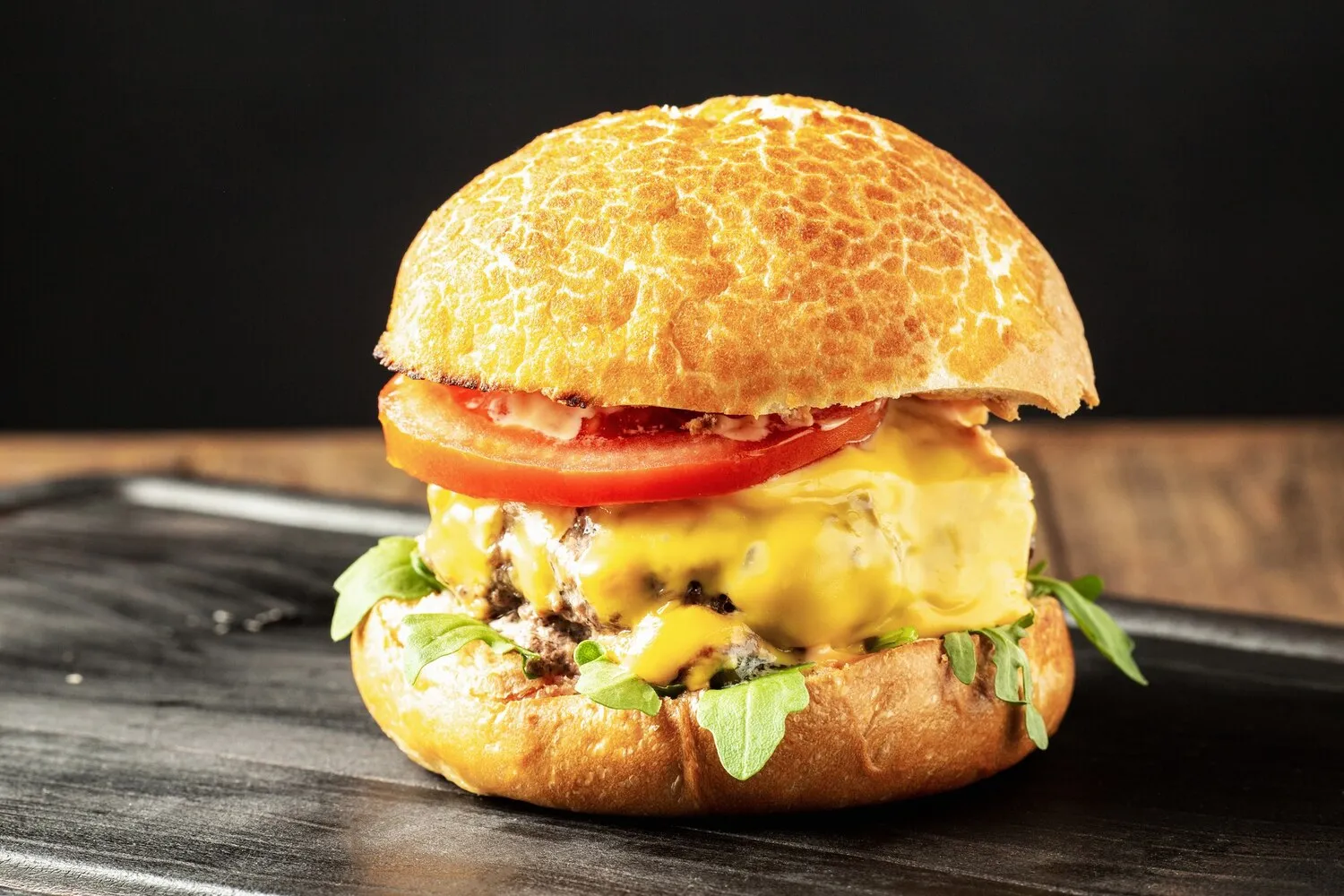

Cheeseburger
Nutrition Facts
* The % Daily Value (DV) tells you how much a nutrient in a serving of food contributes to a daily diet. 2,000 calories a day is used for general nutrition advice.
Premium Feature
The Bungalow Lakehouse
No Similar Dishes Found
We couldn't find any similar dishes at the moment. Try exploring other restaurants!
The cheeseburger evolved from the hamburger, which gained popularity in the late 19th and early 20th centuries. Adding cheese was a natural progression, with various claims to its invention arising in the 1920s and 1930s. The increased affordability and mass production of cheese helped to popularize it. It became a staple with the rise of fast-food chains following World War II.
Premium Feature
The cheeseburger is deeply ingrained in American culinary culture and is a symbol of fast food, casual dining, and American ingenuity. It is a widely accessible and customizable dish that reflects American consumerism and convenience.
Fast Food Icon
The cheeseburger is a cornerstone of fast-food menus across the United States and worldwide, representing the efficiency and affordability of this dining style.
American Staple
It is a common dish found in diners, restaurants, and backyard barbecues, representing casual American dining and social gatherings.
Customization and Variety
The cheeseburger is highly customizable, with regional variations and gourmet versions featuring unique ingredients and flavor combinations.
Premium Feature
The cheeseburger offers a savory and umami-rich experience, balanced with tangy, creamy, and often sweet elements.
The core flavors are the beef's savory, meaty taste enhanced by grilling or pan-frying, and the creamy, sharp, or mild flavor of the cheese (typically cheddar, American, Swiss, or Monterey Jack). Condiments like ketchup provide sweetness and tang, mustard adds a pungent kick, and pickles contribute acidity and crunch. Onions can offer a sharp or sweet note, depending on whether they are raw, caramelized, or pickled. Lettuce and tomato provide freshness and subtle vegetable flavors.
Premium Feature
Beef Selection
Choose ground beef with a good fat content (around 80/20) for optimal flavor and juiciness. Avoid overworking the meat when forming the patties to prevent them from becoming tough.
Cheese Choice
Select a cheese that melts well and complements the beef flavor. American cheese is a classic choice for its smooth, melty texture, while cheddar provides a sharper flavor. Consider exploring other options like Swiss, Monterey Jack, or provolone.
Bun Selection
Use a soft, slightly sweet bun that can hold the ingredients without falling apart. Brioche buns are a popular choice for their rich flavor and sturdy texture. Toasting the bun helps to prevent it from becoming soggy.
Cooking Temperature
Ensure the beef patties reach an internal temperature of 160°F (71°C) for food safety. Use a meat thermometer to verify the temperature.
Premium Feature
Explore additional 10 Years Old & Under Please dishes and restaurants
Explore 10 Years Old & Under PleaseDiscover top dining spots and culinary experiences in Sterling.
Explore SterlingLearn more about the food culture, restaurant scene, and culinary heritage of United States.
Explore United States