
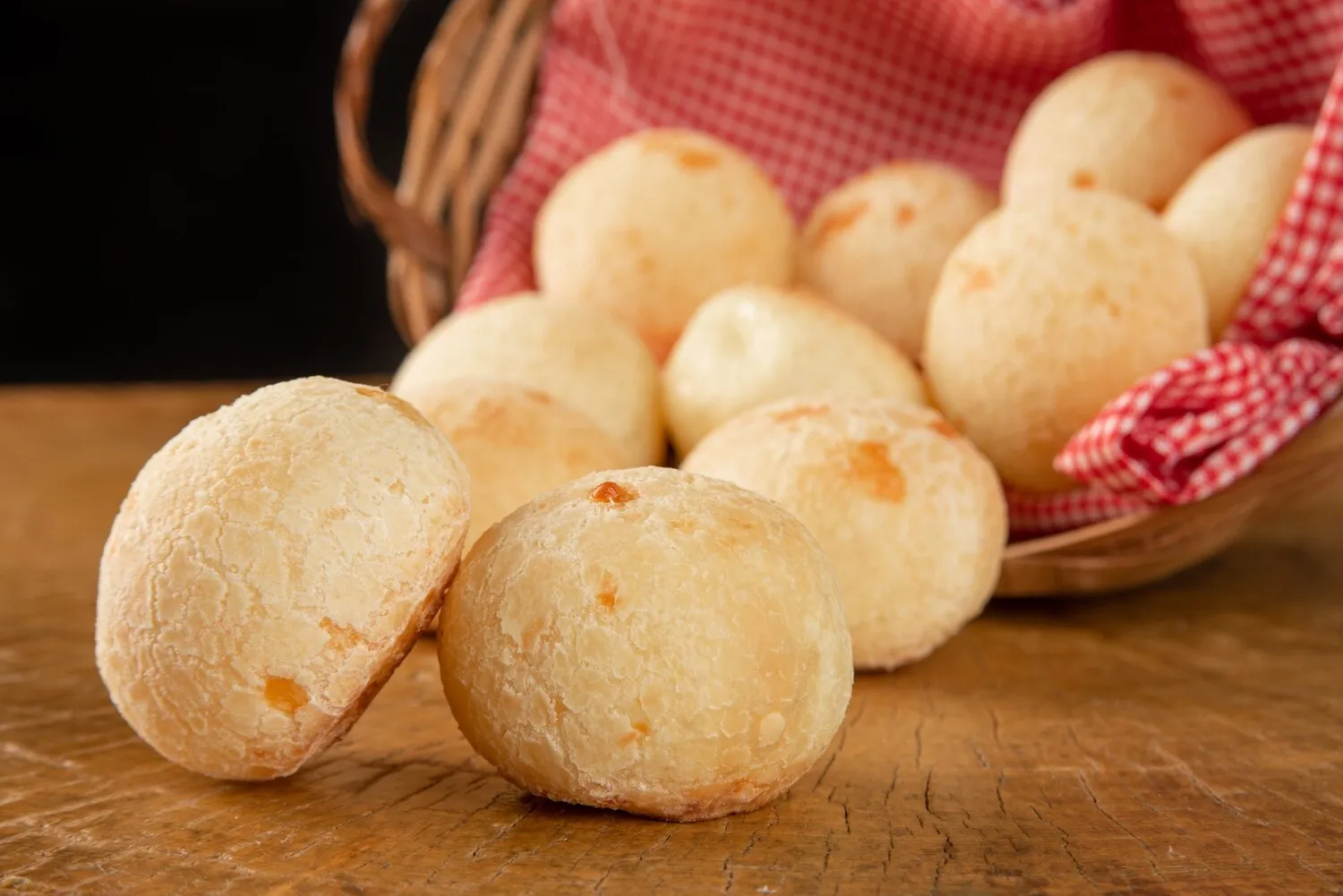

Pão de Queijo
Brazilian cheese bread, small, baked cheese rolls, a popular snack and breakfast item.
Valori Nutrizionali
* Il % del Valore Giornaliero (VG) indica quanto un nutriente in una porzione di cibo contribuisce a una dieta giornaliera. 2.000 calorie al giorno sono utilizzate per i consigli nutrizionali generali.
Funzionalità Premium
The Grill From Ipanema
Funzionalità Premium
The precise origins of Pão de Queijo are debated, but it's widely believed to have emerged in the state of Minas Gerais during the 18th century. The lack of wheat flour and abundance of cassava starch (tapioca starch) due to colonial trade routes, coupled with the region's rich dairy farming, likely contributed to its creation. Some historians suggest that enslaved Africans may have played a role in developing the recipe, adapting readily available ingredients to create a satisfying and nutritious food. Another possible influence is the adaptation of European cheese bread recipes.
Funzionalità Premium
Pão de Queijo is deeply ingrained in Brazilian culture, particularly in Minas Gerais, where it's considered a staple and a symbol of hospitality.
Breakfast Staple
It is commonly enjoyed for breakfast, often paired with coffee. Many Brazilians consider it an essential part of their morning routine.
Social Gathering Food
Pão de Queijo is frequently served at social gatherings, parties, and coffee breaks. It's seen as a comforting and welcoming food.
Regional Pride
In Minas Gerais, Pão de Queijo is a source of regional pride. Families often have their own secret recipes passed down through generations.
National Icon
While deeply rooted in Minas Gerais, Pão de Queijo has become a national icon, readily available throughout Brazil in bakeries, supermarkets, and cafes.
Funzionalità Premium
Pão de Queijo boasts a unique flavor profile stemming from its chewy texture and savory, slightly tangy cheese taste.
The primary flavor is derived from the cheese, typically a blend of semi-cured Minas cheese (a type of Brazilian cheese), which provides a mild, slightly sour, and milky taste. The tapioca starch contributes to the bread's distinctive chewy and slightly gummy texture, offering a subtle, almost neutral base. The addition of eggs enriches the dough and adds a subtle eggy flavor. Depending on the recipe, variations may include Parmesan cheese for a sharper, saltier flavor, or even herbs and spices like garlic or oregano for added complexity.
Funzionalità Premium
Tapioca Starch is Key
Use high-quality tapioca starch (polvilho doce and/or polvilho azedo) for the characteristic chewy texture. The ratio of sweet to sour starch can affect the final product's puffiness and tanginess. Experiment with different ratios to find your preference.
Cheese Matters
While Minas cheese is traditional, other semi-hard cheeses like Gruyere, Monterey Jack, or even a blend can be used. Experiment to find your favorite cheese flavor.
Scald the Starch
Scalding the tapioca starch with hot liquid (milk or water) is a crucial step. It gelatinizes the starch, contributing to the bread's structure and preventing a gritty texture.
Temperature is Important
Baking at a high temperature (around 350-400°F) is essential for creating a puffed-up exterior and a chewy interior.
Freezing for Later
Pão de Queijo dough can be easily frozen. Shape the dough into balls and freeze them on a baking sheet before transferring them to a freezer bag. Bake directly from frozen, adding a few minutes to the baking time.
Funzionalità Premium
Esplora piatti e ristoranti aggiuntivi di Baked
Esplora BakedScopri i migliori ristoranti ed esperienze culinarie a Washington.
Esplora WashingtonScopri di più sulla cultura gastronomica, la scena dei ristoranti e il patrimonio culinario di United States.
Esplora United States